
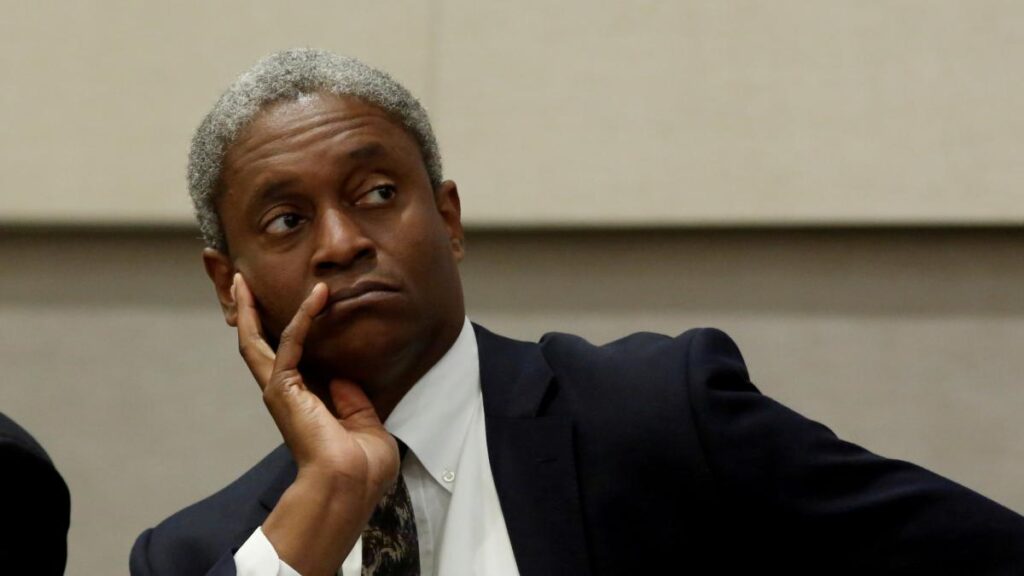
Background on Raphael Bostic
Raphael W. Bostic, the President of the Federal Reserve Bank of Atlanta, is the first African-American and openly gay individual to lead one of the 12 regional reserve banks in the United States. His announcement to retire at the end of his current term on February 28, 2026, comes as a surprise amidst pressure from President Donald Trump to exert more influence over the Federal Reserve (Fed).
Trump’s Influence on the Fed
Although Trump does not choose the presidents of the regional Fed banks, he has been attempting to reshape the Fed’s governing board by pushing for the removal of Governor Lisa Cook and seeking a successor to Fed Chair Jerome Powell when his term concludes in the upcoming spring. Trump has been critical of the Fed, led by Powell, for being overly cautious and slow in reducing interest rates.
Bostic’s Stance on Monetary Policy
Bostic believes that current labor market conditions do not warrant an aggressive response from the Fed, given persistently high inflation. Three Fed governors appointed by Trump have explicitly supported increased monetary easing, with Stephen Miran advocating for especially sharp rate cuts following Adriana Kugler’s unexpected departure in August.
Impact of Bostic’s Retirement
Bostic’s retirement marks the second departure this year of a critical voice within the Fed, which is weighing whether to continue rate cuts initiated in September or pause monetary easing due to ongoing high inflation.
White House Response
When questioned about Bostic’s retirement, White House spokesperson Kushi Desai stated that with inflation now significantly below mid-2022 peaks, “President Trump has rightfully urged the Federal Reserve to lower rates and provide relief in interest costs for U.S. homebuyers and businesses.”
Role of Regional Fed Presidents
Bostic, who holds a Harvard economics doctorate and previously worked as an academic and political advisor in the Department of Housing and Urban Development, would not have been among the five regional Fed presidents joining the seven Fed governors in regular rate-setting votes until 2027. However, like other non-voting regional Fed presidents, he contributes to policy discussions and shapes the final decision.
- Question:
Raphael W. Bostic is the President of the Federal Reserve Bank of Atlanta, the first African-American and openly gay individual to lead one of the 12 regional reserve banks in the United States.
- Question:
Trump seeks greater influence over the Fed by attempting to reshape its governing board through pushing for the removal of Governor Lisa Cook and seeking a successor to Fed Chair Jerome Powell when his term concludes.
- Question:
Bostic believes that current labor market conditions do not justify an aggressive response from the Fed due to persistently high inflation.
- Question:
Bostic’s departure marks the second critical voice leaving the Fed this year, which is considering whether to continue rate cuts or pause monetary easing due to ongoing high inflation.
- Question:
The White House has urged the Federal Reserve to lower interest rates in response to significantly reduced inflation, providing relief for U.S. homebuyers and businesses.
- Question:
Regional Fed presidents, like Bostic, contribute to policy discussions and help shape the final decision, even though they do not have voting rights in regular rate-setting votes.




