
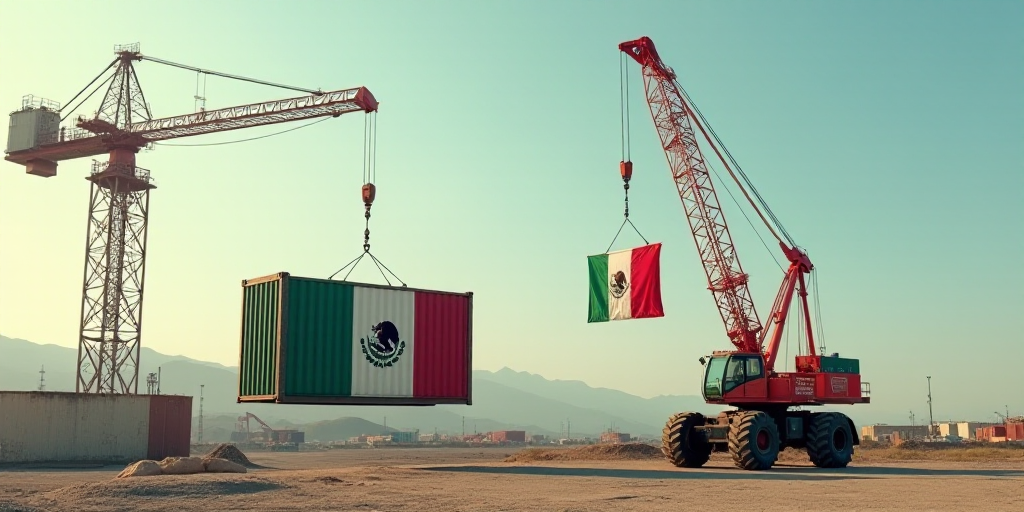
Strengthening Mexican Exports with the “Made in Mexico” Seal
The “Made in Mexico” seal is a crucial tool for boosting Mexican exports, building trust in international markets, and empowering both large corporations and small businesses.
Sergio Contreras Pérez, CEO of the Mexican Business Council for Foreign Trade, Investment, and Technology (Comce), emphasizes that “Mexico is an industrialized nation, well-known for its ability to export quality through manufacturing.”
Tailoring the Message for International Markets
Contreras suggests that, for exports, the seal should be in English and read “Made in Mexico,” enhancing Mexico’s positioning abroad. He adds, “I would write it in English and include the word ‘quality’ to help international markets recognize Mexico as a significant industrial country and a reliable manufacturing source that guarantees quality.”
He mentions ongoing discussions with the Secretariat of Economy to implement this logo version on exported products, stating, “We are waiting for the recognition of the logo implementation to support ‘Made in Mexico’.”
Contreras highlights that 89% of Mexican exports come from the manufacturing sector, where the country holds a strategic advantage and potential to become a key supplier in nearshoring schemes.
Supporting SMEs, Logistics, and New Markets
Kenia Page, Commercial Manager for SMEs at UPS, explains that logistics involves more than just shipping a package. Therefore, UPS signed an agreement with the Secretariat of Economy to promote SME participation in international trade using the “Made in Mexico” seal.
As part of this agreement, SMEs receive training in exportation, digitalization, and access to new markets. Page states, “Collaboration between the private sector, government, and society can propel local talent onto a global stage.”
She adds that the seal not only certifies product origin but also demonstrates commitment to sustainable development goals, positioning Mexico globally.
Page points out that the T-MEC agreement boosts Mexican SME participation in international markets by providing competitive advantages for entering new markets, such as the US and Canada.
Key Questions and Answers
- What is the “Made in Mexico” seal? It’s a label that promotes Mexican exports, builds trust in international markets, and supports both large corporations and small businesses.
- Why is it important for the seal to be in English? To effectively communicate Mexico’s industrial capabilities and product quality to international markets.
- What role do SMEs play in Mexican exports? SMEs contribute significantly to Mexican exports, with 89% coming from the manufacturing sector.
- How does logistics support international trade for SMEs? Logistics encompasses shipping, digitalization, and market access, all of which are crucial for SMEs to participate in international trade.
- What advantages does the T-MEC agreement provide for Mexican SMEs? It offers competitive advantages for Mexican SMEs to enter new markets, such as the US and Canada.




