
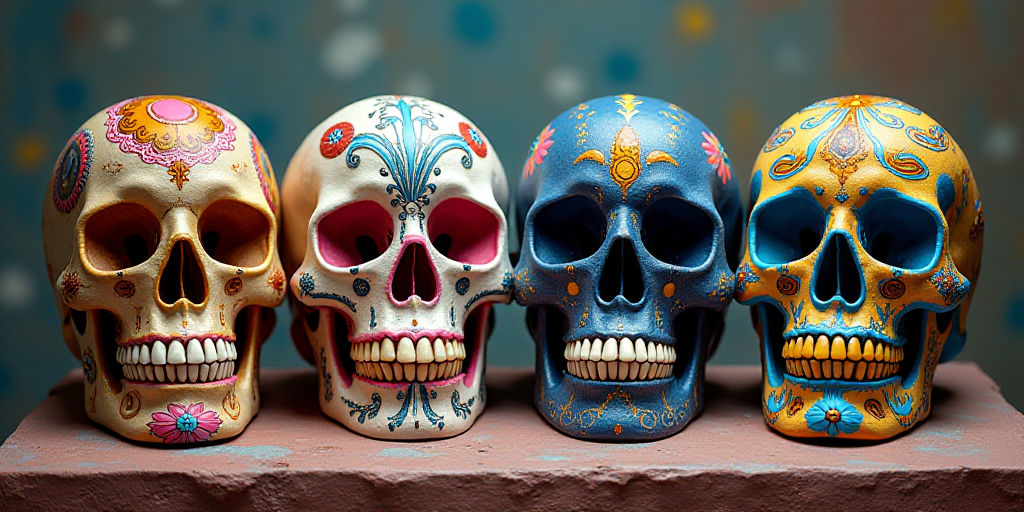
Origins of Sugar Skulls in Pre-Hispanic Mexico
In pre-Hispanic Mexico, Mesoamerican cultures already molded skull figures from amaranth and honey to pay tribute to Mictlantecuhtli, the lord of the underworld. With the arrival of the Spanish and the establishment of convents, sugar—brought from the East via Europe—became the new medium to shape both death and life.
The Convent Era
During the 17th and 18th centuries, convents began using clay molds to create figures of saints, animals, and eventually, sugar skulls. This technique solidified in towns like Toluca, Puebla, and Guanajuato, where artisans adapted the art of alfeñique (cooked sugar mixed with lemon) to the November 1st and 2nd festivities.
The Smiling Skull
Far from representing something macabre, sugar skulls are a sweet mockery of death. On altars, they symbolize the acceptance of mortality and joy at reuniting with those who have passed away. Each skull bears the name of a loved one on its forehead—written with gold or glaze paper—reminding us that death in Mexico is also celebrated with sugar and colors.
The alfeñique fairs held annually in cities like Toluca and Guanajuato are a celebration of ingenuity, where chocolate, amaranto, pepita, and coconut skulls coexist, but sugar skulls remain the most traditional.
Key Questions and Answers
- What are sugar skulls? Sugar skulls, or calaveras de azúcar, are an essential part of the Mexican Day of the Dead celebration. They represent a sweet, colorful, and joyful acceptance of death.
- What is the history behind sugar skulls? The tradition originated from pre-Hispanic Mexico, where skulls were made from amaranth and honey. With Spanish influence, sugar became the new medium, leading to the creation of intricate sugar skulls in convents during the 17th and 18th centuries.
- What do sugar skulls symbolize? Sugar skulls symbolize the celebration of life and death, representing the acceptance of mortality and the joy of reuniting with loved ones who have passed away.
- Where can one find sugar skulls? Sugar skulls are prominently displayed during the Mexican Day of the Dead celebrations, particularly in cities like Toluca and Guanajuato, where annual fairs showcase various types of skulls made from chocolate, amaranto, pepita, coconut, and sugar.




