
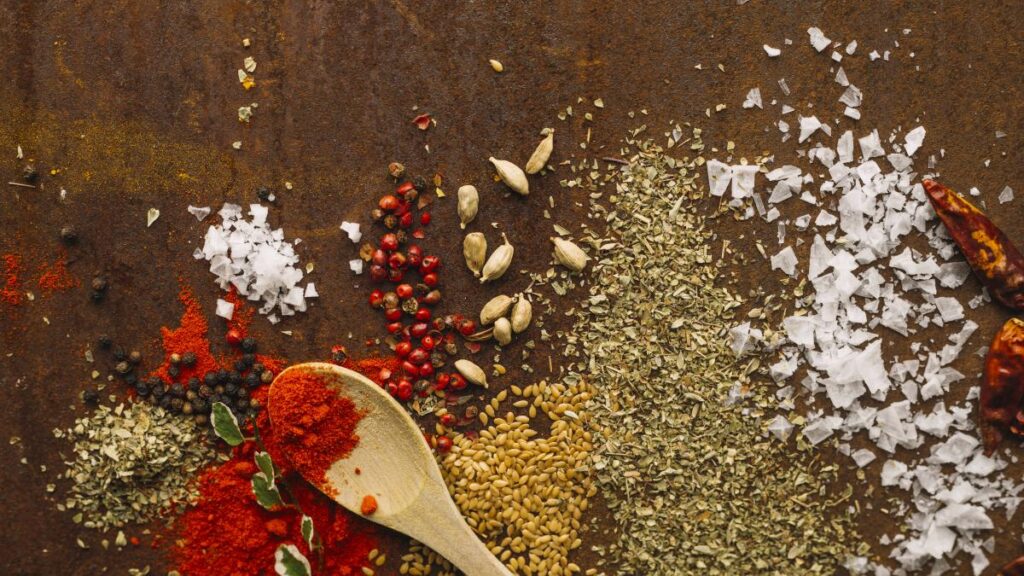
Understanding the Basics of Seasoning
A common mistake in cooking is assuming that flavor solely depends on the amount of salt. When a dish fails to impress, the immediate reaction is often to add more salt, even though the issue might lie elsewhere. The result is usually an overly salty dish that still lacks depth.
True seasoning is built from the balance of four fundamental elements: salt, acidity, fat, and heat. When one of these components is off, the dish loses its complexity, contrast, or clarity. Learning to recognize this balance is what distinguishes following recipes from cooking with understanding.
The Role of Salt
Salt not only adds flavor but also structures it. It enhances sweetness, softens bitterness, and helps ingredients express their inherent qualities better. Consequently, a dish with insufficient salt often feels flat, even with high-quality ingredients.
The key is to season in stages. A little at the beginning helps ingredients flavor themselves from within; adjusting during cooking allows for better control, and fine-tuning at the end refines the taste. Seasoning only at the end usually results in a harsh, poorly integrated impact.
Different ingredients require varying amounts of salt. Vegetables, proteins, and broths react differently to salt, and the reduction of liquid during cooking also plays a role.
When a dish tastes bland, the first adjustment should always be salt, but proceed with caution and constant taste testing.
Identifying Imbalances
- If it feels overpowering, it needs acidity.
- If it’s balanced but lacks depth, it needs more fat.
- If it tastes dull or lacks character, the issue might be in managing heat.
Acidity: Adding Brightness and Balance
Acidity, often provided by ingredients like citrus juices, vinegar, or wine, adds brightness and balance to dishes. It cuts through richness, enhances flavors, and prevents a dish from feeling heavy.
When a dish lacks acidity, it may feel dull or one-dimensional. Adding a splash of lemon juice, a dash of vinegar, or a pour of wine can often bring the flavors to life.
Fat: Enriching and Carrying Flavors
Fat, whether from oils, butter, or cream, enriches dishes and carries flavors. It adds depth and mouthfeel, making food more satisfying.
If a dish seems flat or lacks richness, it might need more fat. Consider adding a drizzle of olive oil, a dollop of cream, or a knob of butter to elevate the flavors.
Heat: Bringing Out and Intensifying Flavors
Heat, whether from cooking techniques or spicy ingredients, brings out and intensifies flavors. It can caramelize sugars, develop complex tastes, and add aromatic notes.
If a dish feels dull or lacks character, the issue might be in managing heat. Adjusting cooking techniques or incorporating spicy elements can help awaken the flavors.




