
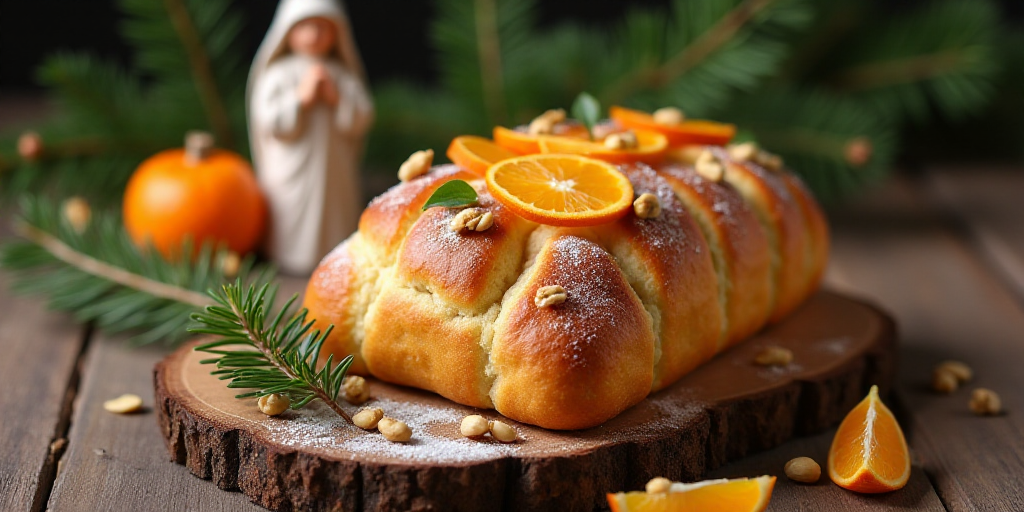
A Cultural Tradition Rooted in History and Faith
Every year, the Rosca de Reyes reappears on Mexican tables as a ritual blending history, faith, and gastronomy. This tradition marks the symbolic start of the festive calendar, with its unique pan going beyond an ordinary bread. The Rosca de Reyes is not just a delicacy; it’s an event that activates a collective ceremony filled with repeated gestures, nervous laughter, and future promises.
From Medieval Europe to Mexican Innovation
The Rosca de Reyes tradition dates back to the Christian celebration of the Epifanía, commemorating the visit of the Three Wise Men to the infant Jesus. In medieval Europe, special breads were crafted for this occasion, meant to be shared in community. With the arrival of this custom in New Spain, the recipe evolved: local ingredients, mixed panadería techniques, and a new sense of celebration transformed the Rosca into a unique symbol within Mexican gastronomic culture.
Shape as Message
The circular or oval shape of the bread is not merely an aesthetic choice. It represents eternity, boundless love, and the continuity of time. In Mexico, this symbolism takes on a social reading: the Rosca is not consumed alone. Its shape necessitates sharing, sitting together, and accepting one’s portion, reinforcing the idea of equality around the table.
The Figurines and Their Profound Meaning
The small figurine hidden inside the bread is the symbolic heart of this tradition. It represents the concealed infant Jesus, protected from King Herod’s persecution. Discovering the figurine isn’t a joke or punishment; it’s accepting a communal commitment. The finder of the figurine becomes the host for the next gathering, inviting tamales on February 2nd, the Day of Candelaria, extending the celebration beyond January 6th.
Regional Variations and Modern Adaptations
In different regions of the country, multiple figurines are placed inside the Rosca to distribute responsibility. While contemporary versions filled with cream, chocolate, or dulce de leche cater to modern tastes, they don’t alter the symbolic structure of the ritual. Even the act of breaking the Rosca has unwritten rules: one doesn’t choose a slice; one accepts it, and one doesn’t seek the figurine; one finds it.
The Rosca de Reyes: A Social Fabric Woven Through Gastronomy
The Mexican Rosca de Reyes is one of the clearest examples of how Mexican gastronomy functions as a social fabric. It’s not just about taste or technique; it’s about belonging. Around this bread, generations intersect, bonds are strengthened, and the new year is inaugurated with a simple yet profound gesture: sharing.
Key Questions and Answers
- What is the Rosca de Reyes? The Rosca de Reyes is a traditional Mexican bread, typically round and adorned with dried fruits and a small figurine, symbolizing the hidden infant Jesus. It’s consumed on January 6th, Epiphany or the Day of the Kings.
- Why is the shape of the Rosca significant? The circular or oval shape represents eternity, boundless love, and the continuity of time. It also symbolizes communal sharing and equality around the table.
- What does finding the figurine mean? Discovering the figurine inside the Rosca signifies accepting a communal commitment. The finder becomes the host for the next gathering, traditionally inviting tamales on February 2nd, the Day of Candelaria.
- How has the Rosca de Reyes evolved? Originating from medieval European customs, the Rosca de Reyes has evolved with Mexican ingredients and techniques. Despite modern adaptations like various fillings, the symbolic structure of the ritual remains unchanged.




