
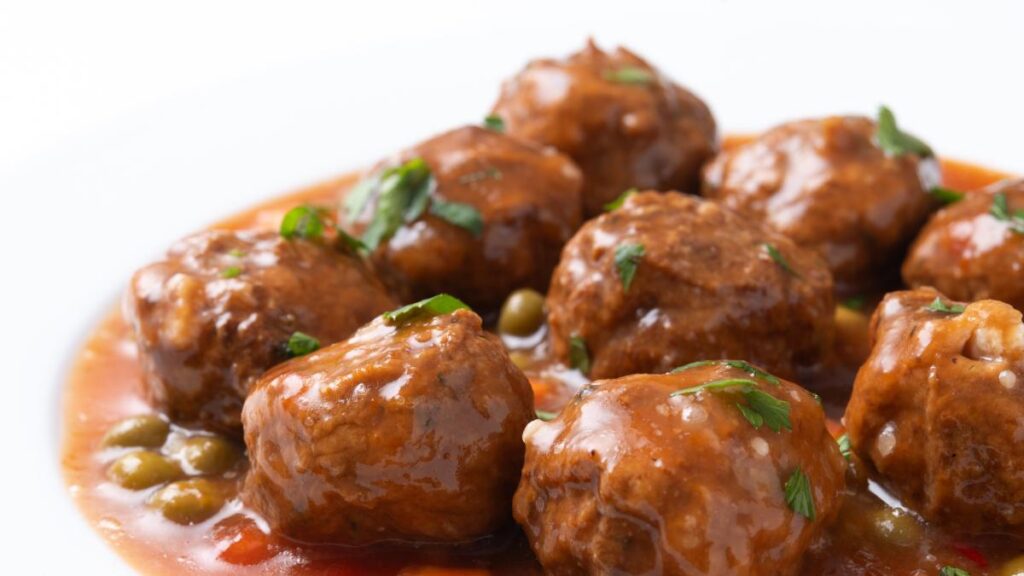
There are dishes that tell stories beyond flavor, and Mexican meatballs are one such heirloom that has crossed borders, religions, and generations. They originated in the Arab world, traveled with conquistadors to Spain, and centuries later transformed in Mexico into a dish brimming with identity: meatballs with chile pasilla and hard-boiled egg.
From Arab Origins to Spanish Conquest
The term “albóndiga” comes from the Arabic word al-bunduq, meaning “small ball.” During the Arab occupation in the Iberian Peninsula, this dish became popular as a humble preparation made with ground meat and spices.
With the arrival of Spanish conquistadors to America, the recipe traveled in ships along with wheat, rice, and stewing techniques. However, upon reaching the Novo-Hispanic kitchens, everything changed: nuns and indigenous cooks replaced Middle Eastern spices with dried chiles and aromatic herbs, giving birth to a new, mestizo version.
The Soul of the Dish: Chile Pasilla
If there is one ingredient that defines Mexican meatballs, it’s the chile pasilla, one of Mexico’s most noble and aromatic dried chiles. Its name comes from “pasa,” referring to its dark color and wrinkled texture.
Native to central Mexico, it is cultivated in states like Puebla, Guanajuato, and Oaxaca, characterized by its slightly sweet flavor with notes of cacao and nuts. When toasted and ground, it releases a deep aroma that turns the sauce. In this dish, the pasilla is blended with tomatoes, garlic, and onion to create a rich, balanced base.
The hard-boiled egg filling isn’t merely a whim but a symbol of abundance. This custom has conventual roots: in 18th-century colonial recipes, the egg represented purity and prosperity. Including it in the meatball’s center elevated a simple dish to festive status.
Key Questions and Answers
- What are Mexican meatballs? They are a traditional dish with origins in Arab cuisine, transformed over centuries by indigenous and Spanish influences in Mexico.
- What makes Mexican meatballs unique? The use of chile pasilla and hard-boiled egg are key elements that give this dish its distinctive flavor and symbolism.
- Where does chile pasilla come from? It originates in central Mexico and is cultivated in states like Puebla, Guanajuato, and Oaxaca.
- What does the hard-boiled egg symbolize in this dish? It represents abundance and elevates the meatballs from a simple to a festive dish.




