
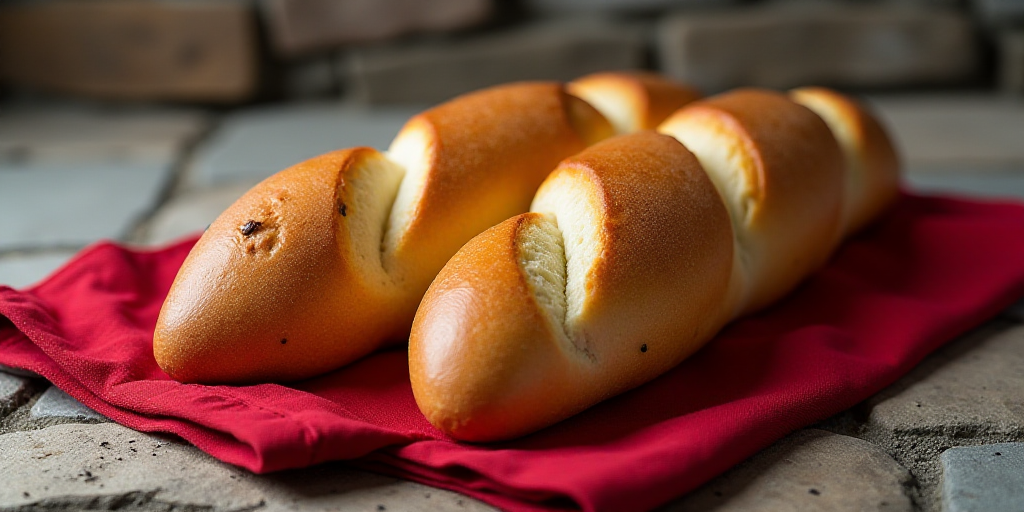
A Culinary Journey Through the History of Mexico’s Beloved Bread
The bolillo, a seemingly simple yet iconic Mexican bread, plays an essential role in the nation’s gastronomy. It serves as a base for tortas, molletes, and countless savory dishes. Its significance transcends mere sustenance; it’s a staple that unites Mexicans across social strata. This humble bread, often overlooked, carries a rich history and cultural significance.
From the Court of Maximiliano to Every Mexican’s Plate
Although we consider the bolillo as our own as chiles, its origins are a fascinating blend of Spanish and French influences. The wheat arrived with the Spanish conquistadors, but the technique of a soft crumb and crisp crust bears an undeniable French accent.
The story takes us to the 19th century, to Camille Pirotte’s kitchen. A French baker in the service of French troops stationed in Guadalajara, Pirotte had to improvise when he couldn’t find his usual yeast. He resorted to natural fermentation and extended proofing times, resulting in the “birote,” a Tapatío twist on his surname. Over time, this recipe migrated to central Mexico, evolved into the bolillo we know today, and conquered panaderías across the capital.
The Secret Behind Its Name: From Embroidery Sticks to Timely Baking
Ever wondered why it’s called a bolillo? The answer lies not in the kitchen but in the sewing kit.
The name originates from “bolillos,” long, rounded wooden sticks with a knob at one end that women used to embroider lace on cushions. The bolillo’s shape, with its central bulge and knotted ends, mirrored these sewing tools.
The linguistic magic didn’t stop there. In the baking community, this word took on a life of its own with the expression “hilar bolillo,” which doesn’t refer to sewing but rather to working efficiently and fluidly. It describes the pan’s rapid sale, ensuring customers always receive fresh, warm bread.
Reasons for Our Love Affair with the Bolillo
The bolillo’s popularity stems from its versatility. It’s neither sweet nor salty, making it a neutral base for various dishes. Its structure is pure engineering: the firm crust can withstand the moisture of a green tamal or chilaquile sauce without falling apart in one’s hands.
And let’s not forget the folklore surrounding it. Eating a bolillo is believed to settle the stomach, absorbing gastric juices released during stress and stabilizing blood sugar levels. It’s a comforting carbohydrate hug.
Key Questions and Answers
- What is the history of the bolillo? The bolillo’s origins trace back to French baker Camille Pirotte in Guadalajara during the 19th century. He improvised with natural fermentation and extended proofing times when he couldn’t find his usual yeast.
- Why is it called a bolillo? The name comes from “bolillos,” long, rounded wooden sticks used for embroidering lace. The bolillo’s shape mirrored these sewing tools.
- What makes the bolillo so popular? Its versatility as a neutral base for various dishes, combined with its engineering-like structure that can withstand moisture, contributes to its popularity. Additionally, the belief that it aids in settling the stomach adds to its appeal.
The bolillo’s journey from French improvisation to Mexican staple is a testament to cultural exchange and adaptation. Its name, shape, and purpose intertwine in a fascinating narrative that extends beyond the kitchen.




