
Introduction to the 2026 Calendar for Workers
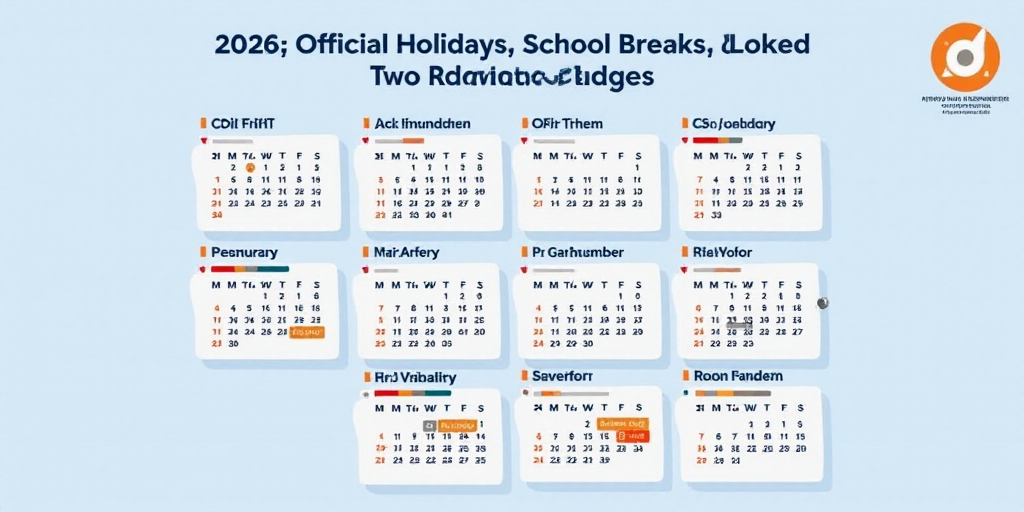
The 2026 calendar will be slightly more favorable for workers, as there will be two additional bridges instead of the traditional three official ones due to the positioning of official holidays. These bridges are created by moving official holidays around the Día del Trabajo (Labor Day) on May 1st and Christmas on December 25th, both falling on a Friday.
Who is Relevant and Why?
The information pertains to workers in Mexico, as the Federal Labor Law (LFT) governs mandatory holidays for employees. Understanding this calendar is crucial for both employers and employees to plan their time off, ensuring compliance with labor regulations.
Official Holidays and Their Impact
According to the current labor legislation, these are the seven mandatory official holidays for workers in 2026:
- January 1, New Year’s Day
- February 2, Constitution Anniversary (commemorated on February 5) – Bridge
- March 16, Benito Juárez’s Birthday (commemorated on March 21) – Bridge
- May 1, Labor Day – Bridge
- September 16, Independence Day – No Bridge
- November 16, Revolution Anniversary (commemorated on November 20) – Bridge
- December 25, Christmas – Bridge
The LFT allows these mandatory holidays to be worked, provided employees and employers agree and receive additional compensation equivalent to double their regular wage, known as “triple pay” for working on a holiday.
Penalties apply for failing to provide this special compensation, ranging from 5,187 to 518,700 pesos per worker affected. The exact date for the 2026 World Cup opening on June 11 remains undecided, with local and federal authorities hinting at the possibility of making it a day off.
Other Important Dates to Consider in 2026
Besides official holidays, the Secretaría de Educación Pública (SEP) has designated several dates for school suspensions. While not mandatory, businesses often follow suit and declare these days as holidays:
- Return to classes (winter break) – January 12
- Holy Week – March 30 to April 5
- Spring Break – March 30 to April 10
- Technical Councils’ Fridays (class suspensions) – January 30, February 27, March 27, May 29, June 26
- Non-official Holidays (class suspensions) – May 5 (Battle of Puebla), May 15 (Teachers’ Day), November 2 (Day of the Dead)
- End of School Cycle – July 15
Various initiatives have been presented in the Congress of the Union to expand mandatory holidays in legislation, but none have succeeded due to political differences.
Key Questions and Answers
- What are the official holidays in 2026? The seven mandatory official holidays for workers in Mexico in 2026 are January 1, February 2, March 16, May 1, September 16, November 16, and December 25.
- What are the additional bridges in 2026? The additional bridges in 2026 are created by the positioning of official holidays, specifically May 1 (Labor Day) and December 25 (Christmas), both falling on a Friday.
- What is the compensation for working on a holiday? Under the Federal Labor Law, employees can work on mandatory holidays if they agree with their employers and receive additional compensation equivalent to double their regular wage, known as “triple pay” for working on a holiday.
- What are the other important dates to consider in 2026? Other significant dates in 2026 include the return to classes on January 12, Holy Week from March 30 to April 5, Spring Break from March 30 to April 10, Technical Councils’ Fridays on January 30, February 27, March 27, May 29, and June 26, non-official holidays on May 5 (Battle of Puebla), May 15 (Teachers’ Day), and November 2 (Day of the Dead), and the end of the school cycle on July 15.




