
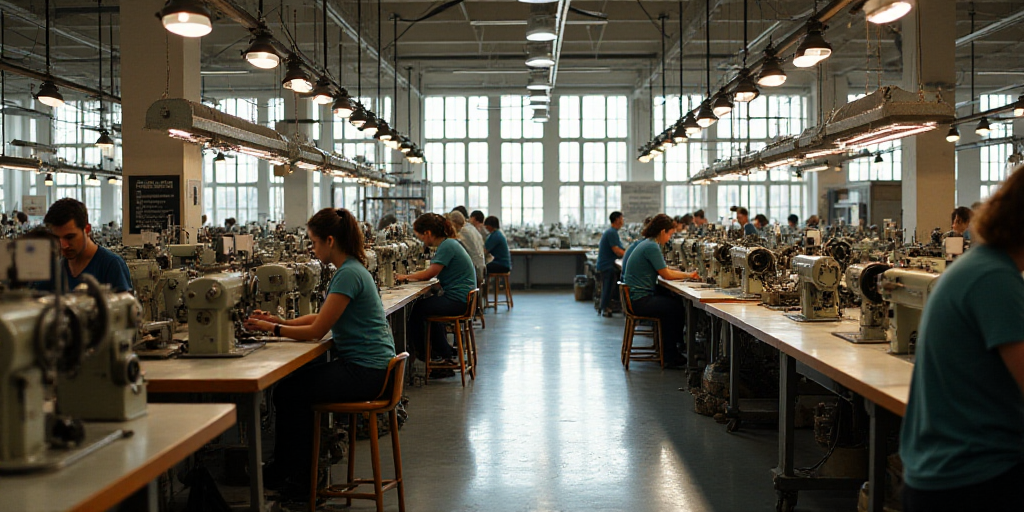
Understanding the Talent Shortage in Industrial Jobs
When discussing talent shortage, one might immediately think of the rapid shift in skill demand due to technological disruption. However, this is not the sole reason; certain industries struggle to fill vacancies due to a more straightforward issue – the jobs are no longer attractive.
Claudia Rodríguez, leader of Career Products at Mercer Mexico, explains, “The operational talent shortage is the most severe because the working conditions that companies are offering do not meet the current needs of an operational professional.”
Operational Roles Among the Hardest to Fill
According to Mercer’s Total Remuneration Survey 2025, operational positions are among the most challenging jobs to attract talent. Arleth Leal, co-founder of the Innovation in Human Resources College (CORH), attributes this phenomenon to generational and changing talent expectations.
“These positions do not offer flexible hours, growth, development, or well-being, making them less attractive. It’s not a lack of people; the market now seeks different conditions,” Leal states.
Operational Jobs Overshadow Digital and Engineering Roles
ManpowerGroup’s latest Talent Shortage Survey indicates that operational and logistics jobs are among the hardest to fill in Mexico, even surpassing digital and engineering roles.
The difficulty in filling vacancies for operational jobs ranges from 62% to 80% among companies in Mexico, according to ManpowerGroup’s data.
Administrative Roles Also Affected
The phenomenon is now reflected in administrative roles, particularly in sales and marketing. While part of the talent shortage is due to changes in work dynamics, such as the rise of online sales requiring new skills, the reality is that these positions are also unattractive due to their conditions.
“Commission structures are no longer as they used to be, with tiered and unlimited limits; now, when you reach a limit, it stops, making the position less appealing,” shares Belén Alonso, General Director of Inteliteam.
Making Operational Jobs More Appealing
Industrial sector companies face a significant challenge: making attractive jobs that have lost their allure.
Rodríguez highlights performance bonuses as a visible change, once predominant in administrative roles. However, there’s still room for improvement in other support measures like remunerated leaves.
Leal suggests companies must think outside the box and abandon the “it can’t be done” mentality, focusing on how to make it possible.
“These roles are crucial because their absence affects the operational chain. If companies don’t adapt to market expectations, they’ll lose competitiveness. It’s essential to review models, adjust shift times for more flexibility, and explore growth opportunities and value propositions,” Leal advises.
Key Questions and Answers
- What is causing the talent shortage in industrial jobs? The primary reason is that companies are offering working conditions that no longer meet the needs and expectations of operational professionals.
- Which job categories are most affected? Operational and logistics roles are among the hardest to fill, even surpassing digital and engineering positions.
- Why are administrative roles also facing this issue? Changes in work dynamics, such as the rise of online sales, demand new skills. Additionally, current job conditions are unattractive to potential candidates.
- How can companies make operational jobs more appealing? Companies should think creatively, focusing on flexibility, growth opportunities, and improved working conditions.




