
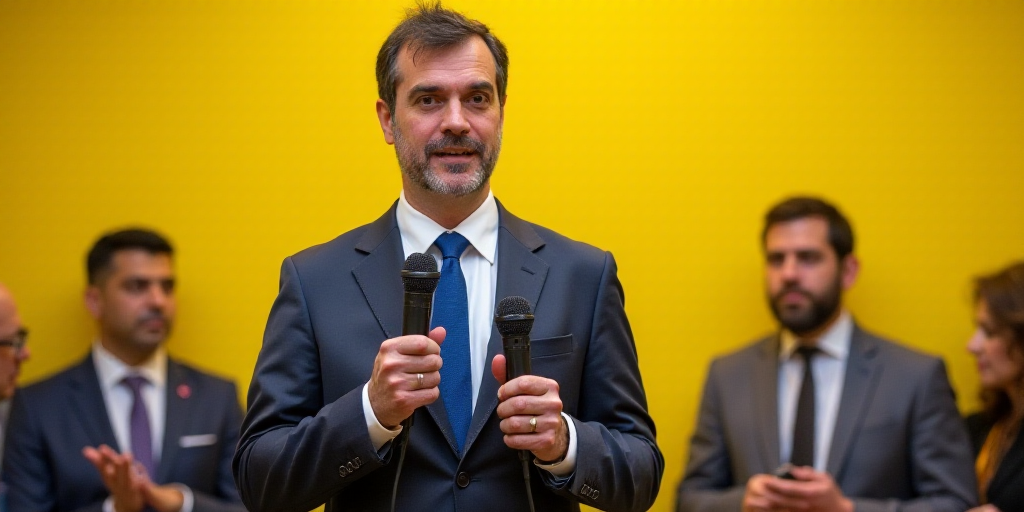
Background on Bolivia’s Hydrocarbons Policy and Corruption Allegations
Bolivia, under the leadership of President Rodrigo Paz, has initiated an investigation into a suspected multi-million dollar fraud in the hydrocarbons sector. This investigation comes after two decades of socialist governments led by the Movement Towards Socialism (MAS), which included former President Evo Morales.
During the MAS administrations, Bolivia implemented a robust policy of fuel subsidies. The country imported gasoline and diesel at international prices but sold them at a loss in the domestic market. This policy resulted in severe dollar reserves shortages, contributing to Bolivia’s worst economic crisis in four decades and fostering cross-border fuel smuggling.
The Corruption Allegations
President Paz’s government accused a “corruption system” of diverting between $800 million and $1 billion annually intended for these imports. Paz stated during the public presentation of the commission in El Alto, “Of the 100% we have purchased in hydrocarbons, 40% of the subsidized portion was stolen, taken, and is now in someone’s accounts.”
Composition and Mandate of the Investigative Commission
The commission, known as a “truth commission,” includes the general prosecutor’s office, the Presidency, Hydrocarbons, and Economy ministries, the transparency vice-ministry, and two deputies. The state oil company YPFB and the National Hydrocarbons Agency will also participate.
The transparency vice-ministry reported having received 140 complaints, which will be analyzed by this new body. Paz mentioned that this is just the first of many commissions to be established for corruption investigations.
Paz’s Stance on Corruption and Justice
“Those who stole from us need to go to jail. This is not about revenge; this is about justice,” Paz declared during the commission’s presentation.
Economic Impact of Fuel Shortages and Corruption
The scarcity of both foreign currency and fuel has driven up the cost of living in Bolivia. In November, annual inflation reached nearly 20%, following a 25% peak in July.
Government’s Financial Report on State Enterprises
Alongside the corruption investigation, Paz’s government released a report on the financial situation of state-owned enterprises. According to the study, between 2006 and 2024, MAS governments provided $7.75 billion in loans from international reserves to these companies. However, only 18% of those funds have been recovered.
Key Questions and Answers
- Who is investigating the alleged fraud in Bolivia’s hydrocarbons sector? President Rodrigo Paz established a “truth commission” comprising various government bodies and two deputies to investigate the suspected multi-million dollar fraud.
- What led to the current economic crisis in Bolivia? The crisis stems from a policy of fuel subsidies implemented during socialist governments, which resulted in severe dollar reserves shortages and fostered cross-border fuel smuggling.
- What is the accusation against the previous MAS governments? The current government accuses the former MAS administrations of a corruption system that diverted $800 million to $1 billion annually intended for hydrocarbons imports.
- Who is part of the investigative commission? The commission includes the general prosecutor’s office, the Presidency, Hydrocarbons, and Economy ministries, the transparency vice-ministry, two deputies, YPFB, and the National Hydrocarbons Agency.
- What is the economic impact of the fuel shortages and corruption? The scarcity of foreign currency and fuel has significantly increased the cost of living in Bolivia, with annual inflation reaching nearly 20% in November.
- What does the government’s financial report reveal about state-owned enterprises? The report indicates that MAS governments provided $7.75 billion in loans from international reserves to state enterprises between 2006 and 2024, but only 18% of those funds have been recovered.




