
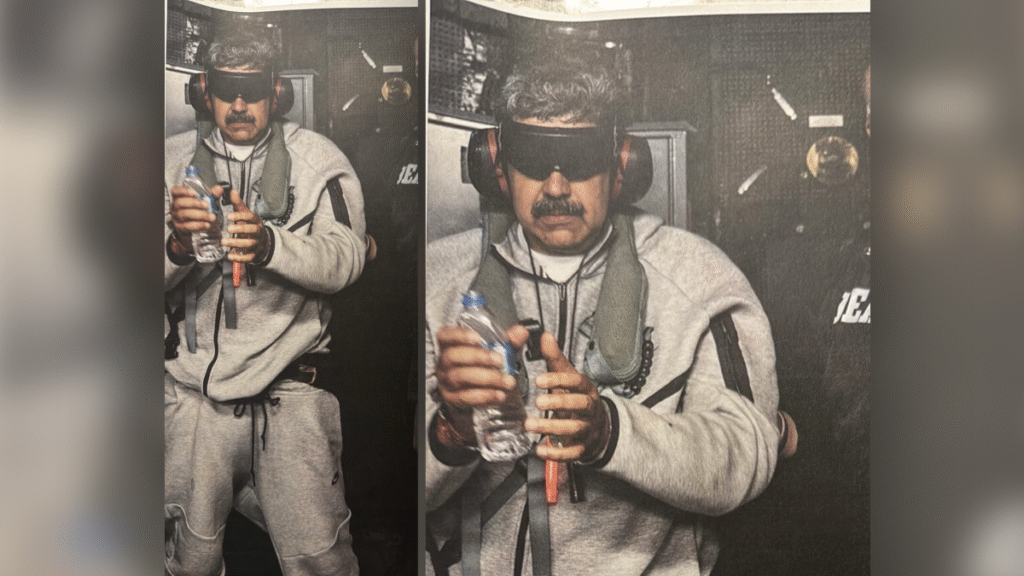
Background on Nicolás Maduro and His Relevance
Nicolás Maduro, the embattled president of Venezolan, has been a central figure in his country’s ongoing political turmoil. His rule has been marked by economic instability, widespread protests, and international condemnation. Maduro’s recent arrest by U.S. forces has sparked a wave of reactions from his supporters and opponents alike, with the chavista movement organizing protests in Caracas.
Chavistas Take to the Streets
On Saturday, hundreds of chavista supporters took to the streets of Caracas, demanding the release of Maduro and his wife Cilia Flores. The protesters, carrying Maduro’s portraits aloft, gathered in the capital amidst a climate of fear and uncertainty. Meanwhile, Maduro’s detractors expressed their discontent through social media platforms, avoiding public demonstrations due to the prevailing tension.
Security Measures and Public Reactions
Black-clad security agents patrolled the city center, where government offices are located. The palace of Miraflores, Maduro’s presidential residence, was under heavy guard. This is where Maduro had recently held rallies against perceived imperialism, dancing to electronic music playing “No war, yes peace.”
Military Attacks and Public Response
Following U.S. military bombardments in the early morning, smoke and the scent of gunpowder filled Caracas’ desolate streets. The initial explosions startled residents, who had never experienced such events in their peaceful country since the 19th century. President Donald Trump declared that Venezuela would be temporarily governed by the U.S. until a peaceful power transition occurred, with Maduro facing trial in New York for narcotrafficking and terrorism.
Chavista Protests and Opposition Silence
Chavista supporters rallied in Caracas, chanting “Long live Nicolás Maduro!” and demanding the release of both Maduro and his wife. Katia Briceño, a 54-year-old university professor, expressed her frustration: “How can a foreign government come and remove our president? It’s absurd!” Pastora Vivas, a 65-year-old militia member, stated to AFP that the possibility of attack was anticipated.
Absence of Opposition Protests
The opposition remained silent, fearing reprisals after spontaneous protests against Maduro’s controversial reelection in 2018 led to the arrest of over 2,000 individuals within two days. Any dissenting comment could result in imprisonment, creating a climate of self-censorship.
Social Media Explosion
Despite the lack of public demonstrations, social media platforms buzzed with expressions of joy, videos, photos, articles, and countless comments. A young Venezuelan residing in Spain shared his emotional reaction upon learning of Maduro’s arrest, posting a video of himself crying tears of happiness.
Economic Impact and Daily Life Disruptions
Most businesses kept their shutters down, but the sight of long lines outside scarce open supermarkets and gas stations highlighted the economic strain on Venezuelans. Nelson Pabón, a 53-year-old man, found himself with an empty refrigerator amidst the chaos, relying on faith to navigate the uncertain times ahead.
Key Questions and Answers
- Q: What is the situation in Venezolan following Maduro’s arrest?
A: Following the U.S.-led military bombardments and Maduro’s subsequent arrest, chavista supporters have taken to the streets of Caracas, demanding his release along with that of his wife Cilia Flores. Meanwhile, Maduro’s detractors express their discontent through social media, avoiding public protests due to fear of reprisals.
- Q: How have daily activities been affected?
A: Most businesses remain closed, and those that are open face long lines of anxious shoppers. The scarcity of goods, coupled with the recent military attacks, has heightened economic tensions and uncertainty among Venezuelans.
- Q: What is the role of social media in this situation?
A: Despite the lack of public protests, social media platforms have become a hub for Venezuelans to express their emotions and reactions regarding Maduro’s arrest. These platforms have also served as a means for disseminating information and fostering solidarity among users.




