
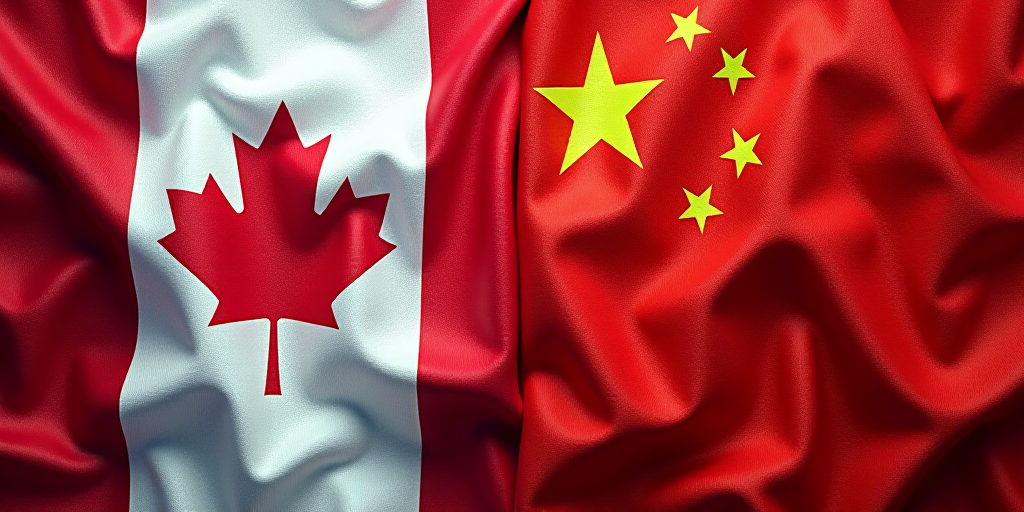
Background on Key Players and Context
The ongoing trade disputes initiated by U.S. President Donald Trump have prompted Canada’s Prime Minister, Mark Carney, to seek new markets in Asia and Europe. In January, Carney signed a historic preliminary trade agreement with China in Beijing, aiming to eliminate trade barriers and reduce tariffs. This move has drawn criticism from Trump, who threatened to impose a 100% tariff on Canadian imports into the U.S. if Canada and China reached a trade agreement.
China’s Response to Trump’s Tariff Threats
In response to Trump’s actions, China’s Ministry of Foreign Affairs spokesperson Guo Jiakun stated that China believes international relations should be based on mutual benefit and cooperation, not a zero-sum game or confrontation. China emphasized that the new strategic alliance with Canada does not target any third party, serves both nations’ common interests, and contributes to global peace, stability, development, and prosperity.
Key Provisions of the Preliminary Trade Agreement
The preliminary agreement between China and Canada includes provisions such as allowing the entry of 49,000 electric vehicles manufactured in China into Canada with preferential tariffs of 6.1%, as per Carney’s description.
Key Questions and Answers
- Who are the key players involved in this trade dispute? The main parties are the United States (represented by President Donald Trump), Canada (led by Prime Minister Mark Carney), and China.
- What is the nature of the trade dispute? The U.S. President Donald Trump initiated a trade war, leading Canada’s Prime Minister Mark Carney to seek new markets in Asia and Europe. This resulted in a preliminary trade agreement between China and Canada, which drew criticism from Trump.
- What tariff threat did Trump make against Canada? Trump threatened to impose a 100% tariff on Canadian imports into the U.S. if Canada and China reached a trade agreement.
- How did China respond to Trump’s tariff threats? China, through its Ministry of Foreign Affairs spokesperson Guo Jiakun, stated that international relations should be based on mutual benefit and cooperation rather than confrontation. China emphasized that its new strategic alliance with Canada does not target any third party.
- What are the key provisions of the preliminary trade agreement between China and Canada? The agreement includes allowing 49,000 electric vehicles manufactured in China to enter Canada with preferential tariffs of 6.1%.




