
Background on Hurricane Melissa and its Impact
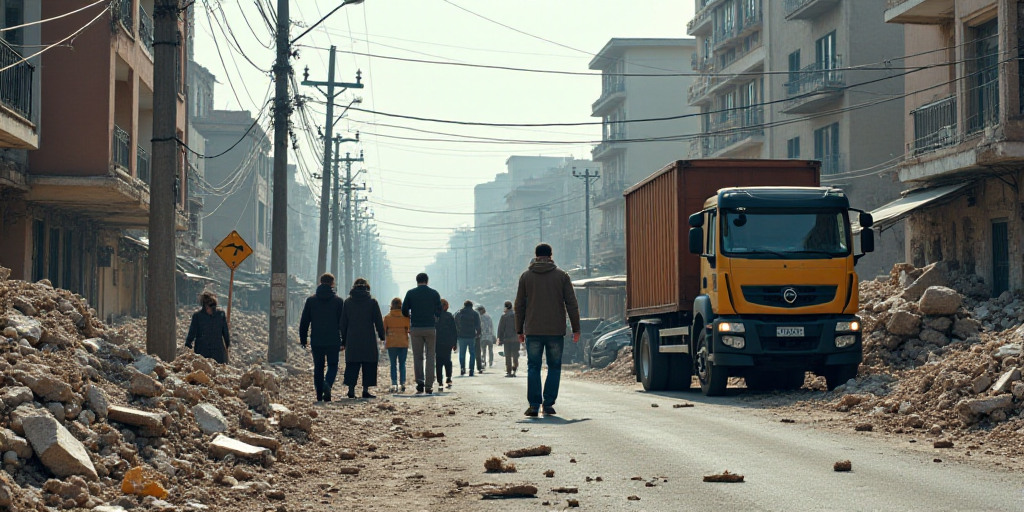
Hurricane Melissa, which caused approximately 60 deaths in the Caribbean, devastated entire regions of Jamaica and flooded Haiti and Cuba during its multi-day journey through the area. The hurricane, described as the most powerful to make landfall in 90 years, struck Jamaica as a Category 5 storm on the Saffir-Simpson scale, with winds reaching up to 300 km/h.
According to a report from Jamaica’s Prime Minister Andrew Holness, Melissa resulted in at least 28 fatalities on the island.
Economic Consequences and UN Response
Nahuel Arenas, head of the United Nations Office for Disaster Risk Reduction for the Americas and the Caribbean based in Panamá, warned that the millions of dollars in losses caused by Hurricane Melissa will serve as a “yoke” affecting Jamaica’s economy for several years.
“It is estimated that Melissa could result in economic losses equivalent to Jamaica’s annual Gross Domestic Product (GDP),” Arenas stated.
UN Secretary-General António Guterres called for “massive resource mobilization to address the losses and damages caused by the hurricane,” according to his spokesperson.
The World Bank reports that Jamaica’s GDP in 2024 was nearly $20 billion for a population of 2.8 million, highlighting the significant economic impact Melissa has had on the island nation.
“These are losses that will weigh heavily on the Jamaican economy for years to come,” Arenas said in an interview with Panamanian television network TVN.
Climate Change and Vulnerability
Arenas emphasized that due to climate change, a storm can escalate into a Category 5 hurricane within 24 to 48 hours.
Since the year 2000, there have been about 90 extreme weather events annually in Latin America and the Caribbean, according to Arenas.
“The significant disparities we have in Latin America, the issue of poverty, and unplanned urbanization often leave us vulnerable to natural disasters,” Arenas explained.
“While we have collectively worked towards reducing deaths from disasters, the number of people affected and the economic losses caused by extreme weather events remain substantial,” he added.
Key Questions and Answers
- What is Hurricane Melissa and its impact? Hurricane Melissa, one of the strongest to hit the Caribbean in 90 years, caused around 60 deaths and devastated Jamaica, Haiti, and Cuba. It resulted in millions of dollars in losses equivalent to Jamaica’s annual GDP.
- How will the economic losses affect Jamaica? The severe economic consequences of Hurricane Melissa will burden Jamaica’s economy for years, as stated by Nahuel Arenas from the UN Office for Disaster Risk Reduction.
- What is the UN’s response to the disaster? UN Secretary-General António Guterres called for massive resource mobilization to address the losses and damages caused by Hurricane Melissa. The UN Office for Disaster Risk Reduction emphasized the vulnerability of Latin America and the Caribbean to extreme weather events due to climate change.
- How does climate change contribute to the situation? Climate change can cause storms to rapidly intensify into Category 5 hurricanes within 24 to 48 hours, increasing the risk and severity of natural disasters in Latin America and the Caribbean.




