
Background and Context
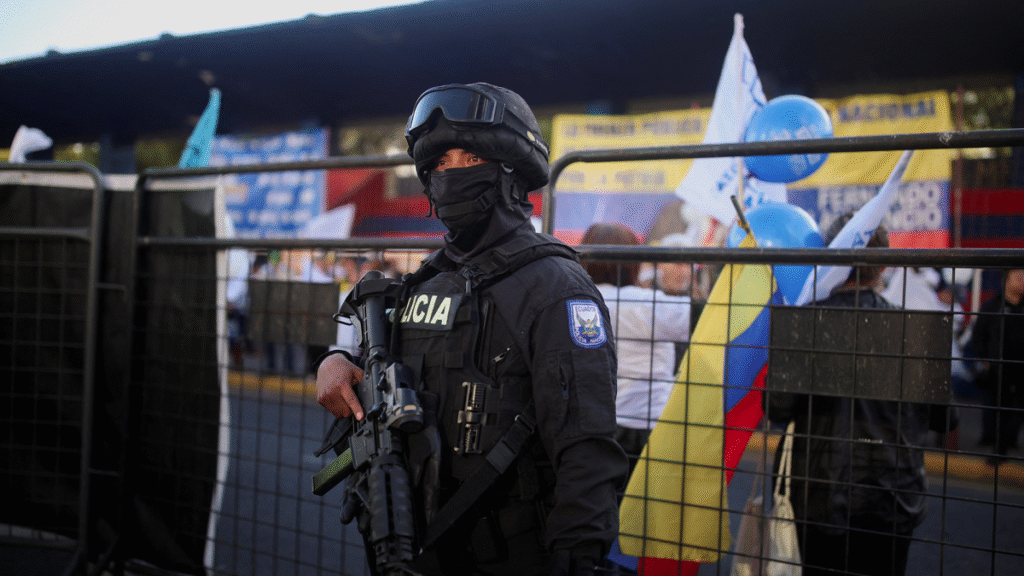
Ecuador, once one of the safest countries in Latin America, has transformed into a hub for drug trafficking due to its Pacific location over the past five years. This shift has triggered an unprecedented security crisis, severely impacting the already fragile economy. The country now faces a critical decision regarding foreign military bases and constitutional reform.
The Referendum: Foreign Military Bases and Constitutional Assembly
On Sunday, Ecuadorian citizens will head to the polls to decide on two significant issues. First, they will vote on whether to allow foreign military bases in the country, a proposal supported by President Daniel Noboa. He believes these bases are essential to combat organized crime. Second, voters will determine their support for a constitutional assembly to reform the current Constitution, drafted during Rafael Correa’s left-wing government.
President Daniel Noboa and His Stance
Daniel Noboa, considered an “excellent partner” by the United States in efforts to curb illegal immigration and drug trafficking, argues that the existing Constitution must be revised to reflect Ecuador’s new reality and expand international cooperation in crime-fighting.
US Involvement and Military Operations
The United States has conducted attacks against over a dozen suspected drug-smuggling vessels in the Caribbean and Pacific, resulting in more than 70 deaths. Noboa has signed two military operation agreements with the US in 2024, enabling drug and weapon seizures at sea. Both countries also have an ongoing agreement for air intercept operations.
Historical Context: Manta Base and Correa’s Decision
The port city of Manta hosted US soldiers in a base for a decade until 2009. Rafael Correa refused to renew their presence and constitutionally banned foreign military bases in the Andean country. US Secretary of Homeland Security, Kristi Noem, recently visited these military installations alongside Noboa.
Security Impact and Concerns
Following the closure of the Manta base, drug seizures dropped by 70% in the subsequent year, according to Interior Minister John Reimberg. This decline was attributed to the suspension of joint interdiction operations. However, some argue that the potential return of foreign military bases is more about geopolitics than internal security.
Luis Córdova’s Perspective
“The idea that foreign bases will solve Ecuador’s violence is far from reality,” stated Luis Córdova, principal researcher at the Ecuadorian Conflict Observatory. “Ecuador lacks public management to address its security issues, not international cooperation.”
Voter Concerns and Sovereignty
Some voters are concerned about national sovereignty if foreign bases are permitted. Jerónimo Ludeña, a 55-year-old lawyer from Guayaquil—Ecuador’s most dangerous city—expressed his apprehension: “We will not allow Ecuador to become a battleground for the ambitious goals of the United States. We must not compromise our sovereignty.”
Current Security Situation
Between January and September, Ecuador seized 146 tons of drugs compared to 208 tons during the same period in 2024. Violent deaths increased by over 36% year-over-year in the first nine months of 2025, according to Interior Ministry data.
Key Questions and Answers
- What is the referendum about? Ecuadorians will vote on allowing foreign military bases and supporting a constitutional assembly for reform.
- Why does President Daniel Noboa support foreign military bases? He believes they are crucial to combat organized crime and that the current Constitution needs revision to reflect Ecuador’s new reality.
- What concerns do some voters have regarding foreign military bases? They worry about compromising national sovereignty and turning Ecuador into a battleground for US interests.
- How has Ecuador’s security situation evolved? Drug seizures have dropped since the closure of the Manta base, but violent deaths have increased. The country continues to grapple with a growing security crisis.




