
Background on Key Figures and Context
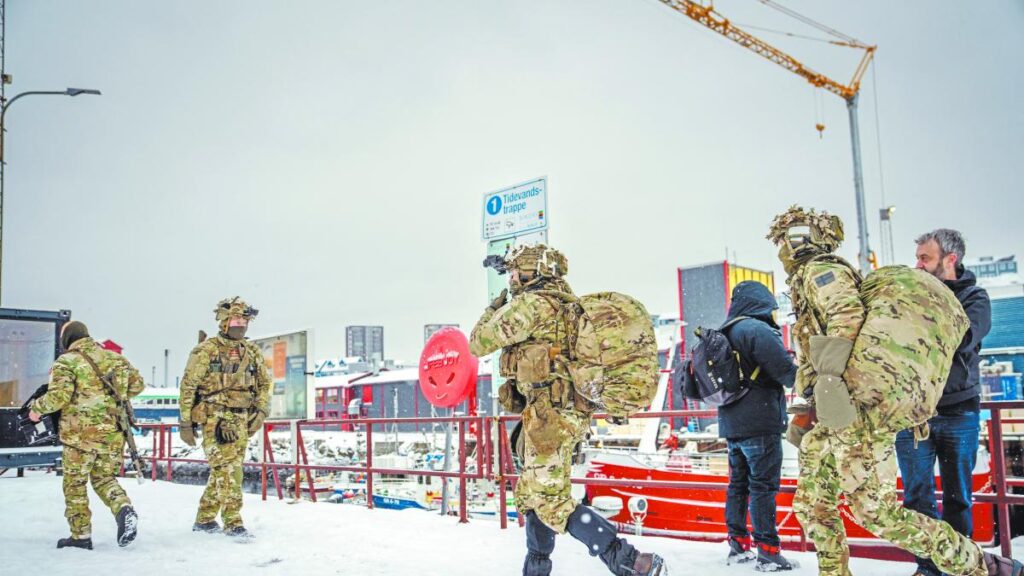
The recent deployment of military forces from eight countries, including France, Germany, and Denmark, to Groenlandia, an autonomous Danish territory, has sparked a response from the European Union (EU) against tariff threats by U.S. President Donald Trump.
Key figures involved include:
- António Costa: President of the European Council, who announced an extraordinary EU summit “in the coming days” following an emergency meeting of ambassadors from the bloc’s countries.
- Ursula von der Leyen: President of the European Commission, who emphasized the EU’s commitment to defending Groenlandia’s soberancy and Denmark’s.
- Emmanuel Macron: President of France, who intended to request the activation of the EU’s powerful anti-coercion instrument in case of new U.S. tariffs.
- Keir Starmer: British Prime Minister, who spoke with von der Leyen regarding the situation.
- Giorgia Meloni: Italian Prime Minister, who described Trump’s tariff threat as a “mistake” and spoke with the U.S. President beforehand.
EU’s Response and Diplomatic Efforts
The EU demonstrated unity in response to Trump’s tariff threats, with the president of the European Council, António Costa, announcing an extraordinary EU summit. The European Commission was tasked with examining potential responses, as members showed their readiness to make it clear to the U.S. that using trade measures as a form of pressure is unacceptable.
Possible EU responses include:
- Activating the EU’s “economic nuclear weapon” to limit imports or access to certain public markets and block specific investments from the U.S.
- Reactivating retaliatory measures worth €93 billion on U.S. products, previously considered but suspended after a 2025 trade agreement between Washington and Brussels.
The eight countries that deployed troops—Denmark, Finland, France, Germany, the Netherlands, Norway, Sweden, and the United Kingdom—issued a joint statement emphasizing their commitment to defending sovereignty and remaining united in their response.
Trump’s Stance on Groenlandia
Trump insists on taking control of Groenlandia for security reasons, claiming that if he doesn’t, Russia or China will. In response to tensions between Washington and Copenhagen, the aforementioned countries sent troops to Groenlandia for a training mission.
Tariffs Set for February 1
Frustrated by the military deployment, Trump threatened to impose new tariffs on these countries until “a full and complete purchase agreement for Groenlandia” is reached.
The 10% tariffs would take effect on February 1 and could rise to 25% on June 1.
Diplomatic Danish Efforts
Danish Foreign Minister Lars Lokke Rasmussen, during a visit to Norway’s capital, emphasized Denmark’s focus on diplomacy. Meanwhile, Danish Prime Minister Mette Frederiksen expressed hope for consistent messages from the rest of Europe, stating that “Europe will not be blackmailed.”
Impact on Global Markets and Further Developments
Trump’s tariff threat unsettled global markets, causing declines in the euro and British pound against the dollar. Italian Prime Minister Giorgia Meloni, more aligned with Trump than other EU leaders, called the tariff threat a “mistake.”
Key Questions and Answers
- What is the main issue? The dispute centers around Trump’s insistence on acquiring Groenlandia, prompting the deployment of military forces from eight countries and subsequent tariff threats from the U.S.
- Who are the key figures involved? António Costa, Ursula von der Leyen, Emmanuel Macron, Keir Starmer, and Giorgia Meloni are central figures in this situation.
- What are the possible EU responses? The EU could activate its “economic nuclear weapon,” limit U.S. imports, or reactivate retaliatory tariffs worth €93 billion on U.S. products.
- How have global markets reacted? Trump’s tariff threat has caused declines in the euro and British pound against the dollar, reflecting uncertainty in global markets.




