
Background and Relevance of the Event
The Conference of the Parties (COP) is a series of international meetings focused on climate change, organized under the United Nations Framework Convention on Climate Change (UNFCCC). COP30, held in Belém, Brazil, is a significant event as it aims to bring together nations to discuss and negotiate strategies for combating climate change. With approximately 43,000 participants, the event features representatives from various countries, NGOs, and indigenous communities.
Indigenous Protesters’ Demands
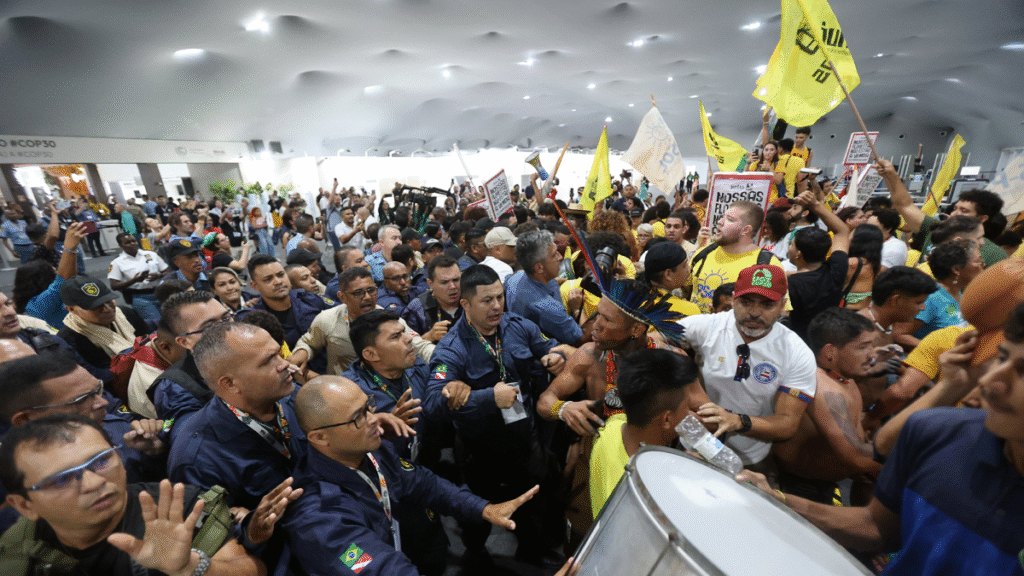
On this particular day, a group of indigenous protesters sought to present their claims inside the COP30 venue. However, they were denied entry by security personnel, resulting in a confrontation.
The Incident
- Indigenous protesters marched through the city of Belém, advocating for climate action and health concerns.
- As night fell, some protesters gathered outside the COP30 center and began dancing.
- Security personnel attempted to prevent their entry into the venue, pushing them out and setting up barriers.
- Despite the resistance from some protesters, security forces maintained control.
UN Response and Investigation
A UN spokesperson confirmed that “a group of protesters breached the main entrance security, causing minor injuries to two security personnel and minor damages to the venue.” The UN and Brazilian authorities took protective measures to ensure safety.
An investigation has been launched into the incident, as per the UN’s statement.
Indigenous Protesters’ Message
Maria Clara, a protester from the Rede Sustentabilidade de Bahia association, explained that their demonstration aimed to highlight the plight of indigenous peoples. “These voices are being ignored,” she emphasized.
The protesters intended to convey that while COP30 may conclude, the destruction of indigenous lands and cultures would continue.
Organizers’ Stance
The organizing body, 350.org, distanced itself from the post-march incidents, stating that such actions were not part of their event planning.
Brazil’s Commitment to Indigenous Participation
Sonia Guajajara, Brazil’s Minister of Indigenous Affairs, expressed her country’s intention to make COP30 the most inclusive event for indigenous participation, as reported by AFP in a previous interview.
Key Questions and Answers
- What was the purpose of the indigenous protesters at COP30? Their main objective was to bring attention to the ongoing destruction of indigenous lands and cultures, despite international climate change negotiations.
- What actions did security personnel take during the protest? Security forces attempted to prevent protesters from entering the COP30 venue, pushing them out and setting up barriers.
- What was the UN’s response to the incident? A UN spokesperson acknowledged minor injuries to security personnel and damages to the venue. An investigation has been initiated.
- How did the organizers of COP30 react to the protesters’ actions? The international organization 350.org distanced itself from the post-march incidents, stating that such actions were not part of their event planning.
- What is Brazil’s commitment regarding indigenous participation in COP30? According to Sonia Guajajara, Brazil’s Minister of Indigenous Affairs, the country aims to make COP30 the most inclusive event for indigenous participation.




