Israel’s Recognition of Somaliland: An Overview
Israel’s surprising recognition of the separatist region of Somaliland provides the State of Israel with unprecedented access to the Red Sea and a platform for potential attacks against Iran-backed Houthi rebels in Yemen, according to experts.
This move could bolster Israel militarily against what is referred to as Iran’s “axis of resistance” in the Middle East, but it also transforms the Horn of Africa into a new battleground, as per experts.
Somaliland’s Geostrategic Significance
Somaliland, which declared independence from Somalia in 1991, holds high geostrategic importance. It offers direct access to the Gulf of Aden and the Strait of Bab el-Mandeb, one of the world’s busiest commercial shipping routes connecting the Indian Ocean to the Red Sea and the Suez Canal.
Moreover, it is located close to the Iran-backed Houthi rebels in Yemen, who have repeatedly targeted Israel since the start of the Gaza war triggered by Hamas’s attack on October 7, 2023.
Historical Context and Western Interest
Somaliland’s strategic location has long attracted Western interest. Once under Ottoman influence, it became a British protectorate in the late 19th century until joining the Republic of Somalia in 1960. The US also considered establishing a military base there in the 1980s.
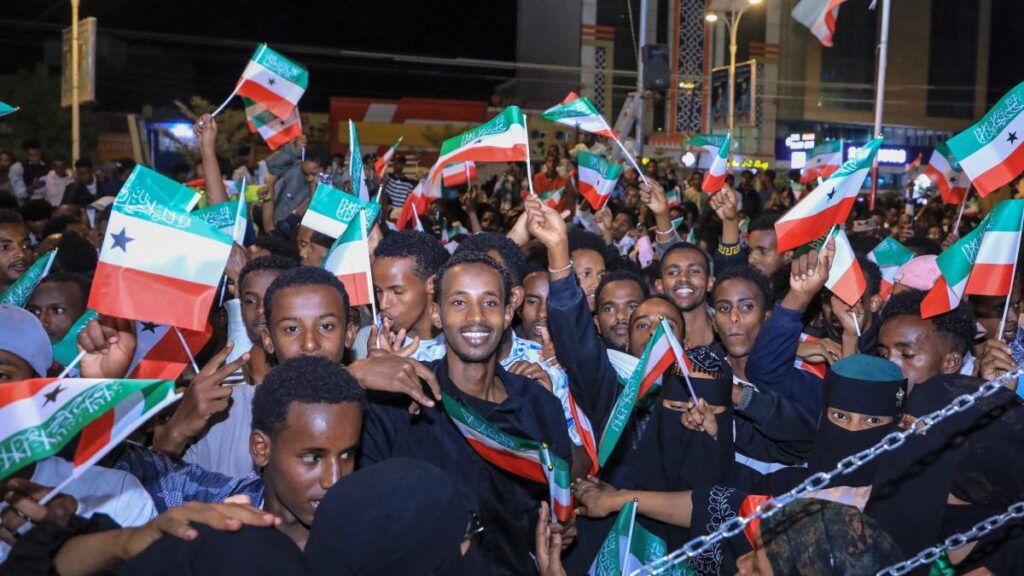
In 1991, Somaliland unilaterally declared independence from the rest of Somalia. Over two years after Hamas’s October 7, 2023 attack, Israel aims to build “counter-balances” against Iran along the coast of pro-Western, politically stable Somaliland.
“Contralianzas” Against Iran
Given its strategic position, Somaliland has been of interest to the West for a long time. Its alliances with regional countries are not new. The UAE operates a military base in Somaliland’s Berbera port under an agreement dating back to 2017. Some sources suggest Abu Dhabi, an ally of Israel, might facilitate Israel’s access to the facility.
Last year, Somaliland also initiated negotiations with landlocked Ethiopia, an ally of Israel, to build a port on its coast. The recognition of this republic aligns well with Israel’s alliances, according to Colin Clarke from the Soufan Center in New York.
Rivalry with Turkey
Israel’s new alliance further intensifies its growing rivalry with Turkey, which has been competing to expand influence over Syria. Ankara aims to deploy troops in the Gaza Strip as part of an international stabilization force led by the US. Israel has firmly rejected this possibility, emphasizing Turkey’s links with the Islamist Hamas group.
Turkey has maintained a presence in the Horn of Africa and views Somalia almost as a “satellite state,” according to Asher Lubotzky from the Herzliya Institute for Israel-African Relations.
Turkish President Recep Tayyip Erdogan criticized the diplomatic recognition on Tuesday, calling it “illegitimate and unacceptable.”
Key Questions and Answers
- What is Somaliland? Somaliland is a self-declared state that declared independence from Somalia in 1991. It is not internationally recognized as a sovereign state.
- Why is Somaliland strategically important for Israel? Somaliland offers direct access to the Red Sea and the Gulf of Aden, a crucial shipping route connecting the Indian Ocean to the Red Sea and the Suez Canal. It also provides a potential base for Israel to monitor and potentially attack Iran-backed Houthi rebels in Yemen.
- What are the implications of Israel’s recognition of Somaliland? This move could bolster Israel militarily against Iran’s “axis of resistance” in the Middle East but also transforms the Horn of Africa into a new battleground. It intensifies Israel’s rivalry with Turkey, which has a significant presence in the region.