
Overview and Causes
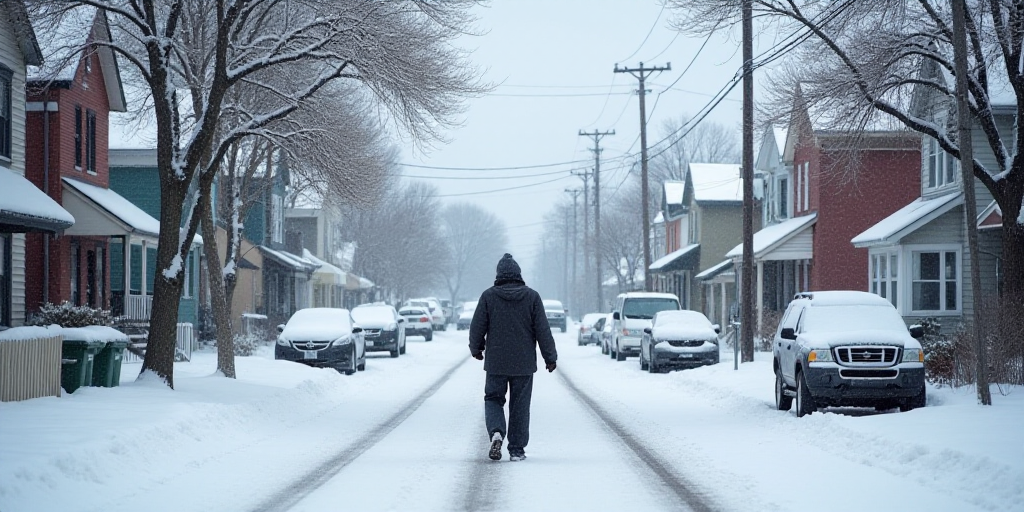
A massive winter storm is pummeling the United States with snow and freezing rain, affecting tens of millions of people across multiple states. The National Weather Service (NWS) described the storm as “unusually widespread and long-lasting,” fueled by an Arctic air mass originating from Canada.
Impact and Preparations
The storm has already caused significant disruptions, with the NWS predicting substantial snowfall and potentially “catastrophic” ice accumulations due to freezing rain. Transportation Secretary Sean Duffy warned that approximately 240 million Americans could be impacted, prompting emergency declarations in at least 16 states and Washington D.C.
- As of Saturday, around 4,000 flights were canceled in the U.S., with FlightAware reporting nearly 9,000 cancellations for Sunday.
- Texas experienced freezing rain, dropping temperatures to -6°C in Dallas. Houston’s mayor urged residents to stay indoors for the next 72 hours.
- Nearly 130,000 households in the U.S. were without power by Saturday afternoon, according to poweroutage.us, with over 50,000 outages in Texas and neighboring Louisiana.
- Oklahoma and Arkansas also saw snow accumulation, with up to 15 centimeters reported in some areas.
Long-lasting Consequences
The storm is expected to hit the densely populated Mid-Atlantic and Northeastern regions, bringing freezing conditions that could last well into the following week. The NWS warned of prolonged power outages, extensive tree damage, and extremely hazardous travel conditions.
Federal Response and Historical Context
The federal government announced that offices will be closed on Monday as a preventative measure. President Donald Trump urged Americans to stay safe and warm through his Truth Social platform.
These extreme winter conditions have become more frequent in the past 20 years, potentially linked to the rapid Arctic warming that weakens the polar vortex’s isolating effect on North American atmospheres. However, scientists require more data to establish a definitive connection between these extreme winter storms and climate change.
State-level Precautions
New York Governor Kathy Hochul advised residents to avoid outdoor activities due to dangerously low temperatures. She emphasized the importance of taking precautions, such as protecting pipes, using heaters cautiously, and checking on vulnerable neighbors.
Authorities warned that the anticipated sub-zero temperatures could last up to a week, particularly in the Great Plains and northern central regions, with sensational thermal minimums below -45°C.
Key Questions and Answers
- Q: How widespread is the impact of this winter storm?
- Q: What types of disruptions can be expected from this storm?
- Q: How long will the effects of this storm last?
- Q: How is the federal government responding to this emergency?
- Q: What is the potential link between this winter storm and climate change?
A: The storm is affecting approximately 240 million Americans, with emergency declarations issued in at least 16 states and Washington D.C.
A: The storm has already caused significant disruptions, including flight cancellations, power outages, hazardous travel conditions, and freezing temperatures.
A: The long-lasting consequences of the storm include prolonged power outages, extensive tree damage, and hazardous travel conditions expected to persist well into the following week.
A: The federal government has announced that offices will be closed on Monday as a preventative measure, and President Donald Trump urged Americans to stay safe and warm.
A: Scientists are investigating a possible connection between the increased frequency of these extreme winter storms and rapid Arctic warming, but more data is needed to establish a definitive link.




