
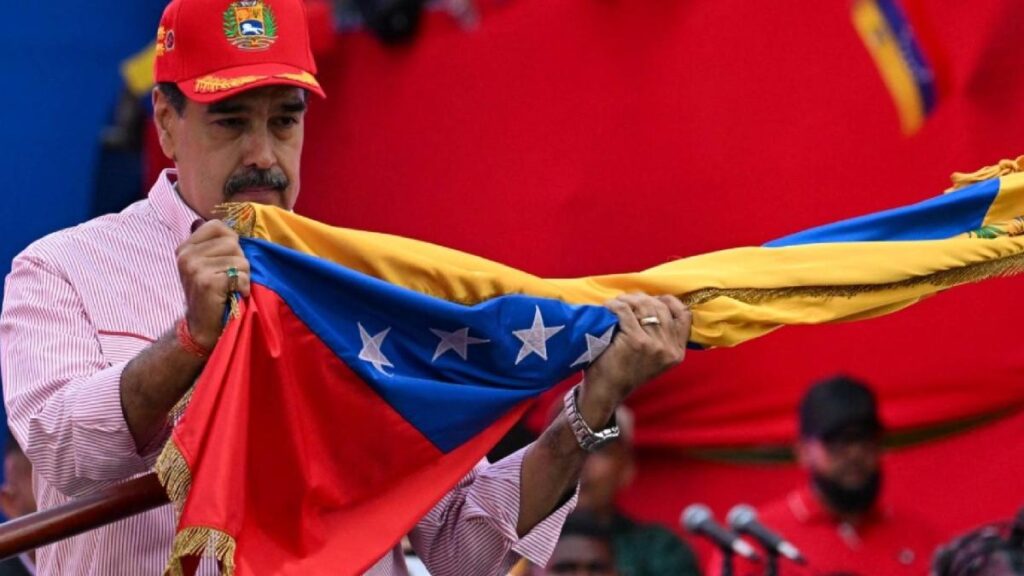
Background and Rise to Power
Nicolás Maduro, born into a working-class family on November 23, 1962, is the son of a labor union leader. He worked as a bus driver during Hugo Chávez’s failed 1992 coup attempt. Maduro campaigned for Chávez’s release and became a fervent supporter of his leftist agenda.
After Chávez’s election in 1998, Maduro secured a seat in the legislature and spent years defending his mentor’s revolution against U.S. intervention in Latin America while staunchly advocating for Chávez’s harsh policies. Critics dismissed Maduro as a mere echo of Chávez, incapable of maintaining power for long.
Despite the skepticism, Maduro’s rapid ascent continued until he became president of the National Assembly and later Minister of Foreign Affairs. In this role, he traveled globally to build alliances with developing nations through oil-funded assistance programs.
Throughout his career, Maduro was often accompanied by his wife, Cilia Flores, who held numerous high-ranking positions, including attorney general and head of the parliament. Flores was regarded as an influential figure, often wielding as much power as her husband. The government refers to her as the “first lady” and the “first fighter.”
Maduro’s Controversial Presidency
Maduro was elected president narrowly following Chávez’s death from cancer in 2013. His popularity, however, was overshadowed by Chávez’s legendary charisma.
Venezuela soon faced long lines for basic goods and shortages, reminiscent of the Soviet collapse, largely due to Maduro’s reluctance to dismantle Chávez-era subsidies that became unsustainable after the oil boom ended.
When inflation soared in 2013, Maduro sent troops to occupy stores selling appliances, forcing them to sell at fire-sale prices. This move bolstered his popularity ahead of a national election for mayors.
In 2018, militants attempted to assassinate Maduro by sending explosive-laden drones over a rally in Caracas. This incident led Maduro to limit public appearances and live-streamed events.
Human Rights Abuses
A UN investigative mission recently discovered that Venezuela’s Bolivarian National Guard had committed serious human rights violations and crimes against humanity for over a decade by attacking political opponents.
Maduro long denied abusing political and human rights, instead portraying his government as resisting a decades-long imperialist campaign to overthrow the Chávez socialist movement and seize Venezuela’s oil.
His government consistently rejected U.S. and other countries’ sanctions, calling them illegitimate measures akin to an “economic war” designed to cripple the nation.
Ongoing Controversies and International Pressure
Maduro faced mounting international pressure, particularly from the U.S., as President Trump authorized CIA operations in Venezuela in October. Maduro harshly criticized these “demoniac” powers allegedly aiming to seize Venezuela’s oil.
He consistently denied accusations of drug trafficking and corruption. In August, the U.S. doubled its reward for Maduro’s arrest to $50 million amid drug trafficking and criminal group ties allegations.
Trump escalated pressure with increased U.S. military presence in the southern Caribbean, attacks on drug-trafficking vessels, and seizure of two oil tankers.
Economic Collapse and Social Impact
Maduro’s successive terms were marked by prolonged economic collapse, leading to the exodus of 7.7 million migrants.
In 2024, nearly 82% of Venezuelans lived in poverty, with 53% in extreme poverty, unable to afford even basic food items, according to a UN special rapporteur’s report after visiting the country.
Key Questions and Answers
- Who is Nicolás Maduro? Nicolás Maduro, born in 1962, is a Venezuelan politician who served as president for over 12 years, succeeding the late Hugo Chávez.
- What were the main criticisms against Maduro? Critics accused Maduro of being a dictator who jailed or persecuted political opponents and orchestrated rigged elections.
- What international pressure did Maduro face? The U.S., under President Trump, increased military presence in the southern Caribbean, attacked drug-trafficking vessels, and seized oil tankers while offering a $50 million reward for Maduro’s arrest.
- What were the human rights abuses under Maduro’s rule? A UN mission found that Venezuela’s Bolivarian National Guard committed severe human rights violations and crimes against humanity by attacking political opponents for over a decade.
- How did Maduro’s presidency impact Venezuela’s economy and society? Maduro’s policies led to prolonged economic collapse, causing mass poverty and migration. By 2024, nearly 82% of Venezuelans lived in poverty, with extreme poverty affecting 53% of the population.




