
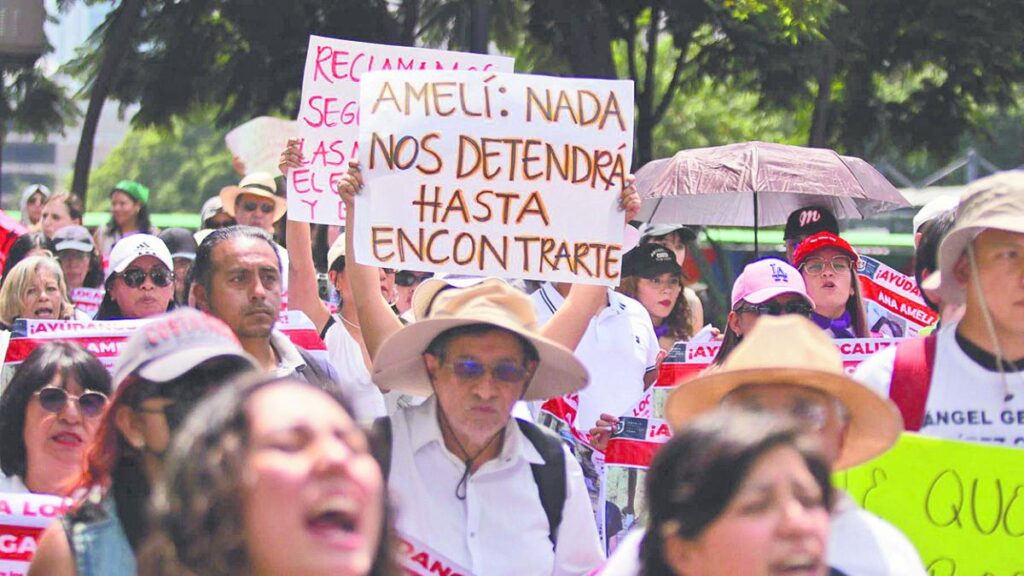
Background on the Problem
The International Committee of the Red Cross (CICR) has highlighted that enforced disappearances remain a “persistent” problem in Mexico and Central America, leaving families of victims in a state of vulnerability. This issue was discussed at a recent conference on the topic in Guatemala.
Causes and Impact
According to Jeremy Renaux, the regional coordinator for the CICR’s missing persons program in Mexico and Central America, thousands of people disappear annually due to political persecution, dangerous migratory routes to Mexico and the United States, human trafficking, and criminal organizations. These factors complicate search processes for families seeking answers.
- Families often fear retaliation or further victimization when reporting cases to authorities, leading many to remain silent.
- Lack of official data exacerbates the situation, making it difficult to address and resolve cases of enforced disappearances.
Personal Stories
The three-day conference in Santiago Sacatepéquez, Guatemala, brought together families of the missing from El Salvador, Honduras, Mexico, and Guatemala. Their stories underscore the devastating impact of enforced disappearances.
- Emma Mora, a Mexican woman, recounted the heartbreaking disappearance of her 14-year-old son José Alberto in Acapulco in 2011, possibly a victim of drug trafficking violence.
- Maritxa Menjívar, a Salvadoran woman, continues to hope for the safe return of her husband Antonio Abrego, who disappeared in August 2020 after entering the United States illegally.
Statistics and Legal Framework
Renaux reported that Mexico has documented 133,624 enforced disappearances since the 1950s. In Central America, data fragmentation poses additional challenges.
- El Salvador, Guatemala, and Honduras lack a comprehensive law on enforced disappearances that recognizes the rights of both the missing person and their families.
- The absence of clear obligations for authorities in these countries further complicates efforts to address this issue.
Key Questions and Answers
- What is the issue? Enforced disappearances remain a persistent problem in Mexico and Central America, with thousands of people vanishing annually due to various factors such as political persecution, dangerous migratory routes, human trafficking, and criminal organizations.
- Who is affected? Families of the missing individuals are left in a state of vulnerability, often fearing retaliation or further victimization when reporting cases to authorities.
- How many people are affected? Mexico has documented 133,624 enforced disappearances since the 1950s.
- What legal framework is in place? El Salvador, Guatemala, and Honduras lack comprehensive laws on enforced disappearances that recognize the rights of both missing persons and their families.




