
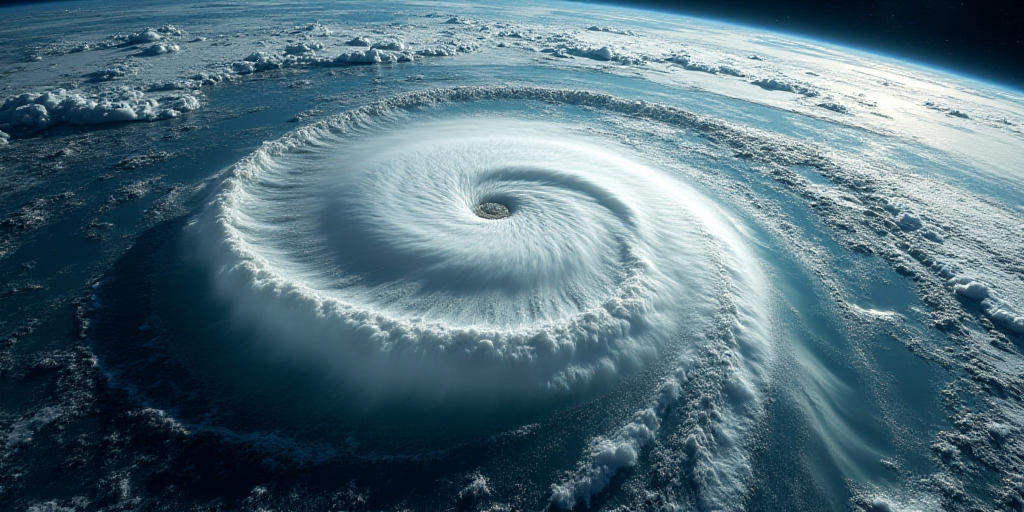
Introduction to Hurricane Melissa
Hurricane Melissa, a Category 5 storm—the highest rating on the Saffir-Simpson Hurricane Wind Scale—made landfall in Jamaica on Tuesday, bringing ferocious winds and torrential rains. This powerful storm is now considered the most intense to ever hit the Caribbean island.
Hurricane Melissa’s Impact
With maximum sustained winds of 295 km/h, Hurricane Melissa struck the southwestern part of Jamaica near the town of New Hope, according to the U.S. National Hurricane Center (NHC).
“This is an extremely dangerous situation that puts lives at risk,” stated the NHC.
Jamaica has been experiencing hours of heavy rain and extreme winds caused by Melissa, one of the strongest Atlantic hurricanes ever recorded. Although it has slightly increased its pace, the storm’s slow movement is expected to heighten the risk of catastrophic flooding and landslides across the island.
Melissa’s intensity surpasses that of some of the most destructive hurricanes in recent years, such as Katrina, which devastated New Orleans in 2005.
Seven deaths have already been attributed to the deteriorating weather conditions caused by Melissa, with three fatalities in Jamaica, three in Haiti, and one in the Dominican Republic.
Preparations and Warnings
Prior to landfall, authorities expressed concern as many residents refused to comply with evacuation orders. On Monday night, Minister of Local Government Desmond McKenzie reported that nearly 880 shelters across the island remained vacant.
“Jamaica, this is not the time to be brave,” McKenzie said on Tuesday. “There’s still a small window of opportunity… let’s see if we can make the most of it.”
Famous Jamaican Olympic sprinter Usain Bolt urged his fellow countrymen to stay safe via Twitter, writing, “Stay safe, Jamaica.”
Testimonies from Affected Residents
Ishack Wilmot, who sought refuge with his family in Kingston, told AFP that they were safe so far but had lost electricity and water during the night. “The winds are strong and gusty,” he said. “Even though we’re away from the eye, it’s still very intense and noisy.”
Hurricane Melissa’s Path and Impact on Other Nations
Melissa is expected to reach eastern Cuba by late Tuesday after hitting Jamaica. The National Defense Council declared the “alarm phase” in six eastern provinces (Santiago de Cuba, Guantánamo, Holguín, Camagüey, Granma, and Las Tunas).
Authorities began evacuating approximately 650,000 people in these provinces, where residents stocked up on supplies and secured their rooftops with ropes. Schools and non-essential work activities were suspended.
In Jamaica, the Red Cross distributed potable water and hygiene kits in anticipation of service disruptions. The organization’s spokesperson, Esther Pinnock, noted that Melissa’s slow pace increased anxiety.
“One would expect it to pass in four hours, but Melissa doesn’t seem to be moving that quickly,” Pinnock told AFP.
Up to a meter of rainfall was forecast, along with sudden flooding and landslides in Haiti, the Dominican Republic, and Cuba.
Climate Change and Hurricane Intensity
Scientists assert that human-induced climate change has intensified large storms, increasing their frequency and severity. Meteorologist Kerry Emanuel explained that global warming causes more storms to rapidly intensify, like Melissa, raising the risk of extreme rainfall.
“Water kills far more people than wind,” Emanuel told AFP.
Climate scientist Daniel Gilford emphasized that human-induced climate change has exacerbated the most severe aspects of Hurricane Melissa.
Key Questions and Answers
- What is a Category 5 hurricane? A Category 5 hurricane is the most intense classification on the Saffir-Simpson Hurricane Wind Scale, with sustained winds of at least 157 mph (252 km/h).
- Why is Hurricane Melissa considered so dangerous? Due to its high category rating, Melissa brings extremely strong winds and torrential rains, increasing the risk of catastrophic flooding, landslides, and storm surges.
- How does climate change affect hurricanes? Human-induced climate change intensifies storms, causing them to rapidly increase in strength and frequency, raising the risk of extreme weather events like Hurricane Melissa.
- What precautions should people take during a hurricane? Follow evacuation orders, secure your home, stock up on supplies, and stay informed through reliable weather sources.




