
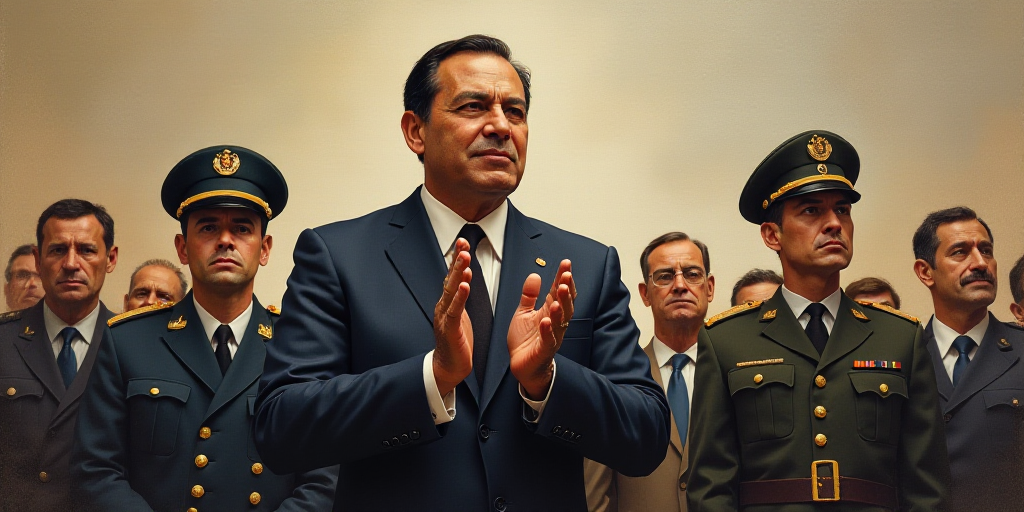
Background and Significance of Rodrigo Paz
Rodrigo Paz, a center-right politician and son of former Bolivian President Jaime Paz (1989-1993), assumed the presidency of Bolivia on Saturday. His inauguration marks the end of two decades of socialist governments, occurring amidst Bolivia’s worst economic crisis in four decades.
Inauguration Details
Paz, 58, was warmly welcomed at the Bolivian legislative building in La Paz by assembly members and over 50 international delegations. He took his oath with the phrase “God, family and country: Yes, I swear!” administered by his vice-president, Edmand Lara, a former police officer.
Heavy rainfall in the highland city accompanied official ceremonies, with strong police presence at the Plaza de Armas where the government palace and parliament are located.
Economic Challenges Facing Paz
Paz inherits a nation grappling with severe economic difficulties, including shortages of dollars and fuel. The outgoing government of Luis Arce depleted almost all foreign exchange reserves to maintain universal subsidies for gasoline and diesel.
- Interannual inflation in October reached 19%, following a peak of 25% in July.
- Paz has pledged to cut more than half of the fuel subsidies and implement a “capitalism for all” program, focusing on formalizing the economy, reducing bureaucratic obstacles, and lowering taxes.
International Support for Paz
More than 50 international delegations attended the inauguration at Bolivia’s capital, situated 3,600 meters above sea level. Notable attendees included the U.S. Deputy Secretary of State Christopher Landau, as well as presidents Gabriel Boric (Chile), Javier Milei (Argentina), and Yamandú Orsi (Uruguay).
Key Questions and Answers
- Who is Rodrigo Paz? Rodrigo Paz is a center-right politician who assumed the presidency of Bolivia on Saturday, succeeding two decades of socialist governments.
- Why is Paz’s inauguration significant? His inauguration marks the end of 20 years of socialist rule during Bolivia’s worst economic crisis in four decades.
- What economic challenges does Paz face? Paz must address severe shortages of dollars and fuel, along with high interannual inflation rates. He has pledged to cut fuel subsidies and implement a “capitalism for all” program.
- Who attended Paz’s inauguration? Over 50 international delegations, including U.S. Deputy Secretary of State Christopher Landau and presidents Gabriel Boric, Javier Milei, and Yamandú Orsi, attended Paz’s inauguration.




