
Background on Key Figures and Relevance
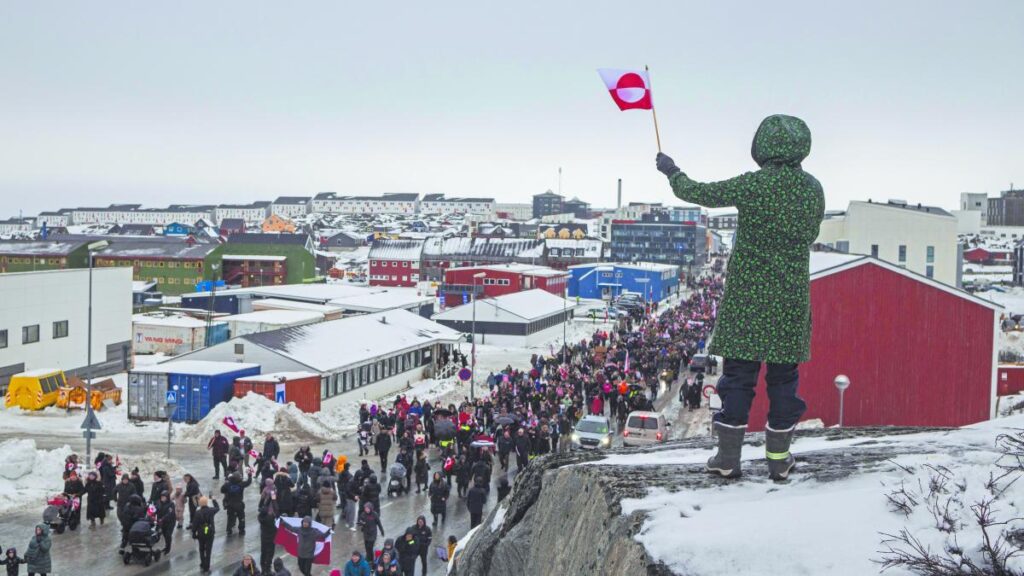
In recent weeks, tensions have escalated between the United States and Denmark over President Donald Trump’s interest in purchasing Greenland, an island located between the Atlantic and Arctic Oceans. This proposal has sparked widespread protests in Denmark and Greenland, with citizens rallying to protect their autonomy and sovereignty.
Greenland’s Prime Minister, Mette Frederiksen, has firmly rejected Trump’s offer, stating that Greenland is not for sale. Denmark, which administers Greenland as an overseas territory, has also maintained that the island remains under Danish sovereignty. The situation has drawn international attention, with European countries sending military personnel to Greenland at Denmark’s request.
Protests Across Denmark and Greenland
Over the weekend, thousands of demonstrators gathered across Denmark in solidarity with Greenland, voicing their opposition to Trump’s intentions. The protests extended to Greenland’s capital, Nuuk, where participants, including Prime Minister Jens-Frederik Nielsen, chanted slogans against the U.S. plan and sang traditional Inuit songs.
Protesters in Copenhagen, carrying signs that read “Greenland is not for sale” and “Hands off Greenland,” gathered at the city hall square before marching towards the U.S. embassy. Julie Rademacher, president of Uagut (Greenlanders in Denmark), expressed gratitude for the overwhelming support and emphasized that Greenland and its people have become an unwitting front in the fight for democracy and human rights.
Military Response
In response to the escalating tensions, NATO has increased its military presence in Greenland. Following a meeting with U.S. officials at the White House, Denmark’s foreign minister and Greenland’s prime minister left with no agreement, as their positions appeared irreconcilable.
Greenland’s deputy premier, Mute Egede, announced that more NATO troops would arrive in Greenland “in the coming days,” citing an increase in military flights and naval presence. French, German, Dutch, Swedish, Norwegian, Finnish, British, and Danish soldiers have already been deployed to the island.
The Danish Arctic Command, based in Greenland, focuses on countering potential Russian activity rather than defending against U.S. military threats, according to General Søren Andersen.
Political Confrontation Between U.S. and NATO
The situation has led to an unprecedented political confrontation between the U.S. and its NATO allies. NATO Secretary-General Jens Stoltenberg confirmed on Sunday that he spoke with Trump about the security situation in Greenland and the Arctic, stating that discussions would continue, with hopes for further progress at the World Economic Forum in Davos.
Key Questions and Answers
- What is the main issue at hand? The primary concern is President Trump’s interest in purchasing Greenland, which has sparked protests from Danish and Greenlandic citizens who wish to protect their autonomy.
- Who are the key figures involved? Key figures include Denmark’s Prime Minister Mette Frederiksen, Greenland’s Prime Minister Kim Kielsen, and NATO Secretary-General Jens Stoltenberg.
- What is the NATO response to the situation? NATO has increased its military presence in Greenland, with troops from several European countries deployed to the island.
- What is the Danish Arctic Command’s focus? The Danish Arctic Command prioritizes countering potential Russian activity in the region over defending against U.S. military threats.




