
Background and Context
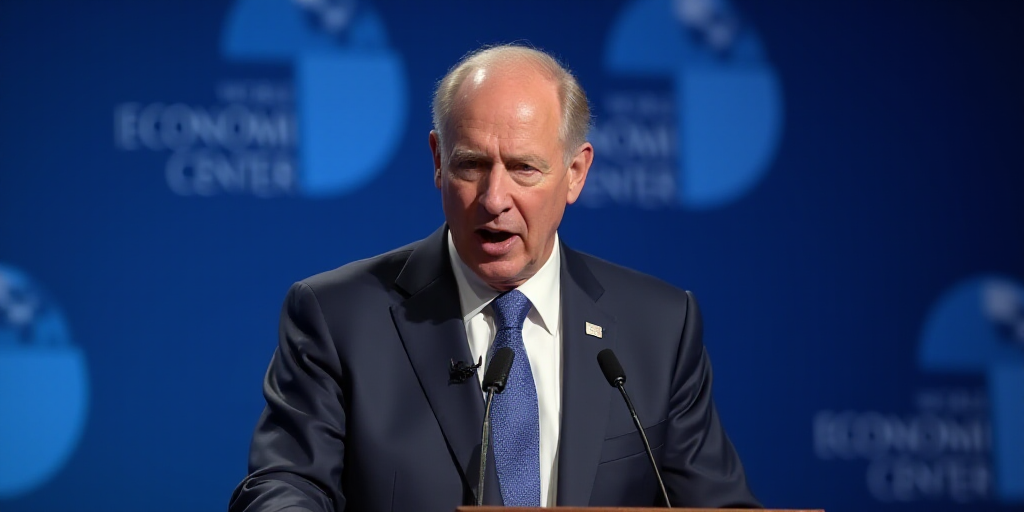
Donald Trump, the President of the United States, made a bold statement at the World Economic Forum in Davos, urging global elites to initiate “immediate negotiations” for the potential acquisition of Greenland. This unexpected proposal has sparked discussions about the geopolitical implications, the strategic value of Greenland, and the United States’ role in global affairs.
Trump’s Statement and Rationale
Donald Trump asserted that only the United States is capable of safeguarding Greenland, a Danish territory and NATO ally. He emphasized that the U.S. can develop and improve this vast, icy landmass.
“That’s why I want immediate negotiations to revisit the possibility of the United States purchasing Greenland,” Trump said.
#Davos2023
Trump further claimed that no country or group of nations could ensure Greenland’s defense, except for the United States. He boasted about America’s military prowess, referencing its recent operation in Venezuela aimed at ousting President Nicolás Maduro.
Reactions and Implications
Trump’s comments have drawn mixed reactions. Some view it as a demonstration of American exceptionalism, while others see it as an unwelcome interference in Danish affairs. Greenland’s government has not yet officially responded, but the proposal has certainly raised eyebrows and initiated conversations about sovereignty and international relations.
Key Questions and Answers
- What is Greenland and why is it significant? Greenland is an autonomous territory within the Kingdom of Denmark, located between the North Atlantic and Arctic Oceans. Its strategic location, abundant natural resources (including rare earth minerals), and potential for future mining operations make it geopolitically significant.
- Why is Trump interested in purchasing Greenland? Trump believes that the United States, as a global superpower, is best positioned to protect and develop Greenland’s resources. He also sees strategic value in having a presence in the Arctic region, which is becoming increasingly important due to climate change.
- What are the potential implications of this proposal? The proposal could strain U.S.-Danish relations, raise concerns about Greenlandic sovereignty, and spark debates on the principles of self-determination and non-interference in domestic affairs. It may also affect international perceptions of American foreign policy and its approach to global partnerships.




