
Background on Donald Trump and Greenland
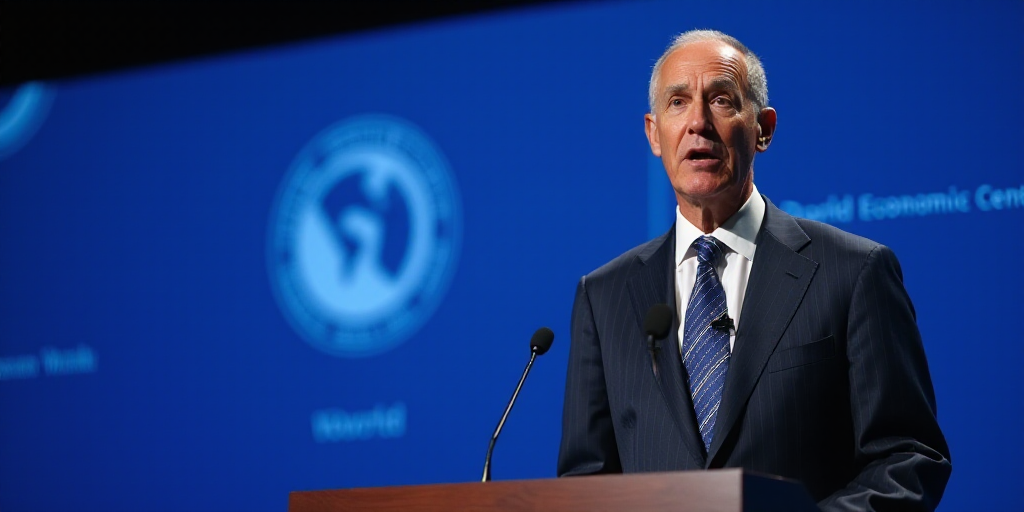
Donald J. Trump, the 45th President of the United States, made headlines at the World Economic Forum in Davos, Switzerland. Trump urged global elites to initiate “immediate negotiations” for the United States’ acquisition of Greenland, an autonomous Danish territory. This unexpected statement has sparked curiosity and debate about the potential implications of such a move.
Who is Donald Trump?
Donald John Trump, born on June 14, 1946, is an American businessman, television personality, and politician who served as the 45th president of the United States from January 20, 2017, to January 20, 2021. As a real estate mogul and reality TV star, Trump gained widespread recognition before entering politics. His presidency was marked by controversial policies and decisions, including his approach to international relations.
Why is Greenland relevant?
Greenland, located between the North Atlantic and Arctic Oceans, is the world’s largest island. It covers approximately 2.1 million square kilometers and has significant natural resources, including minerals and oil. The island’s strategic location also makes it geopolitically important, particularly in the context of climate change and Arctic regional interests.
Trump’s Statements at Davos
Immediate Negotiations for Greenland Acquisition:
During his speech at the World Economic Forum, Trump emphasized that only the United States could protect and develop Greenland. He stated, “Only the United States can protect this massive land, this massive ice sheet, develop it, improve it.” Trump further insisted on immediate negotiations to revisit the possibility of acquiring Greenland.
Ruling Out Force:
Trump clarified that the United States would not resort to force in acquiring Greenland. He asserted, “No country or group of nations is capable of securing Greenland’s defense except the United States.” This statement suggests that Trump believes the U.S. has both the capability and responsibility to safeguard Greenland’s interests.
Trump’s Perspective on U.S. Global Power
In his speech, Trump also highlighted the United States’ global power and influence. He claimed that the U.S. is “much bigger” than people realize, citing its recent military operation in Venezuela as evidence. Trump referred to the failed attempt to overthrow Venezuelan President Nicolás Maduro as proof of American strength.
Trump’s Views on Venezuela
Trump praised the negotiation skills of Venezuelan leaders following Maduro’s capture, alleging his involvement in narcotráfico (drug trafficking). Maduro will be tried in New York for these charges. Trump expressed optimism about Venezuela’s oil revenues, stating that the country could earn more money from oil in the next six months than it did in the previous two decades.
Key Questions and Answers
- What is the significance of Trump’s statement about Greenland?
Trump’s call for immediate negotiations to acquire Greenland has raised questions about the geopolitical implications of such a move. Critics argue that it undermines Denmark’s sovereignty and Greenland’s self-governance. Supporters suggest that it could strengthen U.S. influence in the Arctic region and provide access to valuable resources.
- Why did Trump rule out the use of force?
By ruling out force, Trump aimed to present the United States as a responsible and peaceful negotiator. This approach could help maintain positive relationships with Denmark and other Arctic nations while asserting American interests in the region.
- What is Trump’s perspective on U.S. global power?
Trump believes that the United States is a dominant global power, capable of addressing international challenges. His statements reflect his confidence in American military and economic strength, as well as his willingness to engage in bold diplomatic initiatives.
- What are Trump’s views on Venezuela?
Trump has been critical of the Maduro regime in Venezuela, accusing it of corruption and human rights abuses. He supports opposition leader Juan Guaidó and has imposed sanctions on Venezuelan officials. Trump’s recent comments about Venezuela’s oil potential reflect his belief that economic pressure could lead to regime change.




