
Who is Involved?
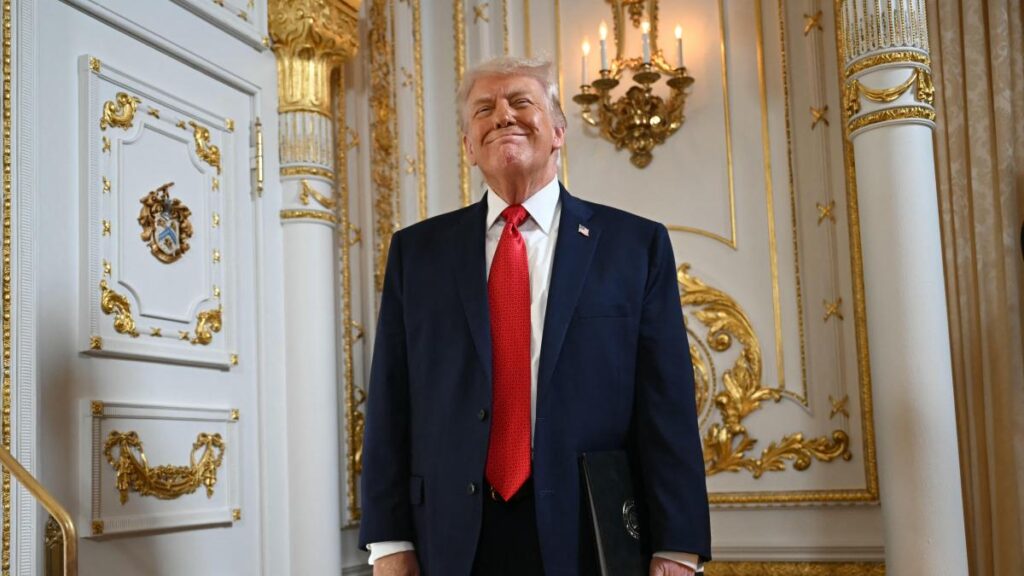
Former U.S. President Donald Trump has proposed that countries wishing to join his “Global Peace Council” pay a $100 million fee for membership. The council aims to promote stability and ensure lasting peace in regions affected by or threatened by conflicts, according to the obtained statutes on Monday.
Trump has invited several world leaders to join this council, including Russian President Vladimir Putin, Hungarian Prime Minister Viktor Orbán, and Canadian Prime Minister Mark Carney.
What is the Council?
The Global Peace Council is an international organization that seeks to establish reliable and legitimate governance, as well as enduring peace in regions impacted by or threatened with conflicts. The council’s statutes criticize existing peace approaches that “institutionalize crises instead of allowing people to thrive,” seemingly targeting the United Nations. It also emphasizes the need for a more agile and effective international peace organization.
Trump will serve as the inaugural president of the Global Peace Council, wielding extensive powers and being the sole authority to discretionarily invite countries to participate. He will have the final say in votes and can revoke a country’s membership, except when vetoed by two-thirds of the member states.
Moreover, Trump will have exclusive authority to create, modify, or dissolve subsidiary entities under the Global Peace Council and will be the ultimate authority on the interpretation and application of the foundational statutes.
Member states will serve a three-year term, renewable by the president. However, this term does not apply to states contributing over $100 million in cash to the Global Peace Council within the first year of its establishment.
Originally conceived to oversee the reconstruction of Gaza, the council’s statutes do not seem limited to the occupied Palestinian territory.
Reactions
Initial reactions from key allies France and Canada were cool. France “does not plan to give a favorable response” to the invitation, according to a source close to President Emmanuel Macron. The initiative raises significant concerns, particularly regarding respect for UN principles and structure, which “cannot be compromised” under any circumstances.
France, a permanent member of the UN Security Council with veto power, reaffirmed its commitment to the UN Charter as “the cornerstone of effective multilateralism, where international law, equal sovereignty of states, and peaceful dispute resolution prevail over arbitrariness, power relations, and war.”
Canada stated it “will not pay for a seat on the council nor has it been asked to do so” following Prime Minister Justin Trudeau’s indication that he would consider joining. A government source confirmed this stance.
Paul Williams, an international affairs professor at George Washington University, reminded AFP that the UN Security Council resolution adopted in October only granted the Global Peace Council authority to act concerning the Palestinian territories.
Criticisms
The proposal appears to contradict international institutions like the UN by asserting that this council should “move away from approaches and institutions that have frequently failed.” Trump has consistently criticized the UN and recently announced the U.S.’s withdrawal from approximately 66 international organizations and treaties, half of which are linked to the UN.
The Global Peace Council began taking shape over the weekend with invitations to leaders of Egypt, Turkey, Argentina, Canada, and Brazil. Trump also appointed U.S. Secretary of State Marco Rubio, former British Prime Minister Tony Blair, his chief conflict negotiator Steve Witkoff, and son-in-law Jared Kushner as members.
Israel has objected to the composition of a “Gaza Executive Council” operating under the broader organization, including Turkish Foreign Minister Hakan Fidan and Qatari diplomat Ali Al-Thawadi.
Key Questions and Answers
- What is the Global Peace Council? It’s an international organization proposed by Donald Trump to promote stability and ensure lasting peace in regions affected by or threatened by conflicts.
- Who has been invited to join? World leaders including Vladimir Putin, Viktor Orbán, and Mark Carney have been invited by Trump to join the council.
- What are the membership terms? Member states will serve a three-year term, renewable by the president. However, this term does not apply to states contributing over $100 million in cash within the first year.
- How have key allies reacted? France and Canada have shown cool reactions, with France stating it will not give a favorable response to the invitation.
- What are the criticisms? The proposal seems to contradict international institutions like the UN, suggesting that this council should move away from frequently failing approaches.




