
Background on Donald Trump and His Role
Donald Trump, the 45th President of the United States, served from January 2017 until January 2021. Known for his background in real estate and television, Trump’s political career was marked by controversial policies and a divisive approach. His presidency saw significant events, including tax reform, judicial appointments, and international agreements. The government shutdown in question occurred during his tenure, highlighting the partisan divide in Congress.
Understanding the Government Shutdown
A government shutdown occurs when Congress fails to pass appropriations bills or continuing resolutions, leading to a lapse in funding for federal operations. This particular shutdown began on December 22, 2018, lasting nearly four days. The impasse stemmed from disagreements between Republicans and Democrats over funding for the Immigration and Customs Enforcement (ICE) agency, following the fatal shootings of two protesters by federal agents in Minneapolis, Minnesota.
Key Events Leading to the Shutdown
- December 22, 2018: The partial government shutdown commences after Congress fails to reach an agreement on border wall funding.
- December 28, 2018: The deaths of two protesters in Minneapolis, Minnesota, at the hands of federal agents intensify debates over ICE funding.
- January 2019: The shutdown continues as negotiations stall, impacting hundreds of thousands of federal employees.
Trump Signs the Bill to End the Shutdown
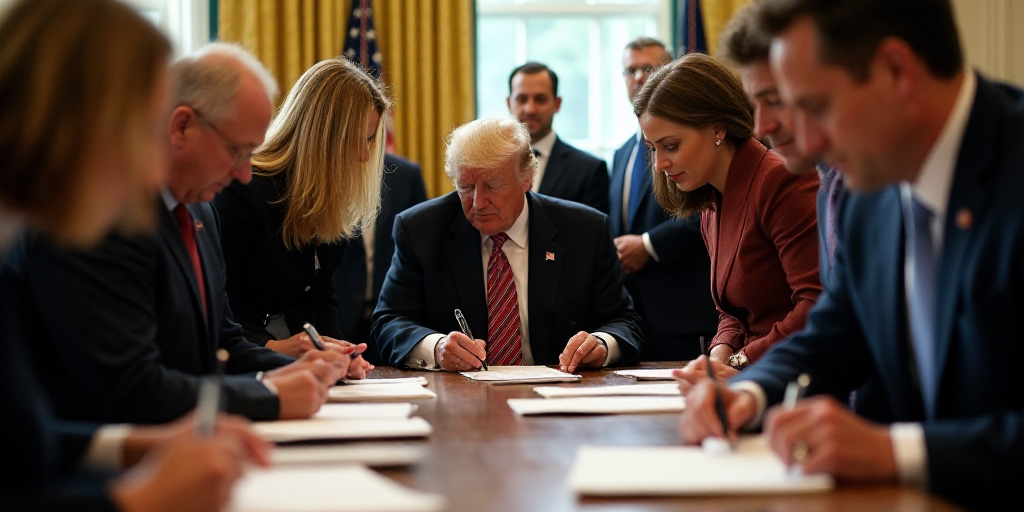
On January 25, 2019, President Trump signed a bill passed by the House of Representatives to end the government shutdown. He hailed it as “a great victory for the American people” during a ceremony at the White House.
Impact of the Signed Bill
The signed legislation officially concluded the budgetary paralysis that had been in effect since December 2018. It allowed federal agencies to resume normal operations, providing relief for the hundreds of thousands of affected employees who had been working without pay or facing furlough.
Key Questions and Answers
- What was the cause of the government shutdown? The shutdown resulted from a failure to agree on funding for the federal government, specifically the contentious issue of financing the Immigration and Customs Enforcement (ICE) agency.
- Who was involved in the negotiations to end the shutdown? The negotiations primarily involved members of Congress, with President Trump ultimately signing the bill passed by the House of Representatives to restore federal operations.
- What was the significance of Trump’s statement? Trump’s declaration of the bill signing as a “great victory for the American people” underscored his perspective on the political implications of ending the shutdown.
- How did the shutdown affect federal employees? The shutdown left hundreds of thousands of federal employees without pay or facing furlough, causing financial strain and uncertainty.
- What events preceded the shutdown? The shutdown was triggered by disagreements over border wall funding and intensified following the fatal shootings of protesters in Minneapolis, Minnesota.




