
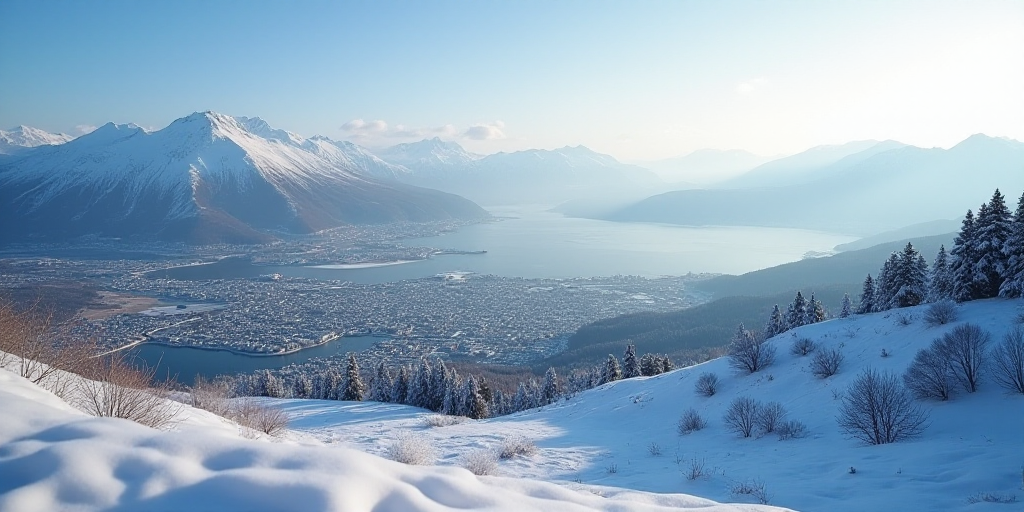
Greenland: A Brief Overview
Greenland is an autonomous territory under the sovereignty of the Kingdom of Denmark, covering 2,166,086 square kilometers and home to a population of 56,900 people, according to the Danish Ministry of Foreign Affairs.
Geographically located in North America, Greenland is considered part of Europe. With 85% of its territory covered by ice, only 16,000 people reside in its capital, Nuuk.
Climate Change and its Impact on Greenland
According to a report in the scientific journal Nature, Greenland’s ice sheet is melting rapidly. While global warming affects the territory, the central and northern regions of Greenland have experienced temperature increases exceeding pre-industrial ranges in the early 21st century, as noted in the report.
This rapid melting is attributed to global warming, drawing the attention of United States, and specifically President Donald Trump, to Greenland.
Greenland’s Strategic Importance and Resources
Greenland’s strategic location between the United States and Europe, within the GIUK (Greenland-Iceland-United Kingdom) gap, has piqued Trump’s interest. Although Greenland is not part of the European Union, it is a member of NATO, making any potential U.S. intervention in Greenland sensitive due to the North Atlantic Treaty Organization’s involvement.
Climate change has also made Greenland more accessible for resources such as oil, gas, and rare earth elements—critical components in today’s world. These resources have further fueled Trump’s interest in Greenland.
Trump’s Proposed Economic Interests and Potential Annexation
Since his first term, Trump has expressed a keen interest in Greenland, aiming to establish an economic agreement or potentially intervene to annex the island to the United States.
Facing rejection from the European Union, Trump has threatened to impose tariffs of up to 25% on European countries participating in military exercises in Greenland.
Key Questions and Answers
- Why is Greenland significant to Trump? Greenland’s strategic location, coupled with its untapped resources like oil, gas, and rare earth elements, has piqued Trump’s interest. The island’s proximity to both the United States and Europe, within the GIUK gap, further adds to its geopolitical importance.
- What are the consequences of climate change in Greenland? Climate change is causing rapid melting of Greenland’s ice sheet, making resources previously inaccessible now more attainable. This also raises concerns about the potential for increased human activity and exploitation of Greenland’s resources.
- Why is Greenland’s membership in NATO important? Greenland’s NATO membership means any U.S. intervention in the island would be sensitive due to the North Atlantic Treaty Organization’s involvement. This adds complexity to Trump’s proposed economic interests or potential annexation of Greenland.




