
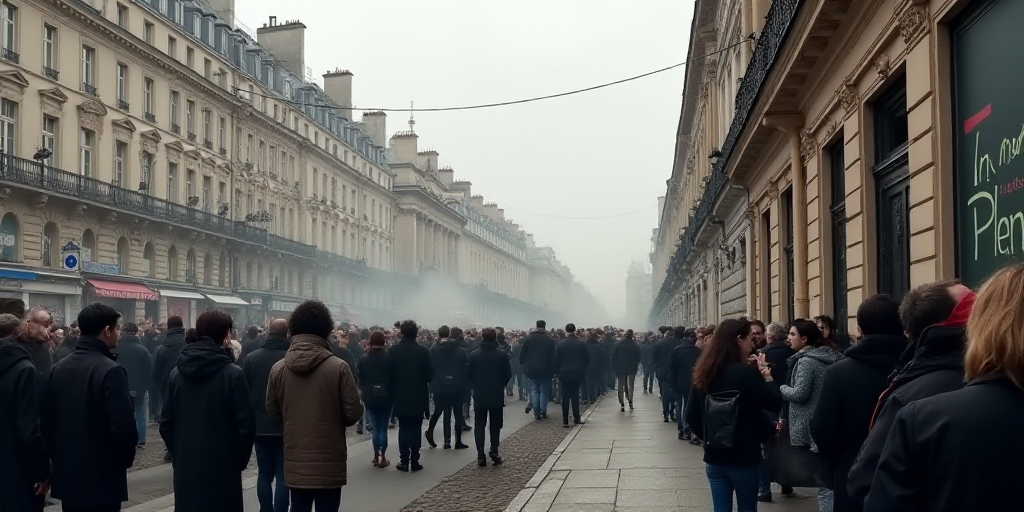
A Tale of Two Responses in Minneapolis
In recent weeks, news from Minnesota has presented an uncomfortable reflection of human nature. Amidst ICE raids in Minneapolis, the capital of this state, to detain immigrants, a heart-wrenching contrast emerges.
On one hand, we hear stories of individuals risking their own safety to protect neighboring immigrants. On the other, there are those who, invoking legality, choose to report their very neighbors.
From Human Shields to Tools of Power
Lawrence Kohlberg, an American psychologist, pioneered studies in moral development. He argued that we don’t come equipped with an innate moral compass but rather construct it as we progress through various stages.
In the most basic, childhood stages, our moral responses are guided by fear of punishment or potential rewards. As we age, we acquire norms and a sense of obedience to authority.
In some individuals, maturation processes and life experiences facilitate reaching a higher level, Kohlberg termed ‘postconventional.’ At this stage, individuals no longer blindly follow laws or authority.
The Legal vs. The Just
Carol Gilligan, a psychologist and ethicist, enriched this moral development study framework by proposing an ‘ethics of care,’ centered on responsibility towards others.
Our research shows that moral responses depend on numerous factors. Among them, the question shapes the response. We don’t answer the same when asked ‘Is it right?’ versus ‘Would you do it?’
This implies that moral reasoning alone doesn’t explain behavior. In real-life situations, we must decide what’s right and then execute—or not—that decision, facing the consequences of our actions.
Another Perspective on Heroism
Data from a study about individuals rescuing Jewish peers during the Holocaust is illustrative. Many responded to ‘Why did you risk everything?’ with a surprising simplicity: “What else could I do?” For these individuals, the decision wasn’t a calculated heroic choice.
It was an inevitable response. Similarly, for Minnesota defenders, inaction would have felt a betrayal of their own essence—a betrayal more painful than any state retribution.
Loyalty to Power vs. Evil
Ironically, complicity with injustice often isn’t about malice. A recent study on ‘loyalty as legitimization’ reveals that the same value making us ‘good neighbors’ can blind us.
According to this research, those who prioritize loyalty over other principles are more likely to perceive unjust acts as legitimate. State repression, in this case, is validated because it originates from the same power structure to which they are loyal.
Dissociation as a Shield
This is compounded by moral dissociation, a psychological shield that allows us to deactivate self-criticism. We see ourselves as mere cogs in a superior machine.
This shield protects us from self-condemnation while we participate in another’s dehumanization.
Hope Amidst Fragility
What remains, then, is hope rooted in our capacity to experience what social psychologist and American writer Jonathan Haidt calls ‘moral elevation.’
Observing acts of ethical excellence in Minnesota can evoke admiration, triggering a psychological and physical state that impels us to realign our moral compass.
Heroism acts as a catalyst, activating our inherent tendency to act. It reminds us that responsibility towards others is ultimately a responsibility towards ourselves.
Vulnerable to Fear and Context
Understanding this warns of our own vulnerability. If faced today with international scenarios, what would we do?
If personal security depended on silence or reporting a neighbor, do we truly know which mechanisms of our minds would take control?
Moral conduct isn’t an exact science. It rests on the bidirectional interaction of three elements: biological predisposition, acquired norms and values, and our reasoning and will to act.
Recognizing this vulnerability in the mirror is the first step towards ensuring our moral compass points the right way when crisis strikes.
Key Questions and Answers
- What is the psychological perspective on people’s contrasting reactions in Minneapolis? The psychological view, drawing from Lawrence Kohlberg’s moral development theory and Carol Gilligan’s ethics of care, suggests that people’s responses are influenced by their moral reasoning stages. While some reach a ‘postconventional’ level prioritizing universal human dignity, others remain at stages guided by obedience to authority or self-interest.
- How do external factors influence moral decisions? External factors, such as the specific question posed (whether it’s about correctness or personal action) and contextual pressures (like state repression or loyalty to power), significantly shape moral decisions.
- What is moral dissociation and how does it affect behavior? Moral dissociation is a psychological defense mechanism that allows individuals to detach from the moral implications of their actions, often leading them to participate in dehumanizing others without self-condemnation.




