
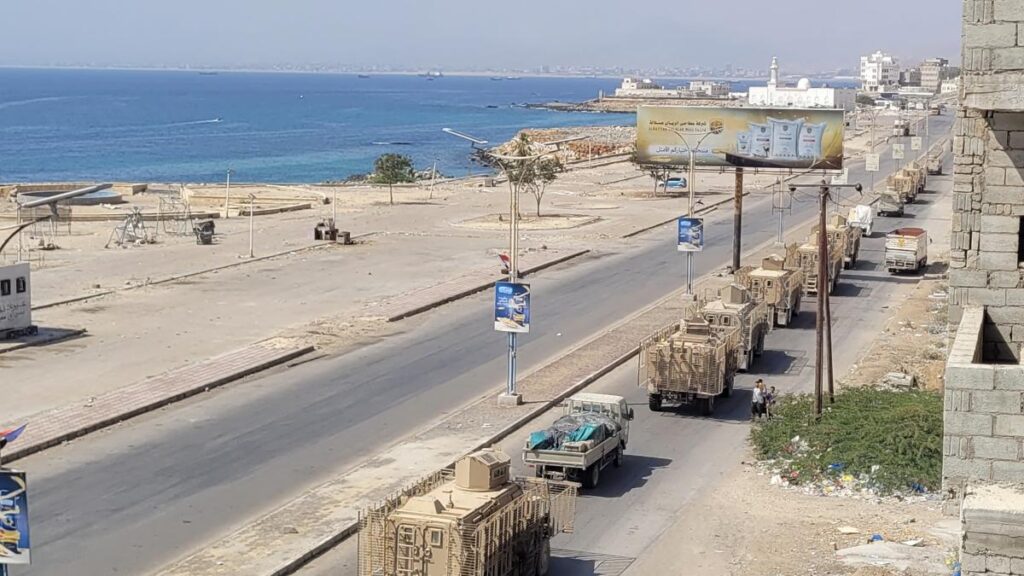
Background on Yemen’s Conflict and the UAE’s Involvement
For over a decade, Yemen has been embroiled in a territorial conflict in its southern region, largely overshadowed by the ongoing civil war between the internationally recognized Yemeni government and the Houthi movement controlling the capital, Sanaa. The United Arab Emirates (UAE) has been involved in this complex situation, supporting the Yemeni government and its allies.
UAE’s Military Withdrawal from Yemen
On Friday, the UAE government confirmed the withdrawal of its troops from eastern Yemen following demands by internationally recognized Yemeni authorities and Saudi Arabia, in response to recent offensives by the separatist Consejo de Transición del Sur (CTS), backed by Abu Dhabi.
“In line with our focus on fostering calm and de-escalation, the UAE has concluded its antiterrorism force presence,” a UAE government official told Europe Press, emphasizing their commitment to dialogue, de-escalation, and international-supported processes as the only sustainable path to peace.
The official further stated that UAE’s decisions have consistently prioritized moderation over escalation, reinforcing a clear preference for regional stability and long-term security.
UAE’s Role in Yemen and Regional Stability
Over the past decade, the UAE has acted upon request from the legitimate Yemeni government and Saudi Arabia, participating in the Saudi-led coalition to support Yemen’s stability and security, particularly in countering terrorist organizations threatening civilians and the broader region.
The UAE’s foreign policy is guided by interconnected principles that mutually reinforce each other, reflecting its commitment to responsible leadership, constructive global collaboration, and sustainable progress. These principles include strengthening international cooperation to promote lasting peace, fostering long-term prosperity, defending sustainability, and promoting peaceful coexistence.
Yemen’s Separatist Movement and the CTS
The separatist CTS, during the height of the conflict, reluctantly supported the Yemeni government in exchange for satisfying their independence claims. This fragile alliance has broken sporadically, but rarely as severely as in early December when CTS-backed forces launched an attack to reclaim their historical territories, resulting in the death of 32 Yemeni military personnel.
With this definitive break from the Aden authorities, which began a decade ago during the onset of the civil war necessitating a united front against the Houthi insurgency controlling Sanaa, the CTS has severed ties with Yemeni authorities.
Key Questions and Answers
- What is the main reason for UAE’s withdrawal from Yemen? The UAE has concluded its military presence in Yemen following demands by internationally recognized Yemeni authorities and Saudi Arabia, prioritizing dialogue and de-escalation as the sustainable path to peace.
- What has been the nature of the conflict in Yemen’s southern region? The territorial conflict in Yemen’s south has largely been overshadowed by the civil war between the internationally recognized Yemeni government and the Houthi movement controlling Sanaa.
- Who are the separatists involved in the conflict, and what are their demands? The CTS, a Yemeni separatist movement, has sought independence and recently launched an attack to reclaim their historical territories, leading to a break from Yemeni authorities.




