
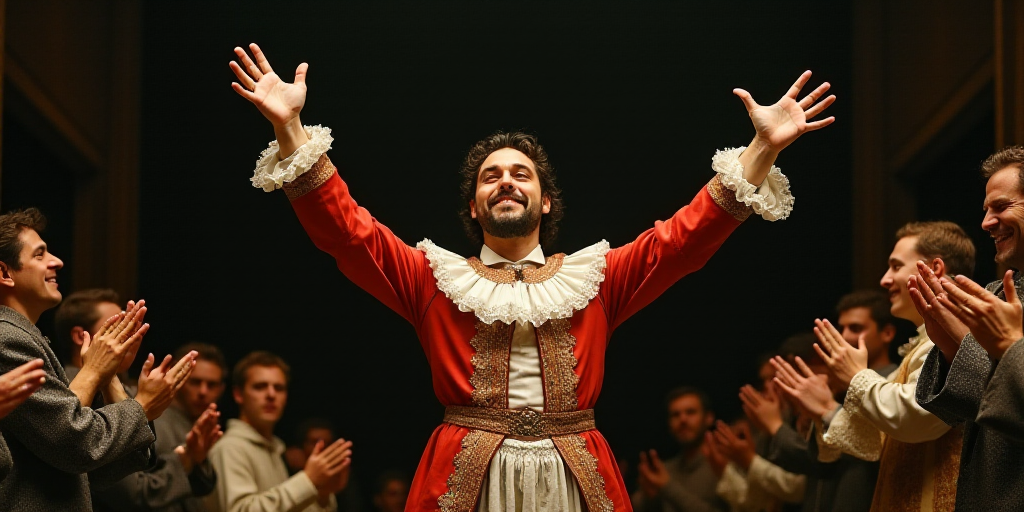
Background and Historical Significance
Hugo Gamba Briones, the director of Teatro Universitario at the University of Guanajuato (UG), highlighted the importance of the interludes in the Cervantino Festival’s foundation during the 53rd edition of the International Cervantino Festival (FIC). He expressed concern over the minimal representation of these interludes, which were pivotal in establishing the globally recognized festival.
The Teatro Universitario originated in 1952 with the play “Arsénico y encaje antiguo” by Joseph Kesselring, performed at the Teatro Juárez. In February 1953, the “Cervantino Interludes” were first presented in the Plaza de San Roque under Enrique Ruelas’ direction, involving Eugenio Trueba Olivares and Armando Olivares Carrillo, the first rector of UG and the initial actor to portray Miguel de Cervantes.
Guanajuato, over 70 years ago, was a distinctly different city from today’s version. The mining industry was dwindling, and the university and state capitals were the only sources of sustenance. Students would gather after classes at “el estudio” (a space in the callejón del Venado house number 20) to discuss various matters, including the interludes.
The Interludes’ Impact and Current Situation
Since 1953, the Cervantino Interludes have been performed in public spaces, particularly the Plaza de San Roque. These interludes form the foundation of today’s acclaimed International Cervantino Festival, established in 1972. The same three interludes—”La cueva de Salamanca,” “El viejo celoso,” and “El retablo de las maravillas”—along with a prologue and epilogue featuring Miguel de Cervantes, Don Quixote of La Mancha, and Sancho Panza—have been presented in every edition.
However, Gamba Briones expressed a sense of “disappointment” regarding the marginalization of these interludes by his company. He clarified that this disappointment stems from decisions made by higher university authorities, not his team.
Audience and Ticket Sales
Despite the disappointment, Gamba Briones emphasized that ticket sales for the interludes are consistently high. Regardless of whether there are four or six performances, the interludes’ tickets sell out quickly.
Call for More Cervantes Works
Gamba Briones advocated for increased visibility of the Teatro Universitario in the festival and more Cervantes works of high quality. He praised student-led productions, stating that their work is worthy of audience appreciation and encourages a return to the interludes’ origins.
Lack of Attendance Figures
The 53rd edition of the International Cervantino Festival concluded with Africa Express, featuring musician and producer Damon Albarn, as the final act for the United Kingdom’s Invited Guest of Honor. However, this year’s closing felt unusual as it was customary to share preliminary attendance numbers and economic impact estimates during the festival.
The organizing committee decided not to hold the traditional press conference, opting instead for a gratitude breakfast on Monday morning. Only communication representatives from relevant institutions, including the Guanajuato government, the Cervantino committee, and UG, would be present.
This change comes amid a gradual decline in festival attendance over recent years.
Key Dates
- 1952 – Creation of the Teatro Universitario company
- 1953 – First presentation of the Cervantino Interludes
- 1972 – Establishment of the International Cervantino Festival
- 1990 – Hugo Gamba’s joining of the Teatro Universitario company




