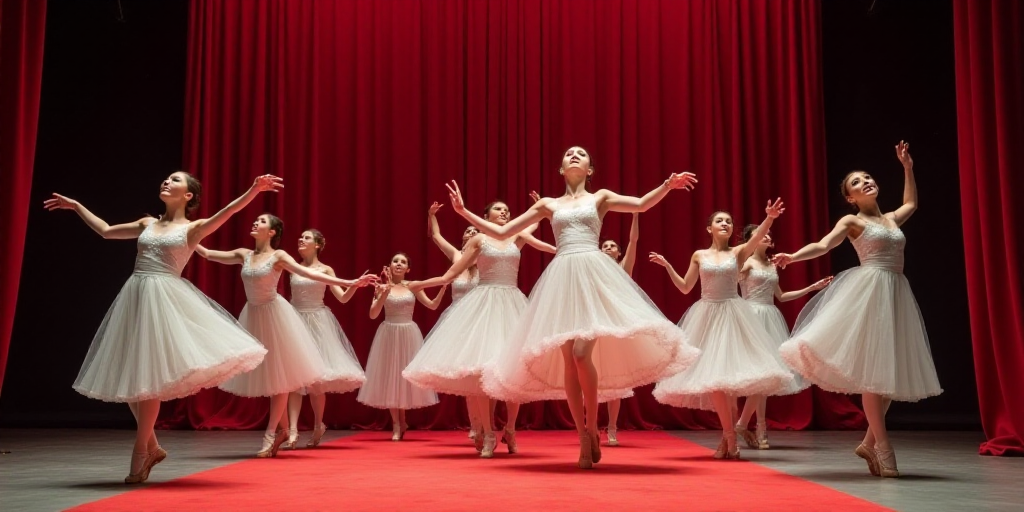
A Collaborative Reimagining of Classical Ballet
The Festival Internacional Cervantino 2025 has witnessed a significant collaboration between the UNAM Taller Coreográfico (TCUNAM) and the Orquesta de Cámara de Bellas Artes (OCBA). This partnership has reimagined the classic ballet, “Giselle,” as a powerful tool for urgent social denouncement amidst the alarming violence and disappearances of women in Mexico.
From Wilis to the Missing: Art as a Denouncement
The original “Giselle” narrates the tale of Wilis, spirits of betrayed brides. In Melva Olivas’ interpretation, these figures take on a dark and contemporary resonance, alluding directly to the women who have gone missing or become victims of gender-based violence in Mexico. Olivas, driven by the urgency of this issue, sought to bring these stories to life on stage.
“We took the classic Giselle as an opportunity to situate this story in a Latin American context and specifically address an urgent and important issue that is experienced daily in Mexico,” Olivas explained to El Economista, emphasizing that the original story already contains this social critique.
Maestro Luis Manuel Sánchez Rivas clarified that while the original text by composer Adolf Adam is respected, a single added sound resource has been incorporated into the original partitura during the final moments of the first act. The choreography, therefore, serves as the primary vehicle to “ground us in the present.”
A Powerful Moment of Silence and Action
The most disruptive and moving moment occurs when the music abruptly stops, leaving an absolute silence. In this pause, the figure of “Giselle’s mother” emerges to utter a heart-wrenching plea: “Why don’t they look for you as you deserve, Giselle? Please, find her.” The scene then turns crimson, symbolizing the nation’s pain as countless names of missing and murdered women are recited. The performance transforms into a protest anthem, sending a firm and desperate message to society and authorities: “Bring back our women, find them, we want them alive!”
Olivas believes art is the ideal tool for this call to action: “Art allows us to speak from the heart, through emotions, poetics, and music, making this reflection reach a deeper level beyond reason, numbers, and daily news.”
The Milestone of Female Composers: Feminine Vision in Creation
This collaboration extends beyond dance. On October 19, the OCBA, under Maestro Sánchez Rivas’ direction, will present a “historic” concert titled “Young Composers,” featuring women proposing women. This program includes the world premiere of five original compositions commissioned from an international group of creators: Paulina A. Monteón (Mexico City), Melissa Vargas (Colombia), Estrella Cabildo (Veracruz), Sonia Rodríguez (Guanajuato), and Cecilia Pereyra (Argentina).
Maestro Sánchez Rivas, involved in this project, celebrates the initiative by the Coordination National of Music and Opera (CNMO) aimed at uncovering women’s creative power:
“I have always believed that art is universal, genderless, and creativity exists equally in men and women. What matters is that as artistic groups, we are entirely open to promoting all these expressions without any distinction,” Sánchez Rivas shared with this media outlet.
Melva Olivas acknowledges the existence of women creators throughout history but highlights the current interest in giving them more focus:
“There’s a window opening to visualize much more female artists. It’s enriching to lead alongside other women. In this production (Giselle), the lighting designer is a woman, and so is the costume designer. We aim to strengthen networks among creators and support each other.”
A Living Testament to Art’s Power for Tradition and Social Consciousness
The season stands as a testament to the living art’s ability to honor tradition (the original music by Adolf Adam in Giselle is largely respected) while transforming into a tool for social consciousness and justice. It paves the way for female perspectives redefining Mexico’s cultural landscape.
Key Questions and Answers
- What is the collaboration about? The Taller Coreográfico de la UNAM (TCUNAM) and the Orquesta de Cámara de Bellas Artes (OCBA) have joined forces to reimagine the classic ballet “Giselle” as a denouncement of gender-based violence in Mexico.
- How does the collaboration respect the original work? While the original text by Adolf Adam is respected, a single added sound resource has been incorporated into the first act’s final moments to ground the performance in the present.
- What is the significance of the silence in the performance? The silence allows for a heart-wrenching plea to be uttered, symbolizing the nation’s pain and calling for action regarding missing and murdered women.
- What is the “Young Composers” concert about? This historic concert, led by Maestro Luis Manuel Sánchez Rivas, features original compositions by five international female creators, highlighting women’s creative power.
- What does this season represent for Mexican culture? The season demonstrates the power of living art to honor tradition while promoting social consciousness and paving the way for female perspectives redefining Mexico’s cultural landscape.