
The Role of Gas, Dust, and Interstellar Pressure
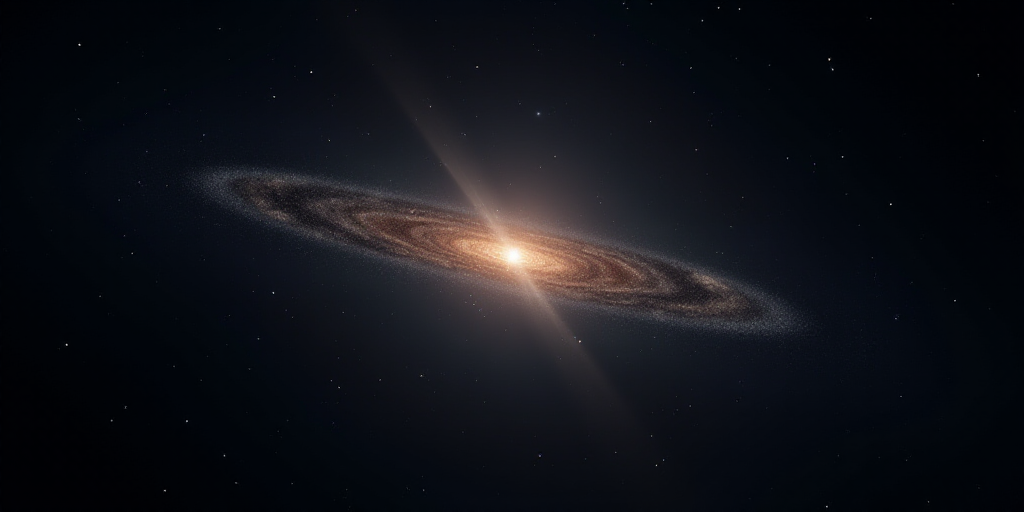
A team of astronomers from the Institute of Astronomy at UNAM has identified the factors that determine when and where a molecular cloud can transform into the birthplace of new stars. Their findings, derived from an analysis of 96 spiral galaxies, provide fresh insights into the physical processes driving stellar formation across the universe.
Molecular clouds are dense, cold regions of space where large amounts of gas and dust accumulate. These clouds serve as “cribs” for the birth of stars. According to the model developed by the team led by researcher Alberto D. Bolatto, the key lies in three primary components: interstellar pressure, dust quantity, and gas chemical composition.
The experts explained that interstellar pressure is crucial for compressing gas and facilitating molecular molecule clustering, while cosmic dust acts as a catalyst surface enabling hydrogen atoms to bond and form molecular hydrogen. Moreover, the abundance of heavier elements (those more massive than helium) influences the cloud’s cooling capacity, a necessary condition for gas condensation and subsequent star birth.
A Model Explaining Galactic Diversity
The analytical model proposed by the Mexican researchers was tested in spiral galaxies with varying characteristics, including regions similar to our Milky Way. The results demonstrated that despite differences in size or luminosity, the physical laws governing molecular cloud formation are consistent and can be described using universal parameters.
According to UNAM, this breakthrough aids in understanding why some cosmic regions are more active in star creation while others remain relatively inactive. It also enables refinement of simulations regarding galaxy evolution and their stellar life cycles.
Impactful Mexican Science with International Reach
This study is part of an international collaborative effort involving institutions from the United States, Europe, and Latin America, with UNAM as a significant contributor. The results were published in The Astrophysical Journal Letters, one of the most influential journals in astronomy.
With this work, Mexican scientists reaffirm their leadership in the study of interstellar physics and star formation, offering a more accurate view of the mechanisms shaping the structure and evolution of the universe.
Key Questions and Answers
- What are molecular clouds? Molecular clouds are dense, cold regions of space where large amounts of gas and dust accumulate. They serve as “cribs” for the birth of stars.
- What factors determine star formation in molecular clouds? The key factors are interstellar pressure, dust quantity, and gas chemical composition.
- How does interstellar pressure contribute to star formation? Interstellar pressure is crucial for compressing gas and facilitating molecular molecule clustering.
- What role does cosmic dust play in star formation? Cosmic dust acts as a catalyst surface, enabling hydrogen atoms to bond and form molecular hydrogen.
- How do heavier elements influence star formation? The abundance of heavier elements influences the cloud’s cooling capacity, a necessary condition for gas condensation and subsequent star birth.
- What does the new model explain about galactic diversity? The model demonstrates that despite differences in size or luminosity, the physical laws governing molecular cloud formation are consistent and can be described using universal parameters.
- How does this study impact our understanding of the universe? This breakthrough aids in understanding why some cosmic regions are more active in star creation while others remain relatively inactive. It also enables refinement of simulations regarding galaxy evolution and their stellar life cycles.
- What is the significance of this study for Mexican science? This study reaffirms Mexico’s leadership in the study of interstellar physics and star formation, offering a more accurate view of the mechanisms shaping the structure and evolution of the universe.




