
Prepare for a Spectacular Otoño Sky in Mexico
November in Mexico promises a dazzling array of natural phenomena, including the brightest supermoon of the year, a comet’s passage, and meteor showers. The clear, dry nights of autumn offer optimal conditions for stargazing. Here are some tips from the UNAM to make the most of these celestial events:
- Move away from artificial light sources.
- Allow your eyes at least 20 minutes to adjust to the darkness.
- Use red-light flashlights to preserve night vision.
Recent Celestial Highlights
This year’s brightest supermoon, also known as the “Hunter’s Moon,” was recently visible across Mexico.
November Events
Saturday, November 8
Comet Lemmon (C/2025 A6) will reach its closest approach to the Sun, becoming visible in dark skies with an estimated magnitude of 5. In Mexico, it will be observable in the western sky between 6:30 PM and 7:30 PM, shortly after sunset.
In urban areas, binoculars will be helpful for viewing, while rural or low-light pollution areas will distinguish it as a diffuse greenish blur. Observing comets allows scientists to study the oldest materials in our solar system, as they are composed of remnants from the Solar System.
Tuesday, November 4 and Wednesday, November 12
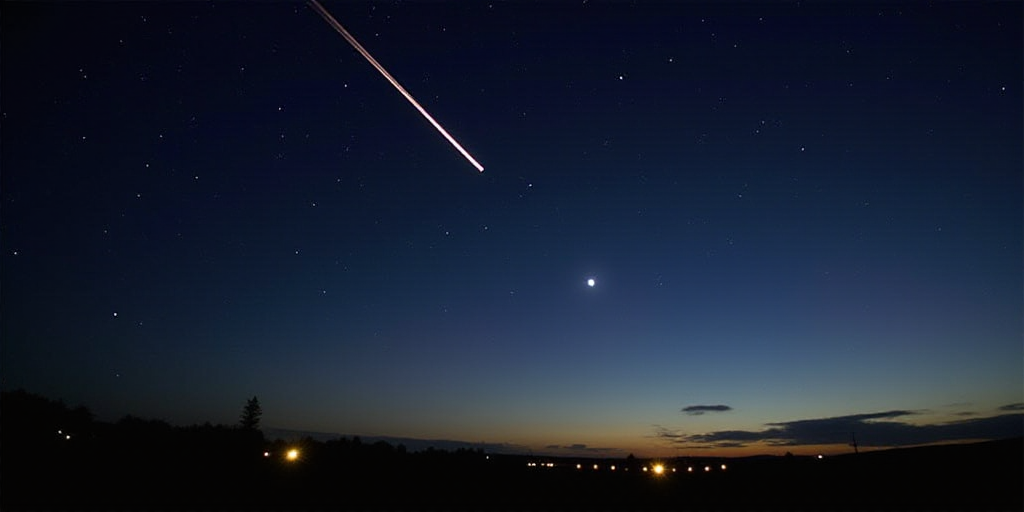
The Southern and Northern Taurids meteor shower will be active between November 4 and 12, producing 5 to 10 meteors per hour. You can spot their distinctive “fireballs,” though moonlight may reduce visibility in the early days.
Monday, November 17 and Tuesday, November 18
The Leonids will be observable three days before the New Moon (17 and 18). To see them, look towards the sky around 2:00 AM; they’ll reach their highest point during dawn.
If the sky is clear, you may witness 10 to 15 meteors per hour. The Leonids are known for historic meteor storms, though current expectations are for moderate activity.
Thursday, November 20
At 00:47 (Central Mexico time), there will be a New Moon, making it the darkest night of the month. This is an excellent opportunity to observe the Milky Way, star clusters like the Pleiades, and galaxies such as Andromeda. It’s also the best time to track Comet Lemmon’s movement as it moves away from the Sun.
Friday, November 21
Urano will be in opposition to the Sun relative to Earth, offering its annual peak brightness. With a small telescope under dark skies, you can spot Urano as a blue dot in the constellation Taurus, near the Pleiades star cluster.
Monday, November 24 and Tuesday, November 25
Venus and Mercury will rise together just before sunrise, both appearing in the eastern sky for a brief period. Venus will shine at magnitude -3.9, while Mercury reaches +1.9, separated by less than one degree.
Key Questions and Answers
- What is the brightest supermoon of the year? The supermoon visible in early November, also known as the “Hunter’s Moon.”
- When and where can I see Comet Lemmon? It will be visible in Mexico on November 8, between 6:30 PM and 7:30 PM in the western sky.
- What meteor shower occurs during November? The Southern and Northern Taurids meteor shower is active from November 4 to 12.
- When is the New Moon in November 2025? It occurs on November 20 at 00:47 (Central Mexico time).
- What celestial events can I observe on November 21? Urano will be at its brightest, visible with a small telescope under dark skies.
- When will Venus and Mercury be visible together? They’ll rise just before sunrise on November 24 and 25, appearing close together in the eastern sky.




