
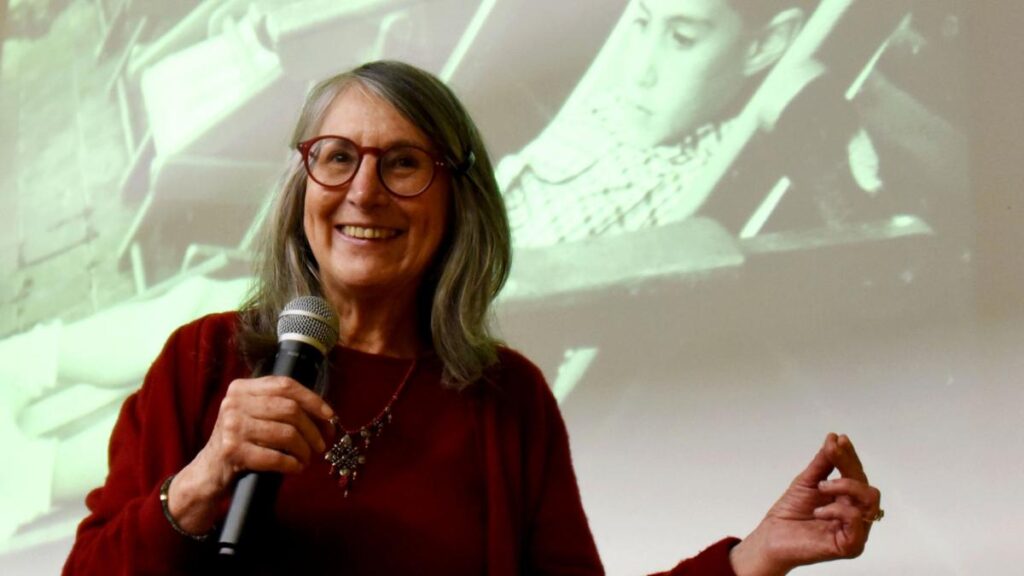
A Tribute to Pioneering Scientists and Their Impact
The year 2025 has been a period of deep reflection for the world of knowledge, as we bid farewell to brilliant minds whose contributions defined contemporary science. Here’s a look at some of these influential figures:
January
- Christopher Hood, a prominent academic and one of the most influential figures in public administration, public policy, and public management over the past few decades.
- Manuel Elkin Patarroyo, a Colombian scientist who created the first synthetic malaria vaccine.
- Joan J. Guinovart, a Spanish expert in glucogen metabolism and diabetes research.
March
- John Curtis Perry, emeritus professor at Tufts University and an expert in maritime relations and Asia.
April
- Carlos Arámburo de la Hoz, founder and first Academic Secretary of the Center for Neurobiology at UNAM, as well as the first director of the Institute of Neurobiology.
May
- Etienne-Emile Baulieu, a French scientist recognized for inventing the RU-486 emergency contraceptive pill.
June
- Atul Butte, a pioneer in using Big Data for precision medicine.
- Niède Guidon, a Brazilian archaeologist who challenged theories about the peopling of America.
July
- Franklin Stahl, co-author of “the most beautiful experiment in biology” that demonstrated how DNA replicates.
- Javier Velázquez Moctezuma, a pioneer in sleep research, educator of professionals, and advocate for its inclusion in public social and labor policies.
- Rainer Weiss, Nobel laureate in 2017 and a pioneer in detecting gravitational waves.
- Lupita Zamarrón Garza, a science communicator and founding member/former president of Somedicyt.
September
- Julieta Fierro Gossman, a physicist and astronomer, Mexico’s leading science communicator, and key figure in UNAM’s astronomy. Her passing in September deeply moved Mexico. She was instrumental in bringing science to children and youth, breaking gender barriers in astronomical research.
- Arturo Gómez Pompa, a pioneer in tropical ecological conservation and ecosystem restoration. Dedicated to understanding, protecting, and teaching the value of nature.
- José Rafael Martínez Enríquez, a distinguished professor of the history of mathematics and philosophy of science.
October
- Jane Goodall, transformed our understanding of humans, animals, and nature in the world. Her departure marks the end of an era in primate conservation and study.
- Chen Ning Yang, Nobel laureate in Physics 1957, worked on statistical physics and particle physics.
- Deepak Kar, a prominent researcher at CERN on dark matter.
November
- Margit Frenk, a philologist, researcher, and teacher, a member of the Mexican Academy of Language.
December
- John Noble Wilford, science journalist for the New York Times who covered the moon landing.
- Nuno Loureiro, director of the Plasma Science and Fusion Center at MIT, an expert in plasma turbulence.
- Wu Feng, member of the Chinese Academy of Engineering, key in developing new energy sources.
Key Questions and Answers
- Who were some of the notable figures who passed away in 2025 and their contributions?
These individuals included Christopher Hood, Manuel Elkin Patarroyo, Joan J. Guinovart, John Curtis Perry, Carlos Arámburo de la Hoz, Etienne-Emile Baulieu, Atul Butte, Niède Guidon, Franklin Stahl, Javier Velázquez Moctezuma, Rainer Weiss, Lupita Zamarrón Garza, Julieta Fierro Gossman, Arturo Gómez Pompa, José Rafael Martínez Enríquez, Jane Goodall, Chen Ning Yang, Deepak Kar, Margit Frenk, John Noble Wilford, Nuno Loureiro, and Wu Feng. Their contributions spanned public administration, malaria vaccine development, glucogen metabolism research, maritime relations, Big Data in medicine, archaeological theories, neurobiology, emergency contraception, sleep research, gravitational wave detection, science communication, ecological conservation, history of mathematics, and dark matter research.




