
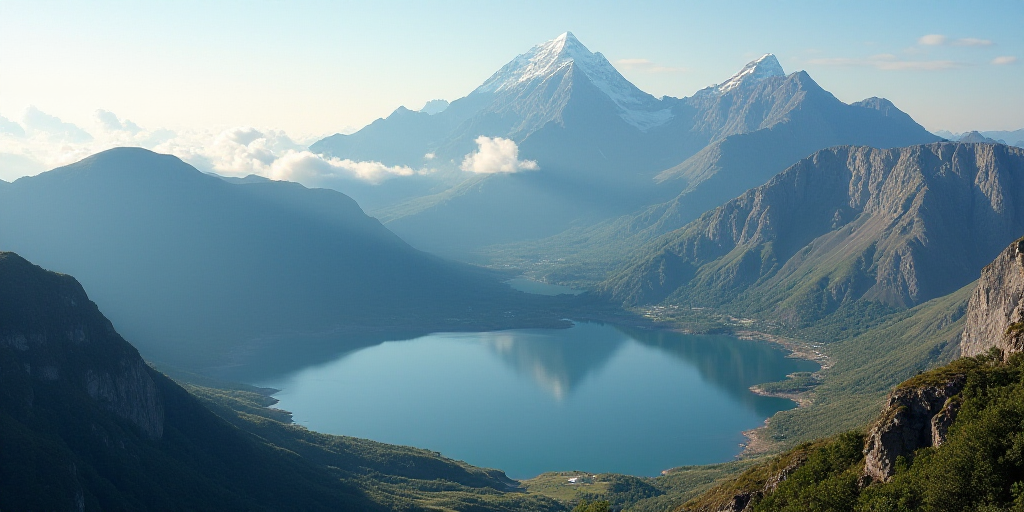
Background on Chichonal Volcano
The Chichonal volcano, located in northern Chiapas, Mexico, has raised concerns due to recent changes in its activity. This volcano is part of the larger Tacaná-Chichonal volcanic complex, which includes the infamous El Chichón volcano that erupted catastrophically in 1982. The recent changes have prompted scientists from the National Autonomous University of Mexico (UNAM) to closely monitor the volcano and assess any potential risks.
Recent Observations by UNAM Researchers
Experts from the Institute of Geophysics (IGf) at UNAM have identified chemical changes and gas emissions from the Chichonal volcano’s crater lake. Patricia Jácome Paz, a researcher from the Natural Resources Department at IGf, explained that the lake’s water composition has shifted from high algal concentration to increased sulfates and silica levels, which are characteristic of an active volcanic lake.
- Chemical changes in the lake suggest modifications in the volcano’s internal processes, making Chichonal a dynamic system requiring continuous monitoring.
- The detection of significant gas emissions from the lake’s bottom to the surface poses a potential health risk, especially with prolonged exposure. As a result, UNAM advises against accessing the crater and restricts unregulated tourism in the area.
Historical Context and Ongoing Monitoring
The Chichonal volcano has been under continuous study for over two decades by UNAM scientists, with periodic sampling of the volcanic lake. These historical records enable researchers to confirm that current variations in solute flows represent genuine changes throughout the entire volcanic system, rather than isolated fluctuations.
Risks and Recommendations
Although experts do not foresee an immediate eruption, they emphasize that the current activity poses local risks. Consequently, scientists urge adherence to recommendations from civil protection agencies, respecting access restrictions, and staying informed through official channels throughout 2026.
- The Chichonal volcano, also known as El Chichón, is situated between the municipalities of Francisco León and Chapultenango in Chiapas.
- According to the National Center for Disaster Prevention (CENAPRED), El Chichón has experienced at least 12 explosive eruptions over the past 8,000 years.
- The most devastating event occurred in 1982, with three plinian eruptions generating cinder columns over 20 kilometers high, resulting in more than 2,000 fatalities and marking a turning point in Mexico’s volcanic monitoring.
Key Questions and Answers
- Q: What changes have been detected in the Chichonal volcano? A: UNAM researchers have observed chemical changes in the crater lake, including increased sulfates and silica levels, as well as significant gas emissions from the lake’s bottom.
- Q: What are the potential risks associated with these changes? A: The chemical and gas changes suggest modifications in the volcano’s internal processes, which could lead to localized risks. Prolonged exposure to gas emissions poses a health risk, and unregulated tourism in the area is discouraged.
- Q: How has the Chichonal volcano been monitored historically? A: UNAM scientists have studied the Chichonal volcano for over two decades, conducting periodic sampling of the volcanic lake to track changes and assess risks.
- Q: What is the significance of the 1982 eruption? A: The catastrophic 1982 eruption of El Chichón resulted in three plinian explosions, generating cinder columns over 20 kilometers high, causing more than 2,000 fatalities, and emphasizing the importance of volcanic monitoring in Mexico.




