
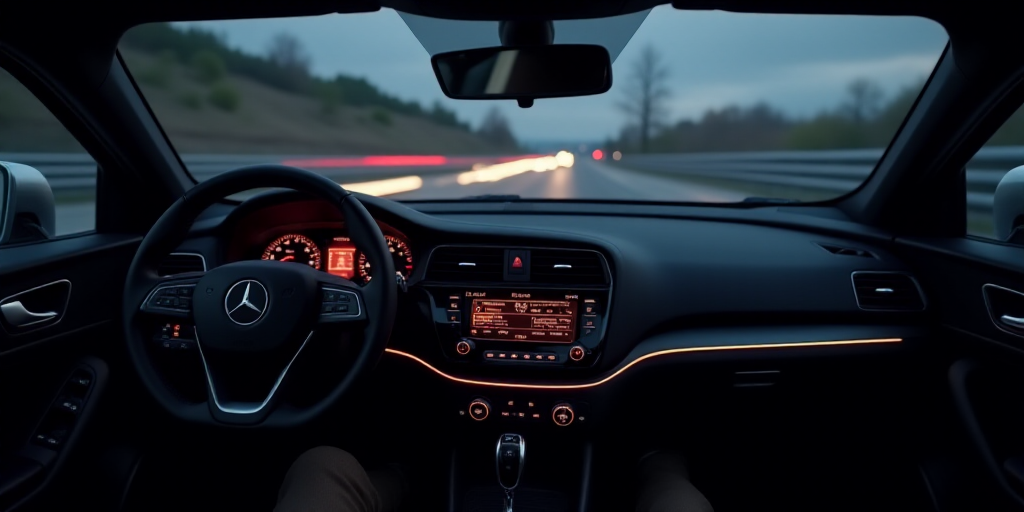
Researchers from Fujita Health University, Japan, Demonstrate Cognitive Load of Speaking Affects Rapid Visual Assessments Necessary for Safe Driving
Background on Key Person: Shintaro Uehara, a professor associated with Fujita Health University in Japan, led this study. His research focuses on understanding how cognitive loads, such as speaking while driving, can impact driving performance.
Study Overview and Significance
Approximately 90% of the information used for driving is acquired visually. This study, published in ‘PLOS ONE’, reveals that speaking while driving introduces a cognitive load strong enough to delay essential movement responses, affecting rapid visual assessments necessary for safe driving.
Study Methodology
- Thirty healthy adults participated in the study.
- They performed rapid saccadic eye movements from center to peripheral targets in three conditions: speaking, listening, and a control condition.
- In the speaking condition, participants answered general knowledge and episodic questions adapted from the Wechsler Adult Intelligence Scale along with personalized additional prompts.
- In the listening condition, participants listened to passages from a Japanese novel.
- The order of conditions was randomized over three separate days.
Key Findings
Speaking resulted in clear and consistent delays in three key temporal components of saccadic eye movements:
- Time to initiate the eye movement after target appearance (reaction time)
- Time to reach the target (movement time)
- Time to stabilize gaze on the target (adjustment time)
No such effects were observed during listening or control conditions, suggesting that speaking and the cognitive effort required to search for and produce verbal responses create a significant interference with eye movement control mechanisms.
Implications for Driving
These delays, though seemingly minor individually, can accumulate during driving and lead to slower hazard detection and delayed initiation of physical responses. Drivers often need to look downward, towards pedestrians, debris, or road objects, highlighting the broad risks of conversation in visually demanding driving situations.
Additional Context and Conclusion
The study emphasizes that speaking is not the sole or primary cause of slowed physical reactions while driving. Multiple cognitive and perceptual factors, such as inattention blindness, divided attention, and the broader interference caused by managing two demanding tasks simultaneously, influence driving performance.
However, the research demonstrates that speaking introduces delays in the earliest stages of visual processing—before recognition, decision-making, or physical action—subtly undermining driving performance in ways not immediately apparent to drivers.
“These results indicate that cognitive demands associated with speaking interfere with the neural mechanisms responsible for initiating and controlling saccadic eye movements, which represent the critical early stage of visuomotor processing during driving,” concludes Dr. Uehara.
Public Safety Implications
Understanding that cognitive effort from conversation can reduce the precision and synchronization of eye movements, drivers may become more aware of when and how they choose to engage in conversations while driving. Over time, this knowledge could encourage safer driving behaviors, inform driver training frameworks, inspire improvements in vehicle interface design, and guide policymakers in formulating future recommendations regarding cognitive distraction.




