
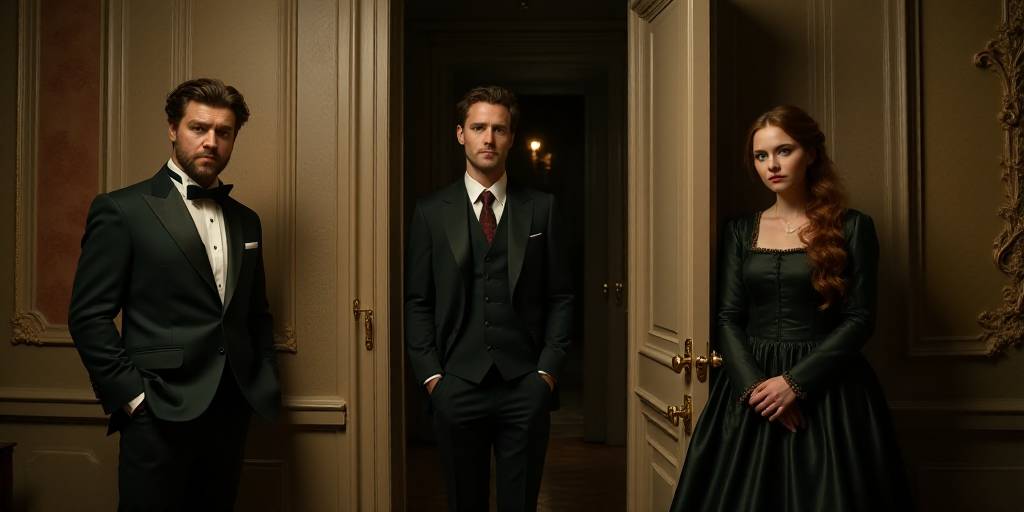
A Society That Rewards Boldness and Coldness
We live in a society that rewards boldness and coldness. This is evident in TV series like House of Cards, where Frank Underwood climbs the ladder by stepping on others. In Succession, Logan Roy maintains control of his family empire through fear and manipulation. Even in The Wolf of Wall Street, excess is celebrated as genius.
These stories haven’t invented anything new; they reflect a widely held belief that “the ends justify the means.” This same mode of operation also sometimes appears in real life.
Psychopathy: A Long-Studied Phenomenon
Psychopathy has been studied for decades. In the 1940s, it was described as superficial charm, lack of guilt, emotional detachment, and impulsive behavior. Later, tools were developed to measure it, proving that these traits aren’t exclusive to criminals. They also appear, though to a lesser degree, in seemingly normal and successful individuals.
Difficult-to-Detect Profiles
Despite this, these dark profiles are hard to detect. They often coexist with good social skills. Their initial charm can conceal their flaws and harmful, dangerous behavior. Short-term, they may appear as ideal leaders, but long-term, they leave conflicts, fear, and exhaustion.
In corporations, especially at the top, cold charisma, risk-taking, and manipulation can sell effective leadership. Many companies pursue immediate results, apparent security, firm gestures, and quick decisions. Empathy is seen as a weakness. Even in interviews, confidence is valued over ethical character.
This allows polished masks and a facade of control to dazzle and hide signs of abuse or incompetence. Subsequently, the coldness and ambition fuel their ascent, often weakening those who support them.
Prominent Psychopaths in Recent History
Recent history provides clear examples. Bernie Madoff maintained a respectable image for years while orchestrating a massive Ponzi scheme that defrauded thousands of investors out of $50 billion. Madoff used new clients’ money to pay old ones, making them believe they were earning returns when, in reality, there was no underlying investment.
Kenneth Lay of Enron appeared as a visionary while his company falsified accounts and concealed debts, eventually leading to one of the largest bankruptcies in history and ruining thousands. Both displayed charisma and coldness until their downfall.
In politics, similar situations occur. Donald Trump has built his image around strength and constant confrontation. He uses simple, combative messages, dominates the stage, and shows no hesitation. Many followers admire him despite his aggressive tone and lack of disposition for dialogue and consensus.
Something similar happens with leaders driving current wars. Russia’s invasion of Ukraine and Israel’s offensive in Gaza demonstrate how cold decisions can destroy thousands of civilian lives. Those who suffer the most from these wars are rarely those who initiate them. Yet, their leaders are often revered as symbols of strength.
The “Dark Trinity” and Power
Psychologists seek to understand why such personalities thrive. The concept of the “dark trinity” is discussed: narcissism, Machiavellianism, and psychopathy. Combined, they convey confidence, dominance, and stress resistance. This can help achieve power, but it carries risks. This meta-analysis reveals that such traits aid ascent but don’t ensure effectiveness once there.
Some leaders achieve short-term results; others erode team morale and make reckless decisions. A little boldness can be helpful in a crisis, but excessive boldness breaks trust and ethics.
Certain traits can counteract these effects. Responsibility, kindness, or emotional stability help regulate impulsivity and promote fair decisions. Without them, coldness turns into recklessness. Moreover, cooperative teams with clear rules are better equipped to resist such profiles.
The issue is that, in highly competitive environments, these qualities are often absent. When a cold leader rises to power, they tend to surround themselves with similar individuals. This creates cultures that exclude those who value cooperation and respect.
Politics should learn from this. A country isn’t a company, but both share risks. The cult of personality erodes controls. Transparency gives way to heroic narratives. Opposition becomes an enemy. Governing isn’t about winning all the time; it’s about caring for everyone.
It’s important to clarify that not all leaders are psychopaths or exhibit such traits. Not everyone displaying some of these traits is harmful. For example, boldness can be valuable in emergencies. However, boldness without empathy becomes reckless. The problem arises when these traits are combined in an imbalanced way.
We should consider: what are we rewarding when we applaud a leader? Their ability to dominate or their care for others? Every time we celebrate coldness, we normalize power over people. Perhaps it’s time to reassess our notion of success.




