
Introduction
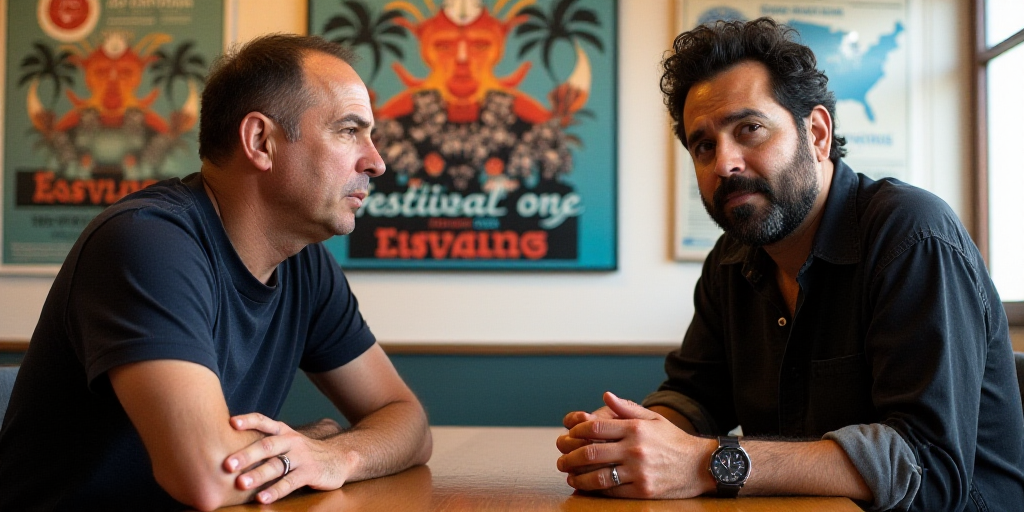
During four days, Playas de Tijuana became the epicenter of film screenings, discussions, meetings, masterclasses, and workshops aimed at revitalizing Tijuana’s cinematographic industry and connecting with the global film scene. The Primer Festival de Cine de Tijuana concluded with a powerful panel discussion titled “Reflections from the Stage to Screen,” offering insights into the role and responsibility of actors.
The Actors’ Responsibility in Film
Silverio Palacios, with over 40 years of experience, and Gustavo Sánchez Parra, an Ariel award-winning actor from “Amores Perros,” both alumni of the Centro Universitario de Teatro (CUT) at UNAM, emphasized that film is the result of creative and collective will. They stressed that acting requires rigorous training and a strong commitment.
Formal Preparation and Unwavering Mystique
Both actors agreed that acting, whether in theater or film, necessitates formal preparation and an unbreakable spirit. Sánchez Parra shared his challenging journey into and stay at CUT, learning that success is not about talent but endurance and resilience in the face of setbacks.
Authenticity Before the Camera
Palacios and Sánchez Parra highlighted the importance of authenticity in front of the camera. They explained that while exaggeration might be acceptable in theater, even a small lie can be magnified on screen, revealing falsehood. Palacios emphasized that actors must learn not to lie when facing the camera, as it requires rigorous training to be genuine and honest through their characters.
Cinema as a Collaborative Art
Addressing a predominantly student audience, the actors discussed cinema’s social nature. Palacios used a powerful analogy from his time on “Y tu mamá también” in Huatulco: “You have to learn to read the sea.”
Understanding the Film Set
Palacios explained that, like a water taxi driver reading the ocean to navigate, actors must “read the set” or the stage. This means understanding and appreciating that “everything there is made for you.”
Collective Efforts in Filmmaking
The actors stressed that cinema is the result of multiple creative wills, from the screenwriter who imagined the story to the crew members carrying cables, setting up lights, and working long hours. They emphasized that actors have the privilege of telling stories and the duty to work diligently, respectfully, and responsibly to honor the collective effort.
The Joy of Storytelling
Palacios and Sánchez Parra emphasized the joy of telling stories responsibly, acknowledging that every human aspires to live a life worth telling. They discussed the crucial relationship between directors and actors, noting that directors sometimes fear inquisitive actors who seek understanding.
Opposite Yet Complementary Roles
Palacios pointed out the contrasting nature of directors’ and actors’ perspectives: directors focus on the partial frame through the lens, while actors see the vast field of vision. Their shared guide is the script.
Celebrating the Tijuana Film Festival
In a press conference, both guests celebrated the Tijuana Film Festival as a vital opportunity to decentralize the film industry and knowledge, traditionally concentrated in Mexico’s central regions.
Expanding Frontiers and Specialized Exchange
Sánchez Parra highlighted that the festival expands frontiers and facilitates specialized exchange by bringing people to share ideas and diverse perspectives, moving beyond commercial exhibition.
Local Talent and Regional Capacity
Palacios stressed that for cinema to be national, it must happen throughout the nation, especially in regions like Baja California with significant film activity. He added that the festival legitimizes local talent and capacity, enabling self-expression without relying on external parties.




