
Introduction to La Santa Muerte
In 2001, a life-sized skeleton dressed as the Grim Reaper appeared for the first time on a street altar in Tepito, Mexico City. Many passersby instinctively made the sign of the cross upon seeing this figure, La Santa Muerte. This popular saint, shrouded in mystery and controversy, was previously known as a figure of domestic devotion—someone to whom prayers could be directed, but only in the privacy of one’s home.
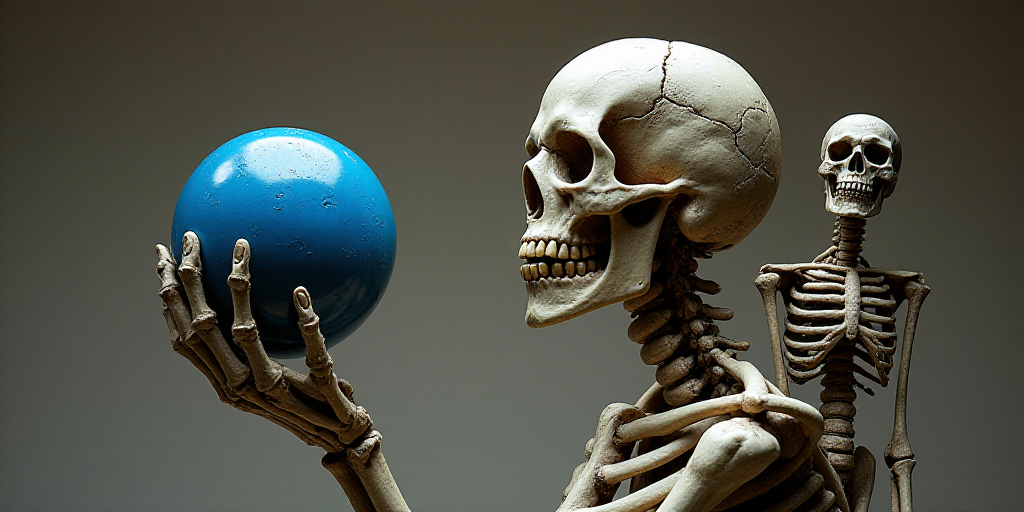
La Santa Muerte embodies death itself and is often depicted holding a scythe or a globe. Since the early 2000s, her popularity has steadily spread across Mexico and beyond to America, Europe, and other parts of the world. The concept and image of death as a saint are both unthinkable and captivating, with associations to narcotraficantes and criminal rituals causing many to distrust the skeletal figure. La Santa Muerte faces significant opposition from the Catholic Church, which condemns her veneration as heretical and morally dangerous. High-ranking church figures, like Cardinal Norberto Rivera Carrera in Mexico, have publicly denounced her devotion, warning that it promotes superstition and contradicts Christian values.
La Santa Muerte as a Source of Comfort
This criticism highlights a deep tension between official religion and popular devotion. Many Mexicans, feeling abandoned by governmental and ecclesiastical institutions, embrace La Santa Muerte as a source of hope. According to my research, she represents strength, protection, and consolation for her devotees, including prisoners, police officers, sex workers, LGBTQ+ individuals, migrants, the working class, and other marginalized groups. Despite her fearsome appearance, she offers a type of care often denied elsewhere.
As an anthropologist who has studied La Santa Muerte in Mexico, I believe her power reflects a paradoxical Mexican view of death—not merely as a symbol of fear but as an integral part of everyday life that has become a symbol of resilience and resistance amidst the country’s chronic violence.
The State and Death
In my recent book, The Intimacy of Images, I examine how devotion to La Santa Muerte in Oaxaca, a state renowned for its Day of the Dead tradition, is rooted in Mexico’s traditional and often playful relationship with death imagery.

Altar to the Santa Muerte in the Tepito neighborhood.
Based on over a decade of ethnographic fieldwork, I discovered how people’s prayers, offerings, and promises to La Santa Muerte are part of a desire to find solutions to everyday problems like illness, economic hardship, and protection from harm. Her frequent representation in images such as alters, tattoos, and artistic productions also reflects a shift in societal understanding of death, which has long been an omnipresent symbol of Mexico’s cultural identity and state power.
Following the Mexican Revolution at the start of the 20th century, death as a symbol of the new nation was popularized by artists like José Guadalupe Posada, especially through La Catrina, the dandy skeleton often associated with the Day of the Dead. While death and its personification were once part of a celebratory and courageous ethic facing the inevitable end of existence, they now serve as unsettling reminders of Mexico’s growing insecurity and violence.
This transformation, along with La Santa Muerte’s role in providing protection amidst this dangerous context, mirrors Mexico’s broader descent into turmoil. After the Partido Revolucionario Institucional (PRI) lost power in 2000, ending its 71-year uninterrupted rule, the election of the conservative Partido Acción Nacional (PAN) shattered informal alliances between the state and criminal networks that had previously suppressed crime through clientelistic systems.
In 2006, PAN’s newly elected president, Felipe Calderón, launched a militarized war on crime following years of evolution in these early criminal networks into ruthless organizations. In the subsequent decades, cartel violence has escalated, civilian deaths and feminicidios have intensified, and state institutions have been accused of direct complicity or reluctance to intervene. The 2014 disappearance of 43 students in Iguala, which exposed the extent of state-cartel collusion and remains unresolved, only crystallized public outrage.
Since the start of Mexico’s drug war in 2006, an estimated 460,000 people have been killed, and over 128,000 are officially listed as missing in the country—approximately one in every 1,140 people. In heavily affected states like Guerrero and Jalisco, this proportion is likely much higher, highlighting the geographical disparity in violence and disappearances across Mexico.
Claudia Sheinbaum, Mexico’s first female president, who took office in October 2024, has pledged to dismantle organized crime. However, violence and widespread perceptions of insecurity persist.
A Violent Mirror
For most devotees, La Santa Muerte is not an ally of criminals, despite her use by groups linked to cartels. Instead, she is one of the few sources of help amid a terrifying social reality. She does not offer any illusion that the situation of political dysfunction or uncontrolled violence will improve; she only provides presence and protection. Her image reflects a harsh reality: survival is no longer guaranteed by a state whose ties to cartels run deep.
This political and spiritual void is reflected in the rise of other secular devotional figures, such as popular saints like Jesús Malverde or more official ones like San Judas Tadeo, or even devotion to the devil.

Photo: Cuarto Oscuro
Unlike these others, La Santa Muerte is death personified—the end of life, the ultimate judge, and a symbol of shared mortality, regardless of status, race, or gender. As one devotee told me, “If you open us up, you’ll find the same bones.” La Santa Muerte is also infused with the care and love of her followers, who address her as a cherished family member—a protective aunt or mother embodying maternal protection and a strength more commonly associated with the masculine.
The Patron Saint of a Nation Haunted by Death
In a country where state protection is scarce and the boundaries between authorities and cartels are blurred, La Santa Muerte represents the people and protects her followers through miraculous intervention. Devotees turn to her because, as they say, only death can protect them from death.
Given the vulnerability of her followers and their unwavering trust in her skeletal form, she is more than just folklore. She is the patron saint of many in a nation where death looms, offering personal consolation and collective resilience. Above all, she is a mirror reflecting a crisis-ridden society and a people seeking meaning, dignity, and protection amidst the violence.




