
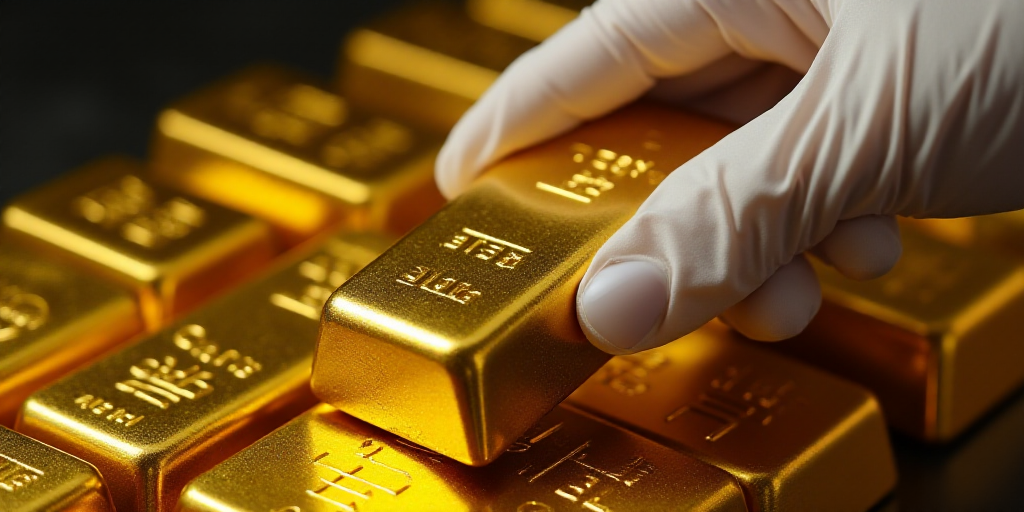
Gold and Silver Prices Soar on Expectations of U.S. Interest Rate Cuts and Geopolitical Tensions
Gold prices surged over 2% on Monday, reaching a historic high, driven by expectations of U.S. interest rate cuts and geopolitical tensions between the United States and Venezuela. Silver also hit a new all-time high, rising 2.82% to $69.06 per ounce.
Spot gold climbed 2.42% to $4,443.65 per ounce, peaking at $4,459.65, while February U.S. gold futures gained over 2% to $4,480.45 per ounce, according to Investing data.
This year, gold has surged 69.36%, marking its largest annual gain since 1979, fueled by robust central bank purchases, safe-haven flows, and lower interest rates.
Silver has soared 136% this year, driven by supply deficits, growing industrial needs, and strong investment demand.
ETF Inflows Propel Gold’s Rally
Investor inflows into Exchange Traded Funds (ETFs) have been historically high for 11 consecutive months, driven by rising gold prices in the international market due to factors such as economic uncertainty and a safe-asset appetite.
According to the World Gold Council (WGC), assets under management reached a record high of $530 billion at the end of November 2025. Collective gold holdings also hit their highest-ever monthly level, with 3,932 metric tons in November.
Despite the six-month upward trend, November’s flows were lower compared to previous months, including October, as per the WGC report.
The WGC noted that Asia was the primary driver of financial instrument purchases backed by physical gold, with China leading the charge. North America saw a significant decrease in ETF entries compared to earlier months.
In November, the top regions for gold ETF investments were Asia, North America, and Europe. Asia led the charge for the sixth consecutive month.
The WGC highlighted that the current ETF gold accumulation cycle began in May 2024. Despite 2025’s strong performance, total holdings in tonnage remain below the COVID-19 pandemic peak in 2020, indicating room for further expansion in the sector.
Asia Leads Gold ETF Inflows
In November, Asia recorded $3.2 billion in gold-related instrument entries, marking its third consecutive monthly inflow.
China became the regional leader by adding $2.2 billion worth of gold ETFs to their portfolios, driven by weak stock markets, rising gold prices, and geopolitical tensions.
“Additionally, a recently announced Value Added Tax (VAT) reform in China may have boosted entries, as investment-motivated buyers opted for ETFs to avoid additional taxes,” the WGC reported.
India maintained consistent inflows for six consecutive months, supported by the attractive local gold price performance. South Korea increased its interest in gold as investors sought market volatility hedges.
In North America, the inflow streak extended to six months, with $1 billion added in November. However, flows were relatively moderate compared to record-breaking purchases in previous months.
Factors supporting the November uptick included a 4.5% gold price advance in the month and expectations of U.S. Federal Reserve interest rate cuts due to milder inflation.
In Europe, flows shifted from negative to positive in November, with $978 million added in the UK and Germany leading regional entries. “This change was attributed to weak equity performance and strong local gold prices,” the WGC reported.
Meanwhile, other regions experienced a slight loss of $38 million, as Australia’s $12 million inflows couldn’t offset South Africa’s $53 million outflows.
Key Questions and Answers
- What drove the surge in gold and silver prices? Expectations of U.S. interest rate cuts and geopolitical tensions between the United States and Venezuela fueled the rally.
- What are the factors behind the strong performance of gold ETFs? Historically high investor inflows into gold ETFs, driven by rising gold prices and safe-haven demand, have propelled the sector’s growth.
- Which regions contributed most to gold ETF inflows? Asia, particularly China, led the charge, followed by North America and Europe.
- How do geopolitical tensions impact gold prices? Geopolitical tensions can increase demand for safe-haven assets like gold, driving up prices.
- What is the significance of the WGC report? The WGC’s monthly reports provide insights into global gold market trends, including ETF inflows and outflows.




