
Background and Relevance of Key Figures
Industrial metals, including platinum, palladium, and copper, are experiencing a significant rise in demand, with futures registering double-digit gains in 2025. This surge is largely attributed to the anticipated economic growth resulting from a trade agreement between the United States and China, which is expected to boost global economic activity.
Key Metals Performance
- Platinum: The price of platinum has surged by 75.45%, reaching $1,597.45 per ounce.
- Palladium: Palladium has seen a strong increase of 59.02%, currently trading at $1,447.50 per ounce.
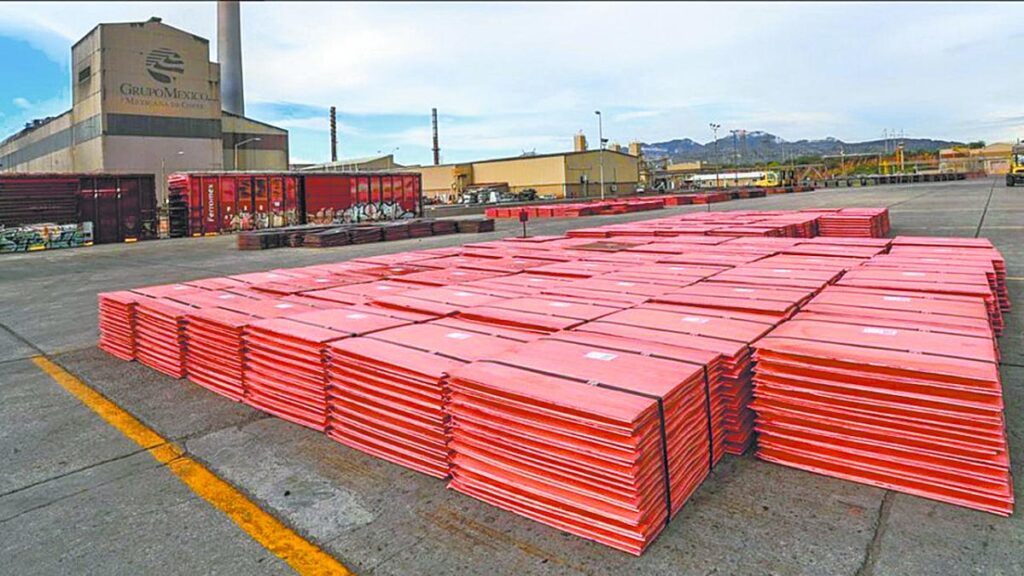
- Copper: Copper has advanced by 25.61%, now priced at $5.057 per metric ton.
- Lead: Lead has risen by 6.40%, currently at $2,076.93 per metric ton.
- Zinc: Zinc has gained 2.36%, trading at $3,048.9 per metric ton.
- Aluminum: Aluminum has increased by 14.41%, currently at $2,879.15 per metric ton.
- Nickel: Nickel, however, is expected to decline by 1.09%, dropping to $15,006.38 per metric ton.
Factors Driving Metal Price Increase
Several interconnected factors are driving the rise in metal prices, primarily economic uncertainty and global monetary policy, along with trade conflicts. Alfonso García Araneda, a derivatives market specialist, explained that during times of market volatility and uncertainty, investors seek refuge in metals. He further noted that ongoing trade policy conflicts and inflationary pressures are contributing to the metal price surge.
Analysts from Banco Base highlighted that supply concerns for metals, particularly copper, are driving prices higher. Several major mines in Chile, Africa, and Indonesia have announced partial closures due to internal disasters. Additionally, aluminum’s rising price is attributed to concerns over insufficient global supply to meet demand, as China has a government-imposed cap of 45 million metric tons per year on primary aluminum production.
Mining Stocks Perform Well
Stock-listed mining companies are experiencing substantial gains this year:
- Grupo México, the world’s fourth-largest copper producer, has seen its stock rise by 50.14% to 156.69 Mexican pesos on the BMV.
- Ivanhoe Electric, a developer of critical minerals like copper, nickel, and gold, has increased by 111.79% to $12.96 on Wall Street.
- Freeport-McMoRan, a global copper producer, has risen by 104.86% to $40.53.
- Southern Copper, a subsidiary of Mexican conglomerate Grupo México, has gained 61.47% to $132.03.
- Taseko Mines, focused on copper and other mineral extraction, has advanced by 90.99% on the Toronto Stock Exchange.
- Hudbay Minerals, which produces copper and zinc, has seen a 71.66% increase.
Gold Hits Three-Week High Amidst Expectations of Interest Rate Cuts
Gold prices reached a three-week high on Thursday, driven by expectations that post-government reopening economic data will support the Federal Reserve’s case for interest rate cuts in the coming month.
- Spot Gold: Spot gold increased by 0.2% to $4,206.64 per ounce, its highest level since October 21.
- December Gold Futures: December gold futures in the U.S. fell by 0.1% to $4,211.5, reflecting trader expectations of weak U.S. labor market data post-government reopening.
Economic data post-government reopening is expected to reveal a weak U.S. labor market, pushing the Fed towards at least one interest rate cut in December, according to Jim Wyckoff, a senior analyst at Kitco Metals. Private surveys have already indicated labor market weakness.
The U.S. government will resume operations following a record 43-day shutdown, funded until January 30. Although the Fed lowered rates last month, Fed Chair Jerome Powell cautioned against further accommodation this year due to insufficient data. An 80% majority of economists, according to a Reuters survey, anticipate another 25-basis-point rate reduction at the Fed’s December 9-10 meeting. Lower interest rates typically benefit gold, which does not pay interest and is considered a safe-haven asset.
Standard Chartered noted that gold’s correlation with key macroeconomic factors, such as the dollar and real yields, has significantly decreased over the past two weeks, reflecting a shift towards structural issues like currency weakness and U.S. debt concerns.




