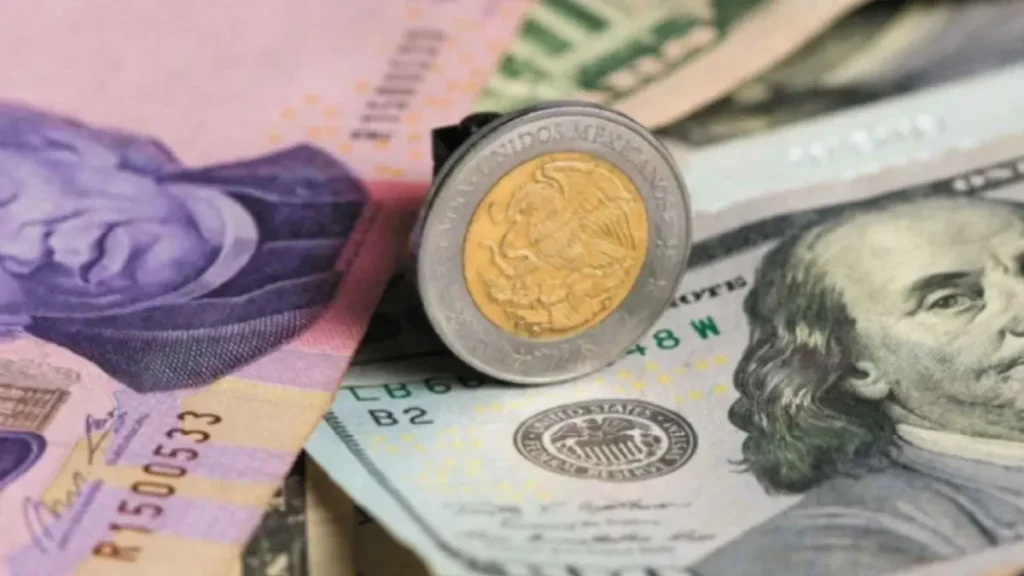
Historical Performance and Recent Surge
The Mexican peso concluded 2025 with a 13.77% appreciation against the US dollar, marking its best performance versus the American currency in 30 years since adopting a free-floating regime for the Mexican currency in 1994. The previous best year was in 2023, with a 13% appreciation against the dollar.
Among the major currencies, the Mexican peso ranked sixth in appreciation for 2025, with a 13.8% increase. The Russian ruble led the pack with a 30.4% appreciation, followed by the Hungarian forint (17.6%), Swedish krona (16.7%), Czech koruna (15.5%), and Colombian peso (14.3%).
Currency Depreciation
On the other hand, the Argentine peso (-40.8%), Turkish lira (-21.5%), Indian rupee (-5%), Indonesian rupiah (-3.4%), and Hong Kong dollar (-0.2%) experienced significant depreciation against the US dollar.
Factors Contributing to Peso’s Strength
Gabriela Siller, director of analysis at Banco Base, highlighted that the peso closed 2025 at 18.008 units per dollar, the largest annual appreciation since it was left to the free market. The peso gained 2.78 units, a 13.7% increase since the introduction of free floating.
The analyst emphasized that the dollar’s weakness aided the Mexican peso’s strong performance. Carry trade operations by Japan, borrowing in yen and investing in pesos due to higher interest rates, also supported the currency’s strength.
The differential in interest rates with the US and Mexico’s liquid status as the second-most negotiable currency in emerging economies (after the Chinese yuan) further bolstered the peso’s position.
Expert Opinions
Diego Albuja, market analyst at ATFX Latam, noted that the peso ended 2025 relatively strong despite an uncertain global context. As long as the US dollar regains momentum and Mexico’s macroeconomic data remains robust, the current exchange rate range can continue to function as an equilibrium zone.
Felipe Mendoza, CEO of IMB Capital Quants, explained that the political-economic landscape in Mexico shows a slightly inflationary bias, causing noise in import costs. However, this has not yet impacted the exchange rate.
Sheinbaum’s diplomatic stance regarding the US-Venezuela crisis and confidence in T-MEC revisions over breakdown scenarios have helped anchor expectations and prevent abrupt movements, according to Mendoza.
Key Questions and Answers
- Q: What factors contributed to the Mexican peso’s significant appreciation against the US dollar in 2025? A: The peso’s strength can be attributed to the US dollar’s weakness, carry trade operations by Japan, a favorable interest rate differential with the US, and Mexico’s liquid currency status.
- Q: How have global and Mexican factors influenced the peso’s performance? A: Despite an uncertain global context, the peso has remained relatively strong due to robust Mexican macroeconomic data and a favorable interest rate differential with the US.
- Q: What role have political and economic factors played in the peso’s performance? A: Mexico’s slightly inflationary bias and diplomatic stance on international issues have helped anchor expectations and prevent abrupt movements in the exchange rate.