
Introduction
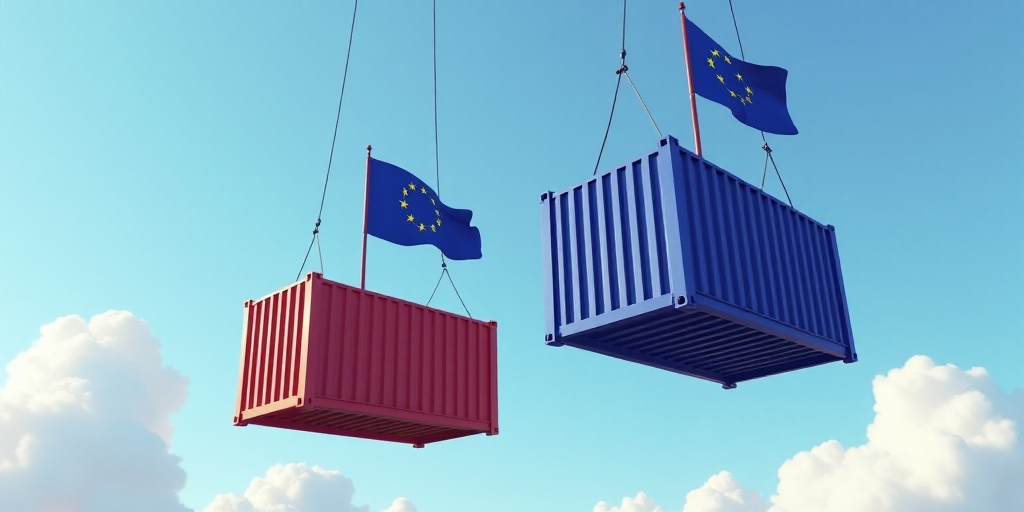
In a world grappling with uncertainty and rising threats to the liberal order, the European Union’s (EU) recent trade agreement with Mercosur (Argentina, Brazil, Paraguay, and Uruguay) stands as a testament to the bloc’s commitment to upholding its core values and principles.
Historical Context
When the EU initiated trade negotiations with Mercosur in 1999, the global landscape was marked by optimism. The euro had just entered global markets, Eastern European countries like Poland, Hungary, and the Czech Republic had joined NATO following the Cold War, and democratization was sweeping across continents.
The Significance of the Agreement
More than two decades later, the world appears more uncertain and perilous. Trade wars, economic and military coercion, and a growing disregard for global norms are eroding the liberal order that fostered shared prosperity and security for decades.
Against this backdrop, the signing of the long-awaited EU-Mercosur agreement in Asunción, Paraguay, sent a clear message of hope. It underscored the EU’s resolve to defend trade based on rules and the multilateral system that has nurtured democracy and open commerce.
Economic Impact
As the largest trade agreement ever signed by the EU, this pact will create the world’s largest free trade zone, encompassing nearly a quarter of global GDP and a combined population of over 700 million. This agreement opens vast new markets for businesses on both sides of the Atlantic, eager for clarity and predictability amidst the fog of protectionism and fluctuating tariffs.
Moreover, the agreement strategically positions Europe in a region with immense growth potential. European exports to Mercosur are projected to rise nearly 70%, and EU companies could save around €4 billion annually in tariffs.
Modern and Comprehensive
Unlike trade deals of the 1990s, this agreement is modern and far-reaching, promoting genuine economic resilience. It includes binding commitments on climate and labor issues, opening up service sectors and procurement markets to drive high-quality job creation in finance, telecommunications, and technology sectors.
The agreement also strengthens Europe’s strategic autonomy by advancing cross-border payment systems and reinforcing the euro’s role in international trade and as a reserve currency.
Access to critical minerals like lithium, cobalt, and rare earths will reduce Europe’s dependence and secure supply chains for ecological and digital transitions. With global demand for these minerals expected to quadruple or sextuple by 2040, the agreement gives the EU a competitive edge in sectors ranging from electric vehicles and renewable energy to defense.
Balanced Provisions
The agreement is balanced, offering safeguards to European farmers by maintaining stringent EU food safety standards and implementing additional controls, while opening opportunities for the EU’s leading agri-food sector.
Spanish branded products, such as olive oil and wine, will significantly benefit from improved access to South American markets. The agreement also provides Europeans with better access to staples like soybeans, contributing to diversifying our input sources.
Global Leadership and Strategic Partnerships
The EU’s commitment to reclaiming its voice on the global stage is evident in this agreement. While others retreat inward, Europe is expanding its network of strategic allies, negotiating new or updated trade agreements with India, Thailand, and Malaysia, among others.
Overcoming Political Differences
With most EU member states overcoming resistance to the Mercosur agreement, Europe has demonstrated its ability to surmount political differences both within and beyond its borders. This determination is crucial for strengthening the EU’s global credibility and influence.
This same determination will accelerate efforts to dismantle internal trade barriers and maximize the potential of the EU’s single market and 450 million-strong population.
The EU’s dual focus on expanding its trade agreement network and deepening internal integration is the key to competitiveness.
Shared Values
Beyond economics, the EU-Mercosur alliance transcends transactional logic. Europe and Latin America share deeply rooted values: democracy, the rule of law, and commitment to multilateralism.
Spain’s Role
As one of the agreement’s leading proponents, Spain exemplifies the benefits of strengthening ties with the region. It is Brazil’s second-largest foreign investor, helping numerous Spanish companies in sectors like telecommunications, infrastructure, and clean energy become global leaders.
Conclusion
The EU-Mercosur agreement is a stepping stone towards deeper collaboration with Latin America, rooted in historical and cultural bonds that unite our politically diverse regions. The agreement proves that differences can be overcome through collaboration. For a safer, more predictable world, we need more agreements like the EU-Mercosur pact.
Key Questions and Answers
- What is the significance of the EU-Mercosur trade agreement? The agreement symbolizes Europe’s commitment to upholding its core values and principles amidst a turbulent global landscape.
- How will this agreement impact the European economy? It will create the world’s largest free trade zone, opening vast new markets and positioning Europe strategically in a region with immense growth potential.
- What are the agreement’s provisions on climate and labor issues? The agreement includes binding commitments on climate and labor, promoting genuine economic resilience and driving high-quality job creation.
- How does the agreement benefit European farmers and agri-food sector? The agreement offers safeguards to European farmers while opening opportunities for the EU’s leading agri-food sector.
- What role does Spain play in the EU-Mercosur agreement? Spain, as one of the agreement’s leading proponents, exemplifies the benefits of strengthening ties with Latin America.




