
Introduction
Since its founding, the United States has been a staunch advocate for post-conflict justice, a powerful tool in the diplomatic arsenal of presidents from all political parties. Donald Trump’s disregard for international justice, however, represents a historical break and poses a potentially grave threat to global peace.
Trump’s Cuts to Foreign Aid
Upon returning to the White House, President Trump has sought to drastically reduce foreign aid. His administration has dismantled the United States Agency for International Development (USAID), slashing over 6,000 programs to fewer than 900. In late August, Trump renewed his assault on foreign aid by canceling $4.9 billion in approved aid through a rarely used mechanism deemed illegal by the Government Accountability Office in 2018.
Consequences of Abrupt Cuts
The abrupt reductions in humanitarian assistance have been devastating, leaving millions of people worldwide at risk of starvation or preventable diseases. Less visible but equally significant is the withdrawal of support for consolidating peace and promoting the rule of law, human rights, and accountability for atrocities. Only a handful of USAID programs remain focused on these issues, while Trump’s latest effort to recoup funds includes revoking $837 million in peace maintenance measures.
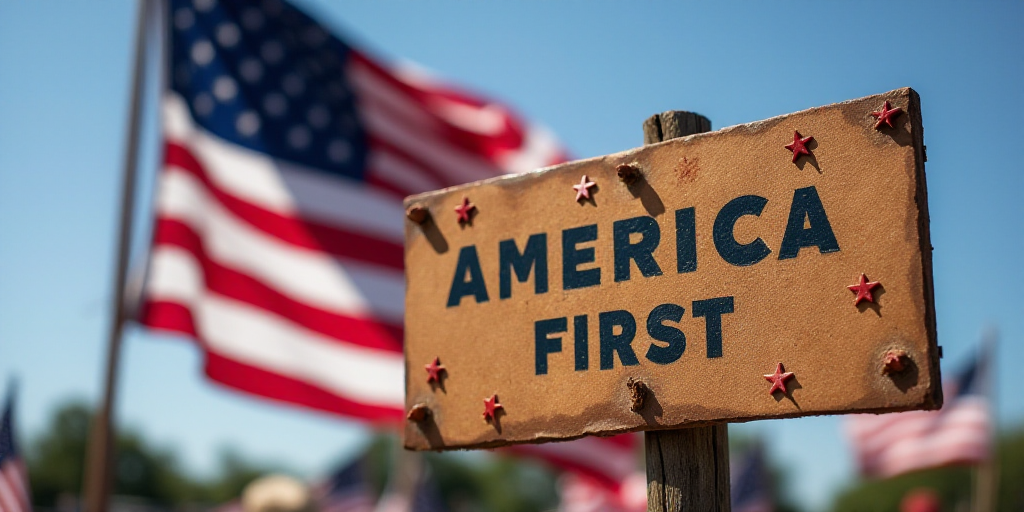
Trump’s “America First” Policy and Its Impact on International Justice
Trump’s “America First” foreign policy emphasizes “peace through strength,” defining “strength” solely in terms of hard power. This approach will prevent transitional justice in countries like Ukraine, once their wars end, and Ethiopia, which still grapples with the aftermath of civil war.
Trump’s Atypical Stance Among U.S. Presidents
As detailed in my book, “Presidential Visions of Transitional Justice,” Trump’s foreign policy makes him an anomaly among U.S. presidents. Since its founding, the United States has consistently championed post-conflict justice, a potent diplomatic tool for presidents of all political leanings, including George Washington, Abraham Lincoln, Teddy Roosevelt, and Woodrow Wilson.
Historical Context: U.S. Role in Promoting International Justice
From the American Revolutionary War to the Spanish-American War, U.S. presidents actively promoted dispute resolution through negotiation and adjudication processes, including arbitration. Post-World War II, the U.S. played a pivotal role in establishing the International Military Tribunal at Nuremberg to prosecute Nazi war criminals.
Nuremberg Trials: A Landmark in International Law
The Nuremberg trials marked the first time leaders of a defeated nation were held legally accountable for war crimes and crimes against humanity. The verdicts established the principle of individual criminal responsibility for war-time human rights violations, a significant milestone in international law.
U.S. Involvement in Post-Cold War Justice Efforts
Following the Soviet Union’s collapse, the U.S. played a crucial role in transitioning Eastern Europe from communism to capitalist democracy, aiding transitional justice and promoting the rule of law.
U.S. Avoidance of Accountability for Its Foreign Interventions
Historically, the U.S. rarely viewed justice as a two-way street, avoiding accountability for its foreign interventions and tactics. This is evident in the post-9/11 war on terror and subsequent invasions of Iraq and Afghanistan, where the use of torture, indefinite detention, and drone strikes undermined international human rights legislation.
Obama’s Efforts to Balance Justice and Foreign Policy
President Obama continued the war on terror but acknowledged these tensions and embarked on a political project of transitional justice, attempting to draw a line from the Cold War era. In his final year in office, he undertook a whirlwind tour of America and Asia, expressing remorse for the pain and deaths caused by U.S. interventions in the 20th century and introducing a new formula for peace and prosperity.
Trump’s Hostility Towards International Justice
During his 2016 presidential campaign, Trump mocked Obama’s “apology tour,” dismissing his efforts to take responsibility and foster more conciliatory relations. Once in office, Trump’s disdain for international justice principles became apparent through his attacks on the International Criminal Court (ICC), established in 2002 to investigate and prosecute individuals for genocide, crimes against humanity, war crimes, and crimes of aggression.
Trump’s Actions Against the ICC
As a result, the U.S. is not part of the ICC, maintaining a distance from its cases since it cannot control them due to the court’s independence from the UN Security Council. Instead of maintaining this stance, Trump’s administration took aggressive action after the ICC launched an investigation into alleged war crimes in Afghanistan. In 2020, his administration sanctioned ICC officials by freezing their assets and barring them and their families from traveling to the U.S.
Trump’s Intensified Disregard for International Justice
Since returning to the White House, Trump’s disregard for international justice has only grown. This is evident not only in his attacks on USAID but also in his failure to recognize the need for justice in a peace agreement between Ukraine and Russia, his attacks on Ukrainian President Volodymyr Zelensky, and his new draconian sanctions against ICC officials.
Conclusion
Trump’s overt hostility towards promoting the rule of law abroad, and the soft power it carries, represents a radical break from the central role the U.S. has long played in establishing multilateral dispute resolution institutions. However, from Ukraine to Gaza and beyond, Trump may soon learn the hard way that peace without justice cannot be sustained.
About the Author
Ruti Teitel is a Professor of Comparative Law at New York Law School and the author of “Presidential Visions of Transitional Justice: An American Legacy of Responsibility and Reconciliation” (Oxford University Press, 2025).
Copyright: Project Syndicate, 1995 – 2025
www.project-syndicate.org




