
Background on Key Figures and Relevance
Rodolfo Campuzano Meza, the General Director of INVEX Operadora de Fondos de Inversión, provides insights into the current economic situation in the United States. As a seasoned professional in the financial sector, his perspective is crucial for understanding the complexities of the market.
Government Shutdown and Data Availability
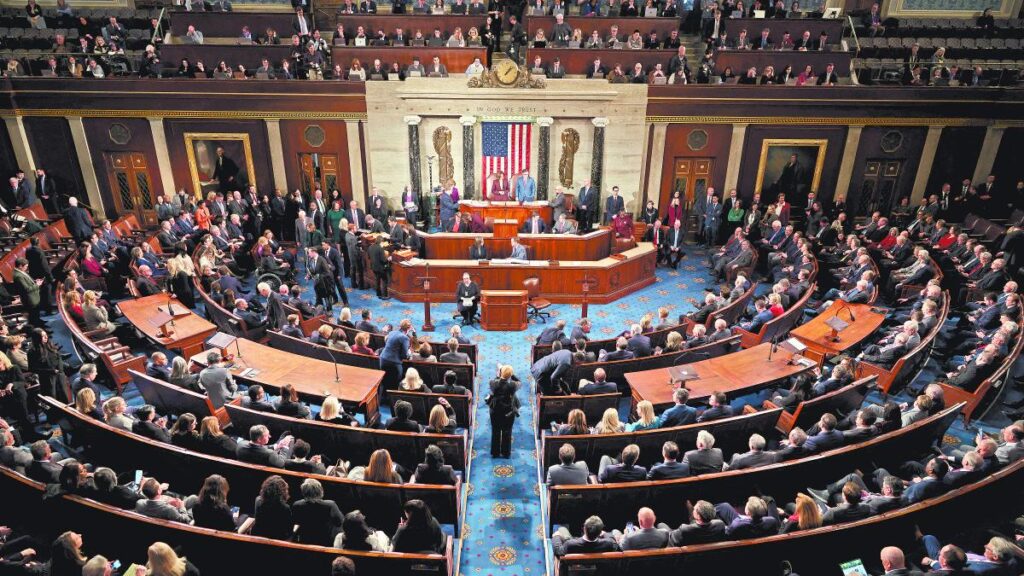
As you read this, it is likely that the U.S. Congress will have approved an agreement to end the government shutdown, which has lasted longer than any period in history with multiple agencies non-operational.
For the past half-year, there have been no reliable data sources, and for the next few months, any available information will be questionable. Investors and analysts traditionally build their forecasts using data from numerous government entities.
The Federal Reserve President, Jerome Powell, acknowledged the uncertainty surrounding economic assessments, including inflation trends and employment levels.
Current Economic Indicators
- Employment has shown significant deterioration during the summer.
- Inflation has only marginally reflected the effects of tariffs imposed by the government on various countries (seen in September).
- The GDP is projected to grow by approximately 4% on an annualized quarterly basis, according to the Federal Reserve of Atlanta’s forecast for Q3.
Data Discrepancies and Questions
While anecdotal data and reports from private agencies, state entities, and regional Fed banks describe a stable economy, there are concerns about the true state of the economy:
- Is there a strong economic slowdown, or will we see more stable employment data?
- Can growth firmness be observed without a corresponding job market recovery?
Unemployment Claims and Business Optimism
Initial unemployment claims (which should rise if mass layoffs occur) remain stable between 220,000 and 240,000, showing no cause for alarm.
Despite some executives’ cautious outlook on consumer strength and potential workforce reductions in their companies, these concerns have not materialized yet.
Consumer spending and service dynamics might have weakened due to uncertainty, as reflected in consumer confidence surveys.
Investment and Economic Growth
The primary driver of economic growth is non-residential investment, aimed at enhancing infrastructure, plant, and equipment.
This concentration factor, previously discussed, applies not only to stock market indices but also to the overall economy.
Fed’s Challenging Decisions
Should the upcoming data show job market deterioration while the economy and stocks remain robust, the Federal Reserve’s decisions will become complicated.
The Fed’s mandate is to control inflation and support job growth. In this scenario, lowering interest rates might not significantly boost employment but could further inflate markets.
Moreover, the upcoming fiscal stimulus from the “Big and Beautiful Bill” spending plan will add another layer of complexity.
Government’s Aggressive Stance
Following the recent Democratic advancements in elections, it is expected that the government will be proactive to prevent genuine growth declines.
Portfolio managers may face a challenging start to 2026, as markets likely continue their upward trajectory.
Key Questions and Answers
- Q: What is the current state of the U.S. economy? Data suggests a stable economy, with companies reporting growth above estimates and profitability justifying high stock valuations.
- Q: How does the government shutdown affect economic data? The prolonged shutdown has led to a lack of reliable data, making it difficult for investors and analysts to build accurate forecasts.
- Q: What are the concerns surrounding employment and inflation? There is uncertainty about whether a strong economic slowdown is underway or if employment will eventually recover.
- Q: How might the Federal Reserve respond to these economic indicators? The Fed may face challenges in balancing inflation control and job growth support, potentially resorting to interest rate adjustments.




