
Exposure of the Issue by Uruapan Mayor’s Assassination
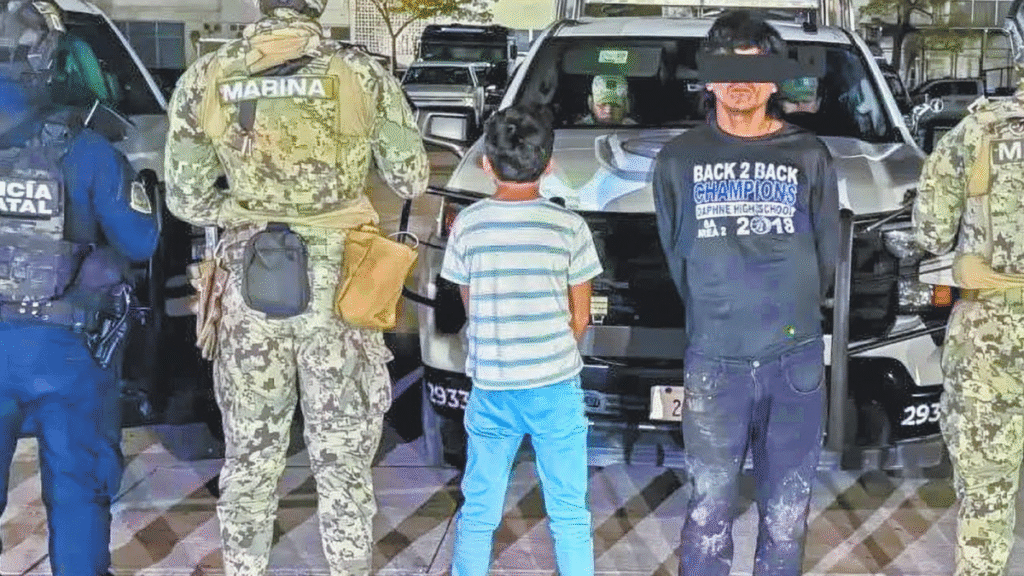
The assassination of Uruapan, Michoacán’s mayor, Carlos Manzo, two weeks ago, highlighted a less-discussed aspect of Mexico’s security crisis. The assassin was reportedly a minor associated with organized crime groups.
Forced Recruitment: A Rising Concern
According to researchers and activists studying the use of children and adolescents by criminal groups, any minor involved in a criminal organization should be considered forced recruitment. This phenomenon is on the rise, with around 250,000 Mexican minors currently at risk of being recruited or exploited by criminal organizations, as reported by the Mexican Red for Children’s Rights (REDIM).
Used as “Disposable Assets”
Alejandro López Contreras, an investigator at the National Institute of Criminalistic Sciences (INACIPE), explains that criminal groups now recruit children as young as eight to ten years old. These minors are viewed as “disposable assets” for various activities, from informants or neighborhood watchers to hitmen. If detained or killed, they can be quickly replaced.
Risk Factors
Tania Ramírez Hernández, REDIM’s executive director, identifies structural factors that facilitate the forced recruitment of minors by criminal groups. These factors include marginalization, poverty, and entrenched violence in communities, as well as institutional issues like the ages of criminal responsibility that contribute to their recruitment.
Case Study: Laura from Michoacán
Juan Carlos Quirarte, an expert consultant on the matter, shares a case study of Laura (not her real name), a Michoacán native exploited sexually by her mother as a child. Coopted by organized crime, she was helped by academics to disengage from the criminal group and reintegrate into society. However, she faced further violence at work and chose to move to a distant location.
Entry Points into Criminal Groups
Today, children and adolescents can enter criminal groups through various means. Alejandro López Contreras, the INACIPE investigator, states that initial contact often occurs through their own support networks—family or community.
Context of Vulnerability
Boris Alexander Caballero Escorcia, another consultant in the field, highlights that these minors are vulnerable due to structural violence and precarity in their communities. In some regions like Michoacán or Jalisco, territorial control by criminal organizations facilitates recruitment similar to conflict scenarios. In contrast, Mexico City’s situation is more complex due to the diffuse territorial control of criminal groups.
Forced Involvement, Not Choice
Experts emphasize that it’s crucial to dispel the narrative that minors join criminal groups willingly, as they are always forced. Michoacán, with high levels of child labor and educational lag, increases minors’ vulnerability to recruitment and exploitation.
Criminalizing Minors’ Recruitment
Alejandro López Contreras suggests amending the legal framework to classify recruitment and use of minors by criminal groups as a crime. Law enforcement should be trained to recognize when minors detained for crimes are victims of forced recruitment by criminal organizations.
He stresses that while not all crime-committing minors are victims, many have been coerced. Legal loopholes allow criminal groups to exploit minors, as their true motives for committing crimes are never investigated.
Conclusion
The growing concern of forced recruitment of Mexican minors by criminal groups requires urgent attention. Addressing this issue involves legal amendments, law enforcement training, and tackling the root causes of vulnerability in marginalized communities.




