
Background on Key Figures and Relevance
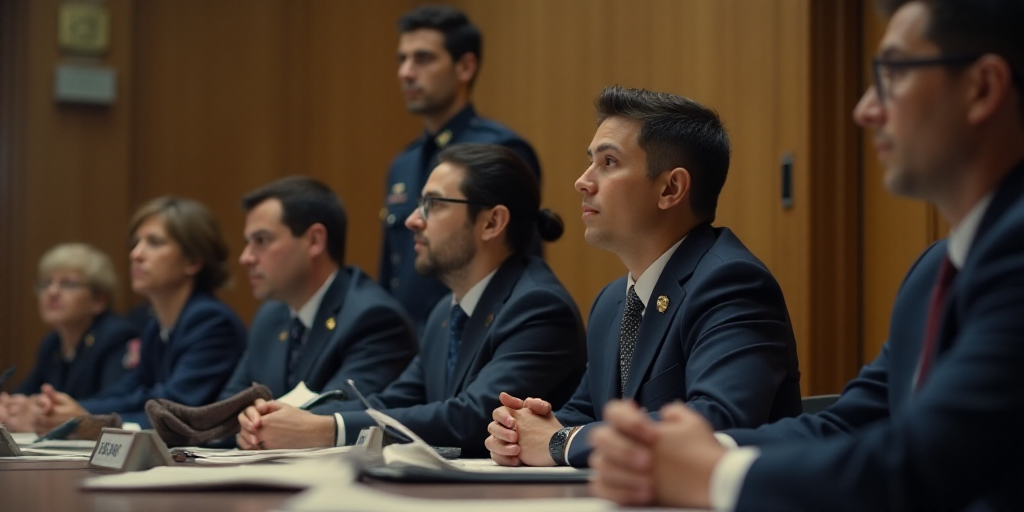
The Mexican states of Puebla and its capital city have been affected by intense rainfall that caused significant damage, leaving 64,000 people displaced and 19 fatalities across 23 municipalities. In response, the federal, state, and local governments have joined forces to restore essential services in these communities. Governor Alejandro Armenta, along with the support of President Claudia Sheinbaum and the Mexican armed forces, are leading this collaborative effort.
Key Players and Their Roles
- Governor Alejandro Armenta: The governor of Puebla, responsible for coordinating state-level efforts in the reconstruction process.
- President Claudia Sheinbaum: The head of Mexico’s federal government, who has shown solidarity and commitment to Puebla’s recovery.
- Leticia Ramírez Amaya: The coordinator general of Intergovernmental Affairs and Social Participation for the Mexican government, who has been instrumental in facilitating communication between different levels of government.
- Héctor Ávila Alcocer: Commander of the Sixth Military Region, overseeing the deployment of military personnel for rescue and relief efforts.
- Vice Admiral Raúl Sergio Marín: Commander of the Marine Corps, responsible for coordinating security and aid distribution in affected areas.
Reconstruction Efforts and Progress
The reconstruction process focuses on four key areas aligned with President Sheinbaum’s approach: immediate emergency response, comprehensive support for affected families, infrastructure and housing reconstruction, and strengthening early warning systems to prevent future risks.
Immediate Emergency Response
The federal, state, and local governments, along with the Mexican armed forces, have been working diligently to provide immediate assistance. As of the 20th of October, they have:
- Deployed 2,147 personnel from the Defense and National Guard to various affected areas.
- Completed 90% cleanup efforts in nine Huauchinango colonies and the Ceiba neighborhood in Xicotepec.
- Conducted 153 aerial operations, delivering 130 tons of supplies including food, water, medicine, and clothing.
- Provided 25,859 hot meals through community kitchens.
Infrastructure and Housing Reconstruction
The Secretary of Infrastructure, José Manuel Contreras de los Santos, reported that 93.5% of road clearance has been achieved. Key accomplishments include:
- Recovering 134.8 kilometers of damaged communication routes, removing 40,442 cubic meters of mud, clearing 24.5 kilometers of avenues and streets, and eliminating 4,000 cubic meters of damaged asphalt.
- Liberating 19 road segments in Huauchinango, Naupan, Zihuateutla, Xicotepec, Jalpan, and Tlacuilotepec.
- Transporting aid to five affected municipalities (Pahuatlán, Francisco Z. Mena, and Zacatlán) via cleared roads.
Support for Affected Families
The Secretary of Governance, Samuel Aguilar Pala, reported that 19 fatalities and five people remain unaccounted for. A total of 73,000 support packages have been distributed, including blankets, food supplies, cleaning kits, and medical aid.
Shelter and Aid
The Secretary of Well-being, Laura Artemisa García Chávez, stated that eight shelters are currently housing 1,759 individuals who have lost their homes due to the disaster.
Key Questions and Answers
- Who is leading the reconstruction efforts in Puebla? Governor Alejandro Armenta, along with support from President Claudia Sheinbaum and the Mexican armed forces.
- What are the four key areas of focus for the reconstruction process? Immediate emergency response, comprehensive support for affected families, infrastructure and housing reconstruction, and strengthening early warning systems.
- How many people have been affected by the disaster in Puebla? Approximately 64,000 people have been displaced, with 19 fatalities and five individuals still unaccounted for.
- What progress has been made in the reconstruction process? Significant advancements have been reported in road clearance, infrastructure recovery, and distribution of aid packages to affected families.




