
Background on Cuba’s Oil Dependence and the Venezuelan Factor
Cuba has relied heavily on Venezuela for oil supplies since the early 2000s, securing crude through an agreement with Caracas in exchange for medical professionals and educators. However, following Nicolás Maduro’s ousting by U.S.-backed military forces, Venezuela ceased oil shipments to Cuba in early December. This sudden halt, coupled with U.S. sanctions and pressure, has pushed Cuba towards a potential humanitarian crisis and mass migration to Mexico.
Key Players: Claudia Sheinbaum and Donald Trump
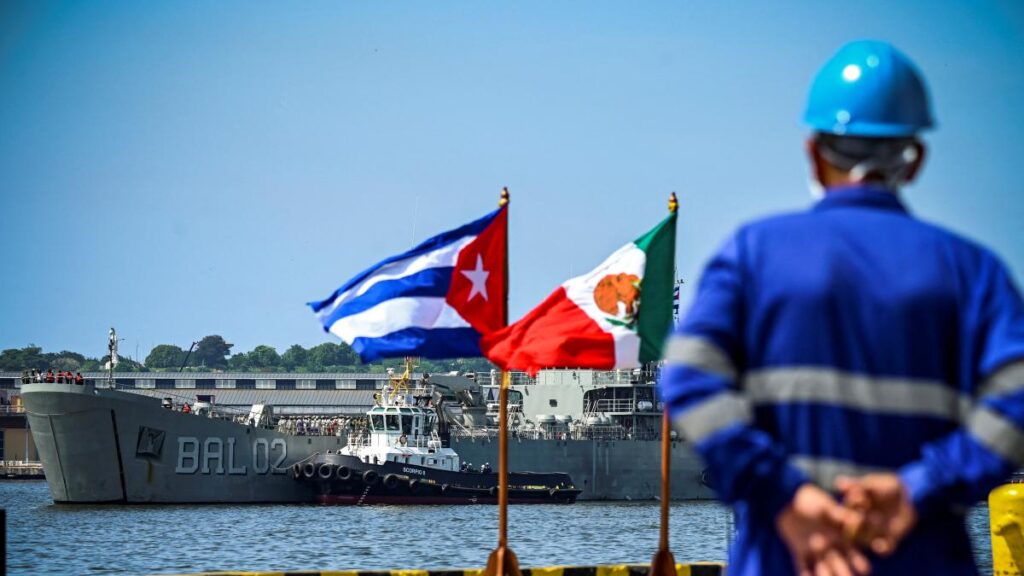
In response to this crisis, Mexico’s President Claudia Sheinbaum has stepped in by supplying oil to Cuba through Pemex’s Gasolinas Bienestar program. Between January and September 2025, Pemex exported an average of 17,200 barrels of crude and 2,000 derivatives daily to Cuba, totaling $400 million. This move has raised concerns about Mexico’s relationship with the U.S., its key trading partner in the T-MEC (Trading as Mexico, Canada, and the United States Agreement).
Ex-Mexican Canciller Jorge Castañeda’s Perspective
Former Mexican Foreign Minister Jorge Castañeda warns that Sheinbaum’s decision to supply oil to Cuba might jeopardize Mexico’s relationship with the U.S., especially considering the ongoing T-MEC review and Trump’s trade pressures. Although Pemex lacks U.S. shareholders, American bondholders of Pemex might disagree with risking repayment due to Cuba’s oil subsidies.
Cuba’s Energy Crisis and its Impact
Cuba produces around 40,000 barrels of heavy oil daily, crucial for powering its eight thermoelectric plants. However, these plants frequently malfunction due to a lack of maintenance and spare parts. The island nation also relies on hundreds of diesel-powered generators, often facing fuel shortages.
- Cuba’s power generation has plummeted to half of its needs, causing daily and extended blackouts.
- The scarcity of electricity and fuel has stalled both industry and agriculture.
- Gerardo Arreola, author of “Cuba, el futuro a debate,” fears a humanitarian crisis, mass migration, and further deterioration of the situation, noting Cuba’s proximity to Mexico.
Migration Pressures and Unresolved Payment Details
Since late 2021, over a million Cubans have emigrated, mostly to the U.S., but with borders closing under Trump’s administration, many remain stranded in Mexico. Sheinbaum has repeatedly pledged to disclose Cuba’s oil payment methods amidst persistent media inquiries, though the details remain undisclosed.




