
Background on Key Figures and Relevance
Rubén Rocha Moya, the current governor of Sinaloa, Mexico, has been instrumental in driving economic transformation within his state. His recent efforts include a working trip to Japan, where significant progress was made in securing international partnerships for the Mexinol project.
Details of the Japan Working Trip
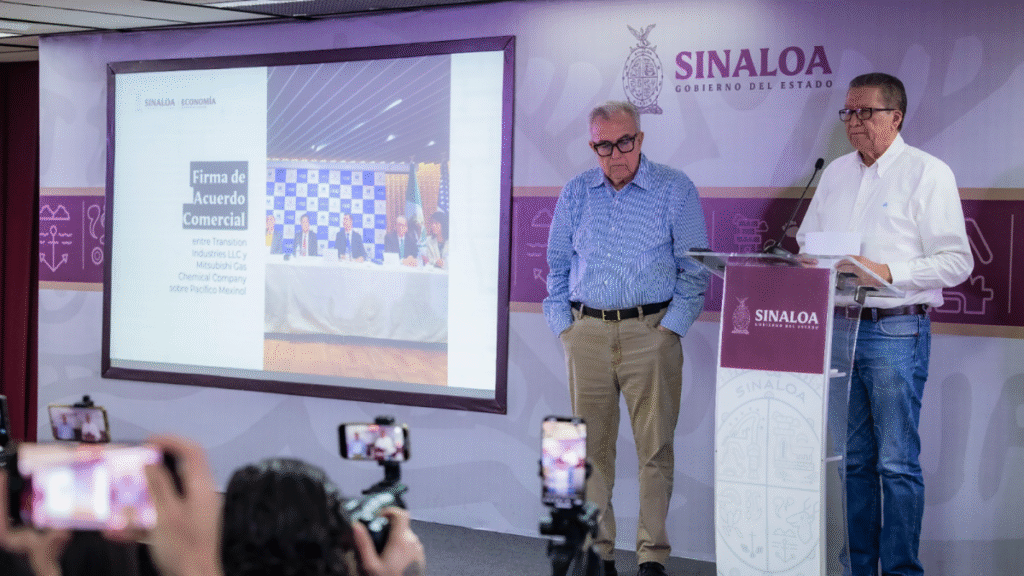
During a press conference in La Semanera, Feliciano Castro Meléndrez, the Secretary of Economy for Sinaloa, detailed his successful working trip to Japan. The visit included meetings with energy sector representatives, trade organizations, and diplomatic authorities.
Key Agreement on Metanol Green Sales
Among the outcomes of these meetings was a crucial commercial agreement between Transition Industries LLC and Mitsubishi Gas Chemical Company (MGC). This agreement ensures the long-term sale of green metanol produced by the Pacifico Mexinol project in Topolobampo, Ahome municipality.
- The agreement guarantees metanol green market access in Asia, solidifying the project’s economic viability.
- The Mexinol project, once completed, will be the world’s largest metanol green production plant with an annual capacity of 2.1 million tons.
- This project positions Topolobampo as a significant economic development hub, aligning with the Plan México priorities set by Governor Rocha Moya.
Environmental and Economic Impact
Secretary Castro Meléndrez emphasized that the metanol green produced in Topolobampo will have ultra-low carbon emissions, supporting the United Nations’ Sustainable Development Goals aimed at global decarbonization.
This project not only benefits Sinaloa’s regional economy but also contributes to Mexico’s and the world’s sustainable development, as stated by Castro Meléndrez.
Government Support and Future Prospects
The Sinaloa government, under Governor Rocha Moya’s leadership, will continue to ensure legal certainty, labor peace, and favorable investment conditions for the successful construction and operation of the industrial complex.
The Pacifico Mexinol project, estimated to cost $3.3 billion, is expected to create approximately 4,500 direct and indirect jobs, establishing Topolobampo as a strategic point for clean energy production and export from Mexico to Asia.
Additional Meetings and Collaboration
Secretary Castro Meléndrez also met with Mexico’s ambassador to Japan, Melba Pría, and executives from the Japan External Trade Organization (JETRO). These discussions focused on potential investments and commercial cooperation opportunities for Sinaloa’s primary products, including chili bell, mango, shrimp, kabocha squash, and beef.
Key Questions and Answers
- What is the Mexinol project? The Pacifico Mexinol project is a large-scale green metanol production plant in Topolobampo, Sinaloa, Mexico, aiming to be the world’s largest with an annual capacity of 2.1 million tons.
- Who are the key partners in this project? Transition Industries LLC and Mitsubishi Gas Chemical Company (MGC) have signed a long-term agreement for the sale of green metanol produced by the Mexinol project.
- What is the significance of this project for Sinaloa? The Mexinol project represents a crucial step in Sinaloa’s economic transformation, creating jobs and positioning the region as a hub for clean energy production and export.
- What are the environmental benefits of this project? The metanol green produced will have ultra-low carbon emissions, contributing to global decarbonization efforts and aligning with the United Nations’ Sustainable Development Goals.




